|
History of the Old Lesmeister Building
|
|||
The land upon which Lesmeister Guesthouse stands was purchased February 24, 1902, by Henry Lesmeister, who proceeded to construct the building. Electricity didn’t come to Pocahontas until 1911, so Lesmeister’s building was originally lit only by its large east- and west-facing windows, and oil lamps. The streets in downtown Pocahontas were first paved in 1928. The land for the building was purchased from a larger plot of property in downtown Pocahontas that was purchased from Minnie Beauvais by Carl J. Roellin, June 4, 1894. Henry Lesmeister and his wife Martha Whipperman Lesmeister had immigrated to America from Essen, Germany, first settling in Lexington, Kentucky, before moving in 1880 to Pocahontas with their son, Henry Jr. and their daughter Theresa Frances. Henry Jr. became a noted architect who designed the grandest buildings in downtown Pocahontas, including his father’s building that now houses Lesmeister Guesthouse. Henry Jr. also designed the roof on St. Paul the Apostle Catholic Church in Pocahontas, with its king trusses that carry the building’s roof without need for interior support posts. Henry Jr. also designed many buildings in nearby Jonesboro and as far away as Memphis, Tennessee. With time, young Theresa Frances Lesmeister became the bride of Hubert A. Peters, whose family had come to America from Aachen, Germany, settling first in Columbus, Ohio, before moving to Pocahontas in 1880. Initially, Peters opened Peters Grocery in the north half of the Lesmeister building, with Bennett and Rice Grocery opening soon after that in the south half of the building. Peters Grocery sold “everything from thread to harnesses”.
|
|||
|
|
|||
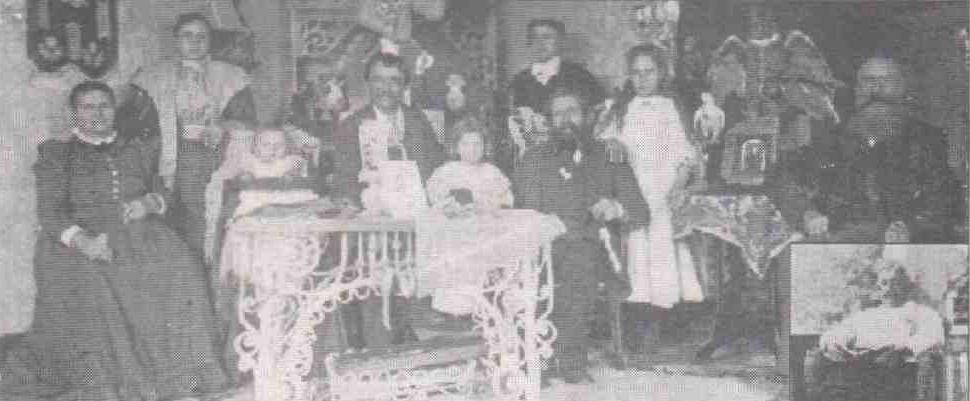
| The Peters and Lesmeister families. From left,
Martha Lesmeister, Theresa Lesmeister Peters, Henry Hubert Peters
(who died in infancy), Hubert Peters, Mary Martha Peters Burke,
Henry Lesmeister (seated), Mary Lesmeister, Kate lesmeister, and
"Uncle Frank*". Inset is Hubert Peters. _______________________________ * There’s an interesting story regarding the man identified as
"Uncle Frank" in the photo above. Mary Frances Burke Brackett, whose
mother Mary Martha is in the photo above, explains, "Uncle Frank
really was not a family member. In the 1890's he appeared at the
Peters’ back door and asked if there was work he could do in return
for food. Grandmother (Mrs. Theresa Peters) fed him well and said he
could chop a little kindling in return. Being a cold late afternoon
he asked if he could spend the night someplace. Then, with my
grandfather’s permission, he spent the night in the laundry house.
When the family awoke the next morning there were warm fires built
in all the stoves and coffee brewing on the kitchen stove. He then
moved into the family home and remained there until his death in
1916. He helped with the children, did gardening, and few questions
were asked about his past. It was assumed because of his education
and mannerisms that he was of noble birth and possibly a deserter
from the Austrian Army. He was always referred to as "Uncle Frank",
the man who came to dinner." |
|||
| The old building finally sat vacant for a few years before
Pocahontas native, Dr. Patrick Carroll, purchased the property in
February, 2011, to restore it to its 1902 outside appearance as it
became the Lesmeister Guesthouse, featuring four guest rental suites
with interior decor and fixtures reminiscent of the 1902 era while
offering modern comforts. |
|||
|
|
|||
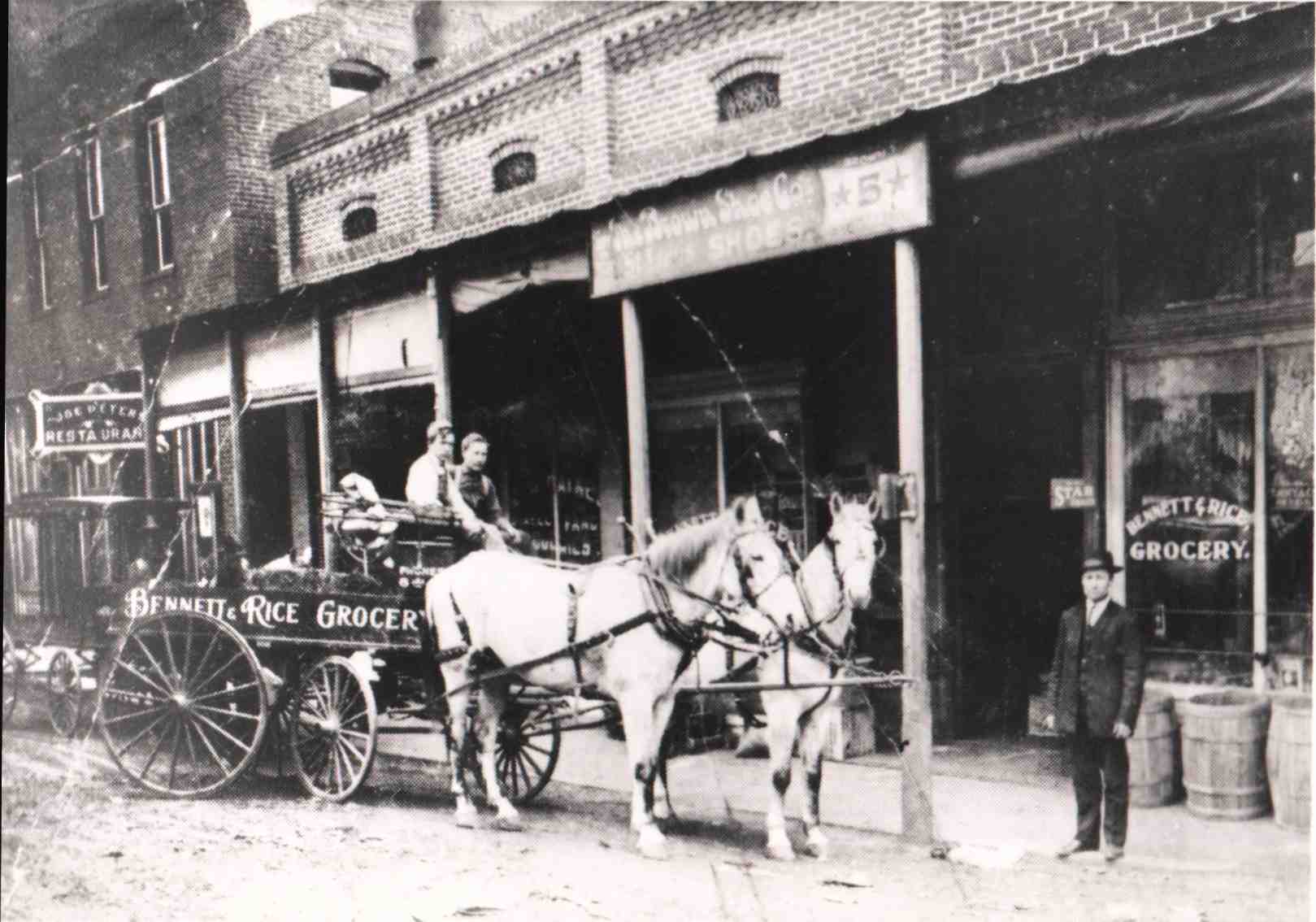
| The building that houses Lesmeister Guesthouse as
it appeared in the long ago. The building was later "re-faced’ with
more ornate and colorful brickwork. The building just north of the
guest house once had a second story that held rental apartments. In
later years that building had its second story removed and it was
also "re-faced" with Roman-style brick in an attempt to make it look
more modern. |
|||
|
|
|||
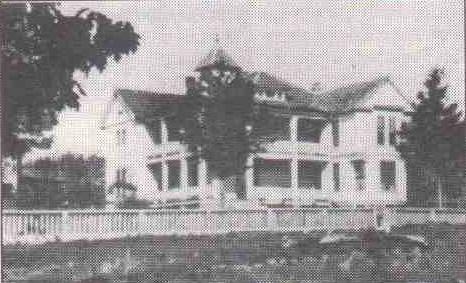
| The large Peters family home stood at the foot of
"Catholic Hill" in Pocahontas, where the city post office now
stands. _____________________ Information in this report comes from the deed records of the Randolph County Circuit Clerk (Book 27, Page 360; Book 28, Page 254; and Book 59, Page 491), the book "1910 Directory of Randolph County" by L. F. Blankenship, and the book "The Making of Catholic Hill" by Susan Moore Thielemier. |