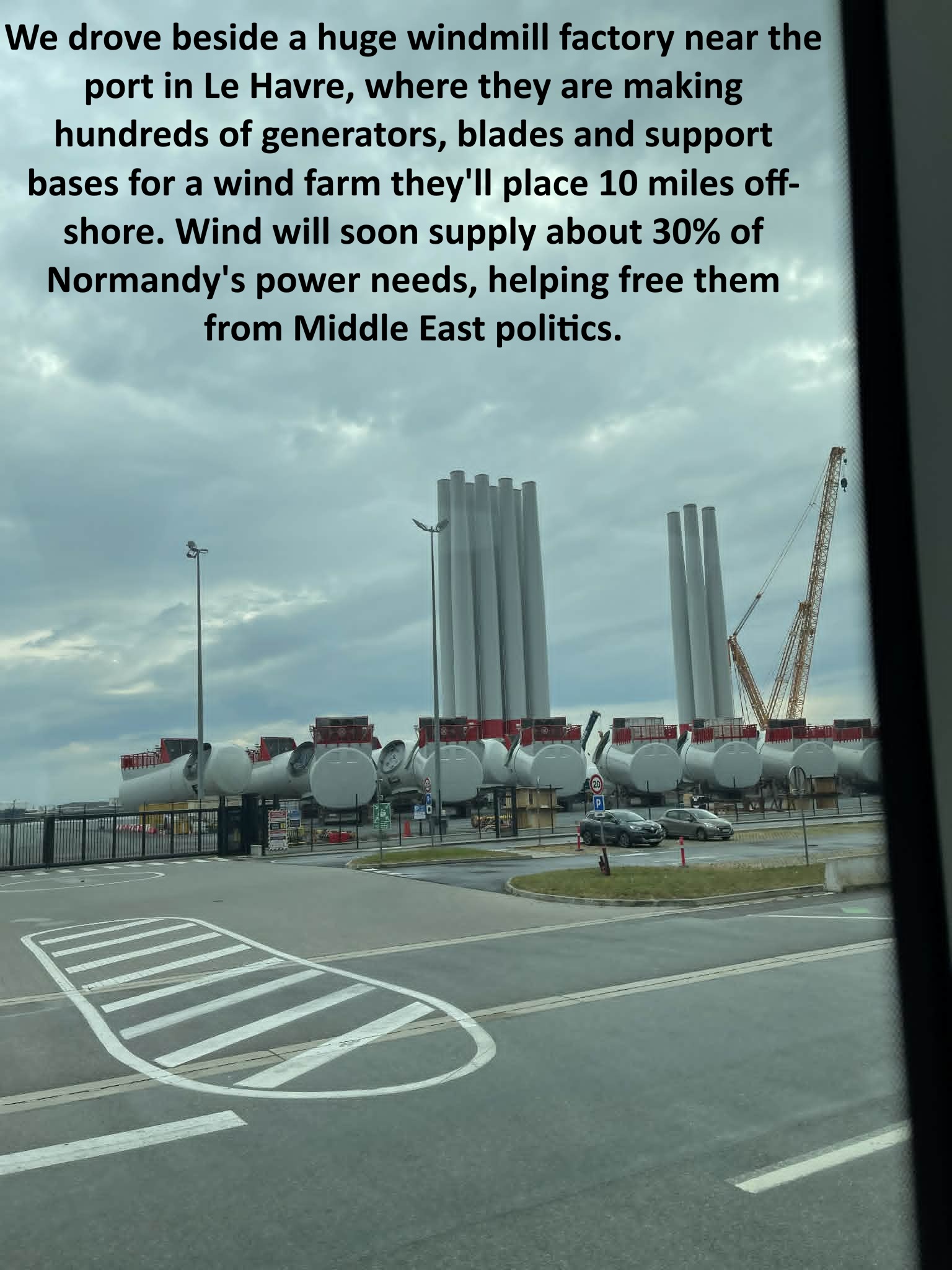
France
1 May 2026
What a difference a day makes! Wednesday night aboard QM2 we were the same bunch of old retirees who have been traveling the world for months, because nobody but retirees can take 3 or 4 months to circle the globe. With over half the ship’s passengers leaving us yesterday morning, and new people boarding for just the voyage to New York, the ship is now full of families with young children, some in high chairs!
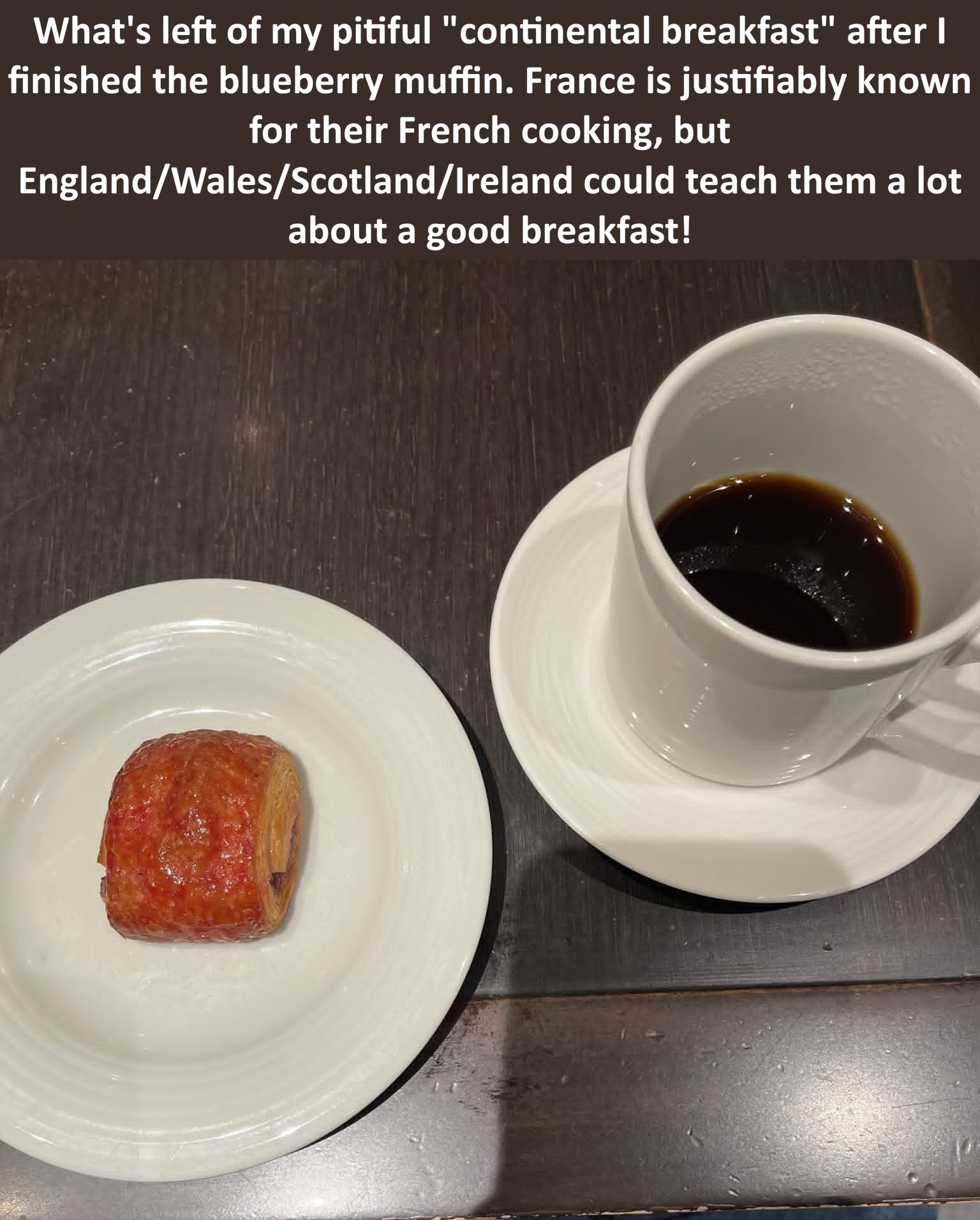
This morning Queen Mary 2 docked in Le Havre, France, at the mouth of the River Seine. Some of the ship excursions are driving into Paris for the day. Having already “done” Paris, we opted for something different. Appropriately, this morning I will have a French “continental breakfast,” not by choice, but because our tour group has to gather to leave the ship at 7:00, and only continental breakfast is available before 7:00. It’s OK, I’ll have extra eggs tomorrow!
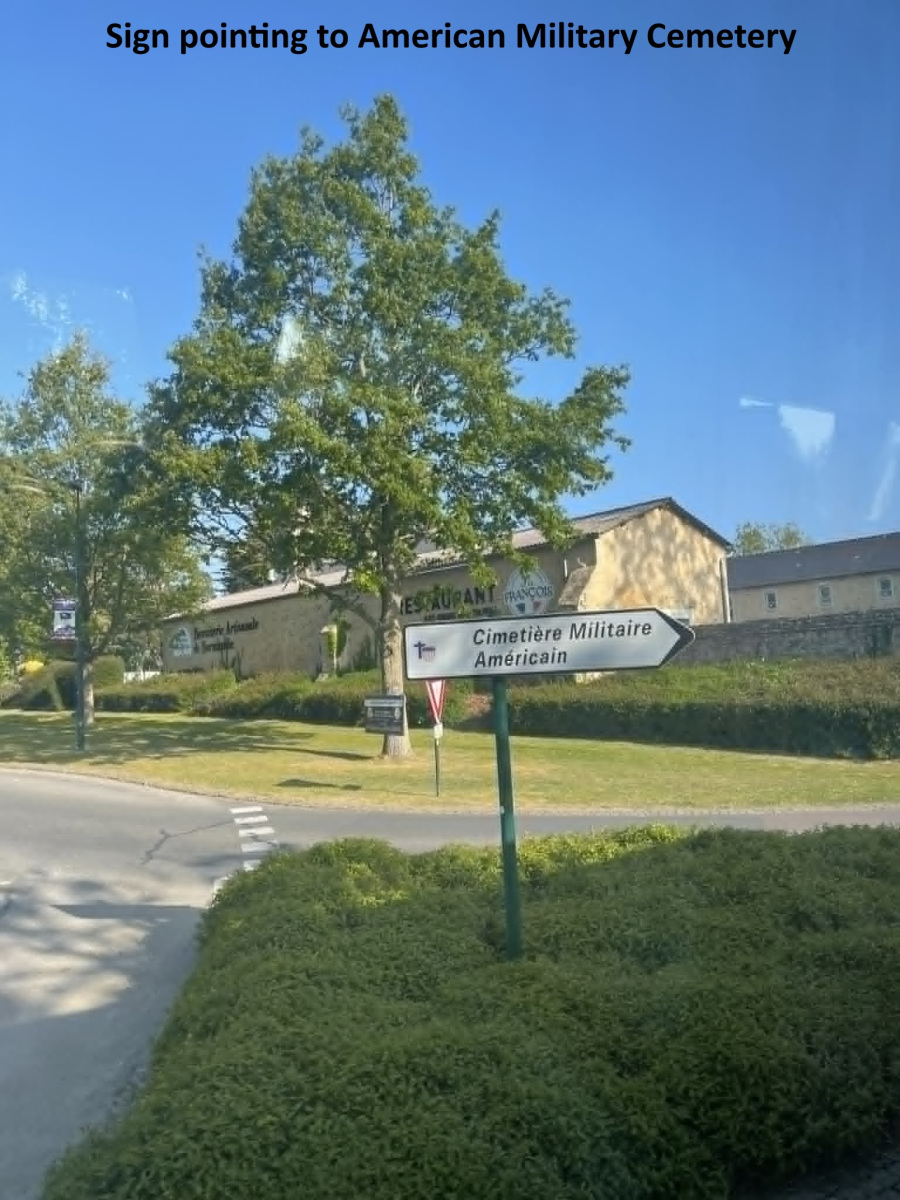
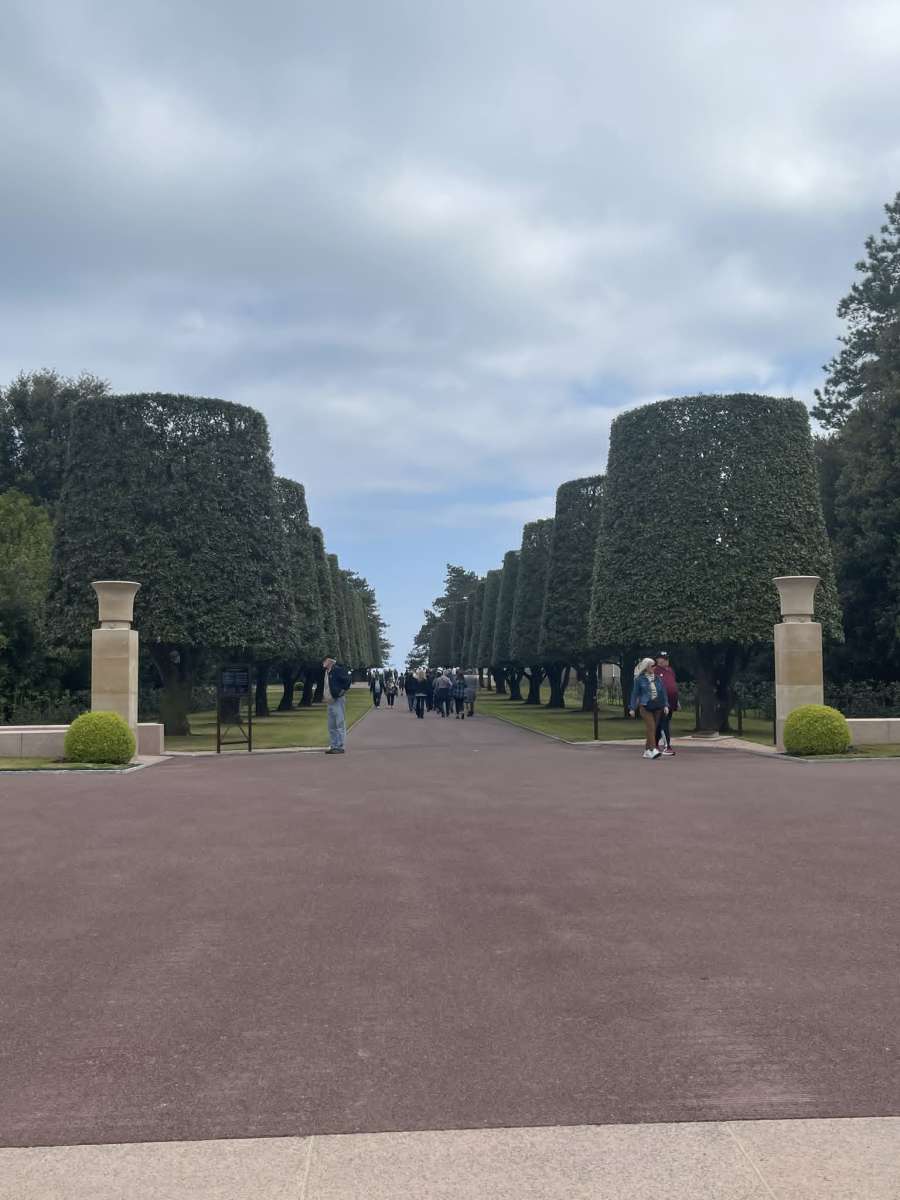
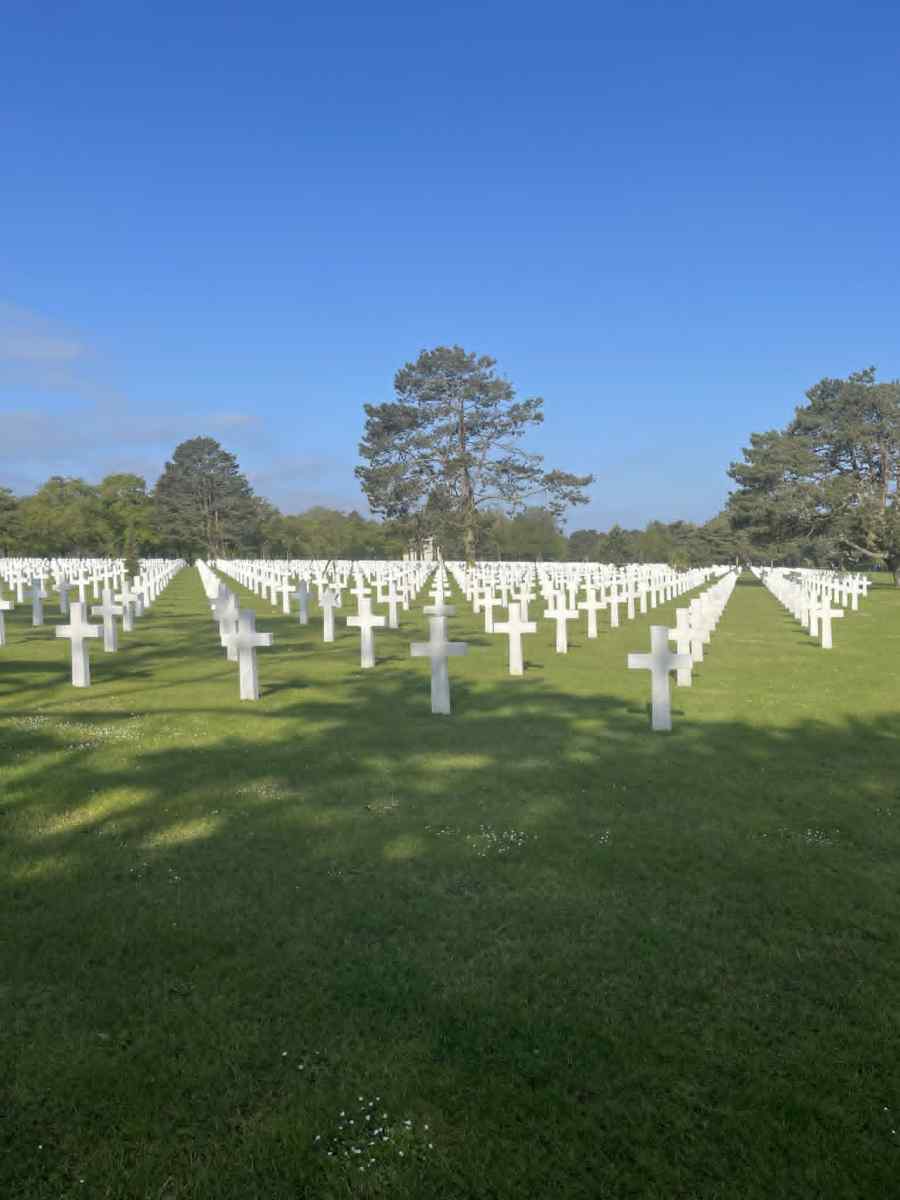
 Our bus left the Le Havre, France, cruise terminal at 7:30 a.m. Friday, headed for the American Military Cemetery, on a bluff overlooking Omaha Beach. Buried there are 9,389 American soldiers who lost their lives June 6, 1944, D-Day, and in the weeks thereafter as they fought to free Normandy, the area of North Central France named for the Normans, the North Men, the Vikings who settled there beginning in year 841. William the Conqueror was the Norman who conquered England in 1066.
To invade German-controlled France, ships full of men, supplies, and equipment can’t just sail up to a beach and start unloading. They need a port deep enough for the ship to enter and unload, and all the French deep ports were heavily fortified by the Germans.
The Americans realized that the only way to land over 1 million troops and equipment would be to create artificial ports. To accomplish this, they first had to land 156,000 American, British, and Canadian troops on the beaches of Normandy, the hard way, by putting them on little boats far out at sea. They then had to travel 15 miles in small boats, and many men and much equipment were lost before they even got to the beaches.
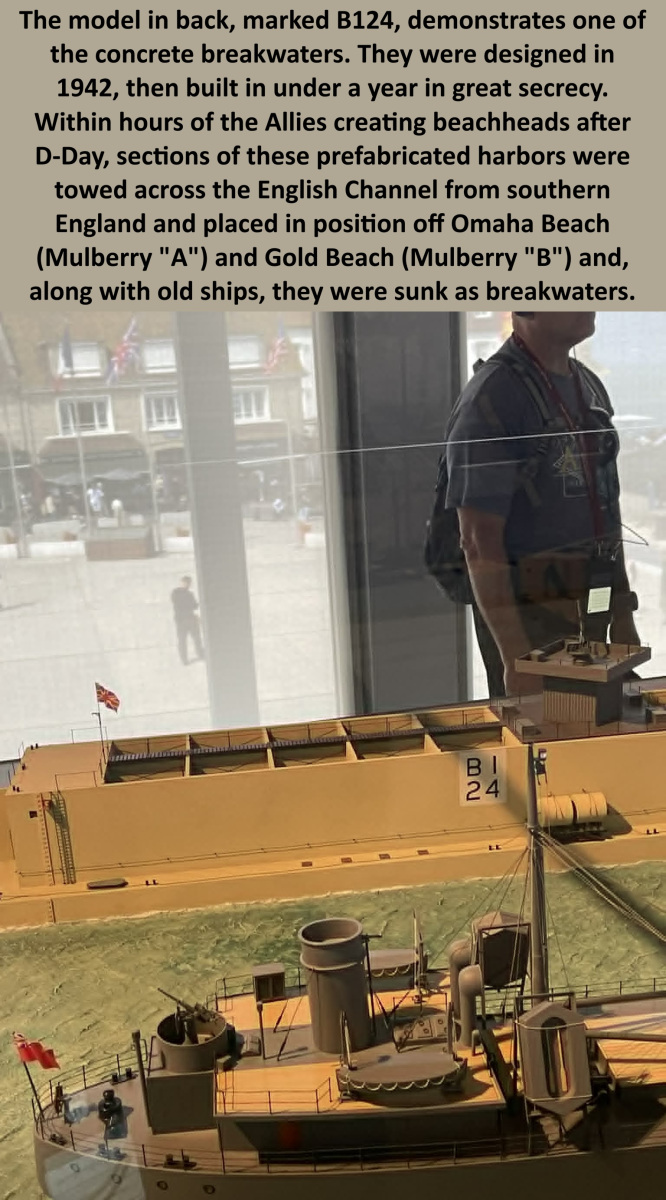
But all this was done in one day, overwhelming the German defenses in the region and gaining a foothold on continental Europe. Then, over ensuing weeks, they floated huge reinforced concrete caissons from England, where they were built, to Normandy.
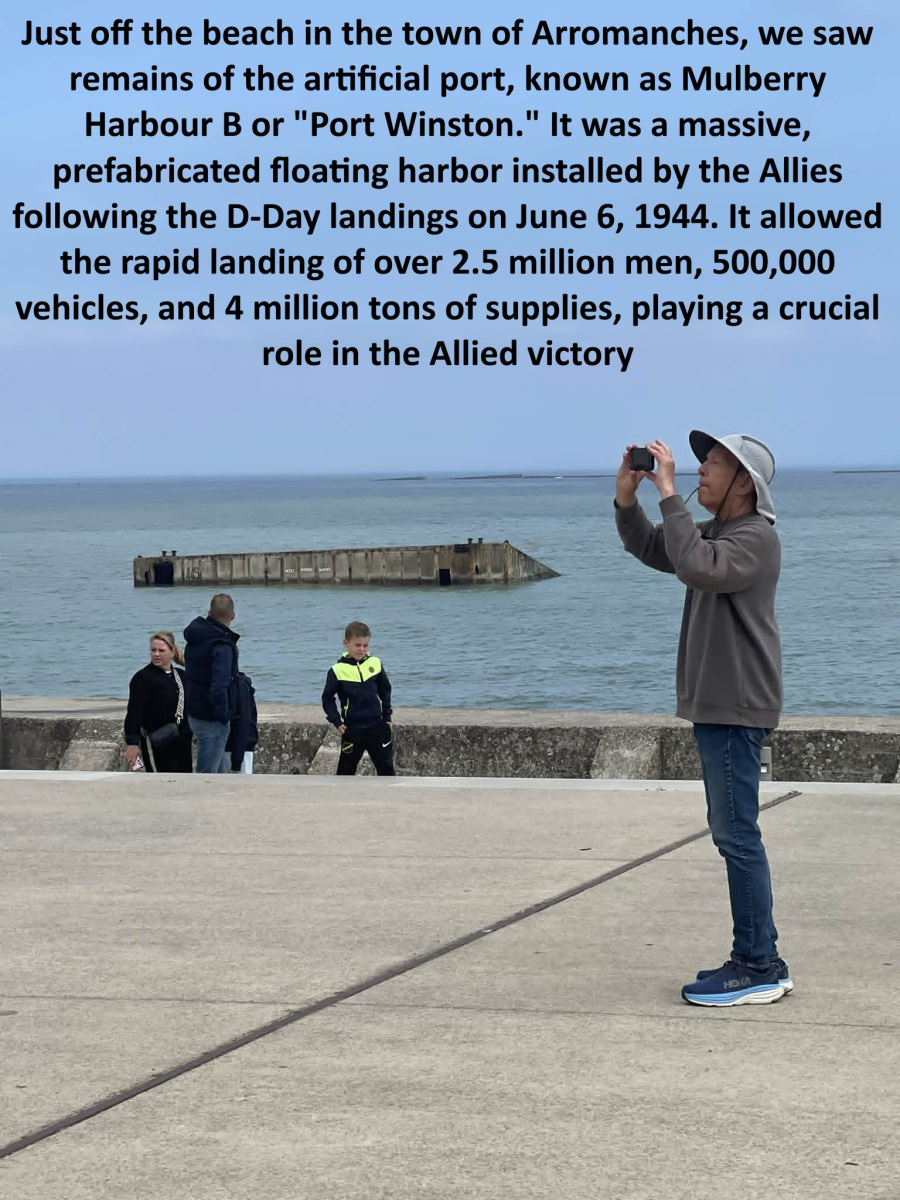
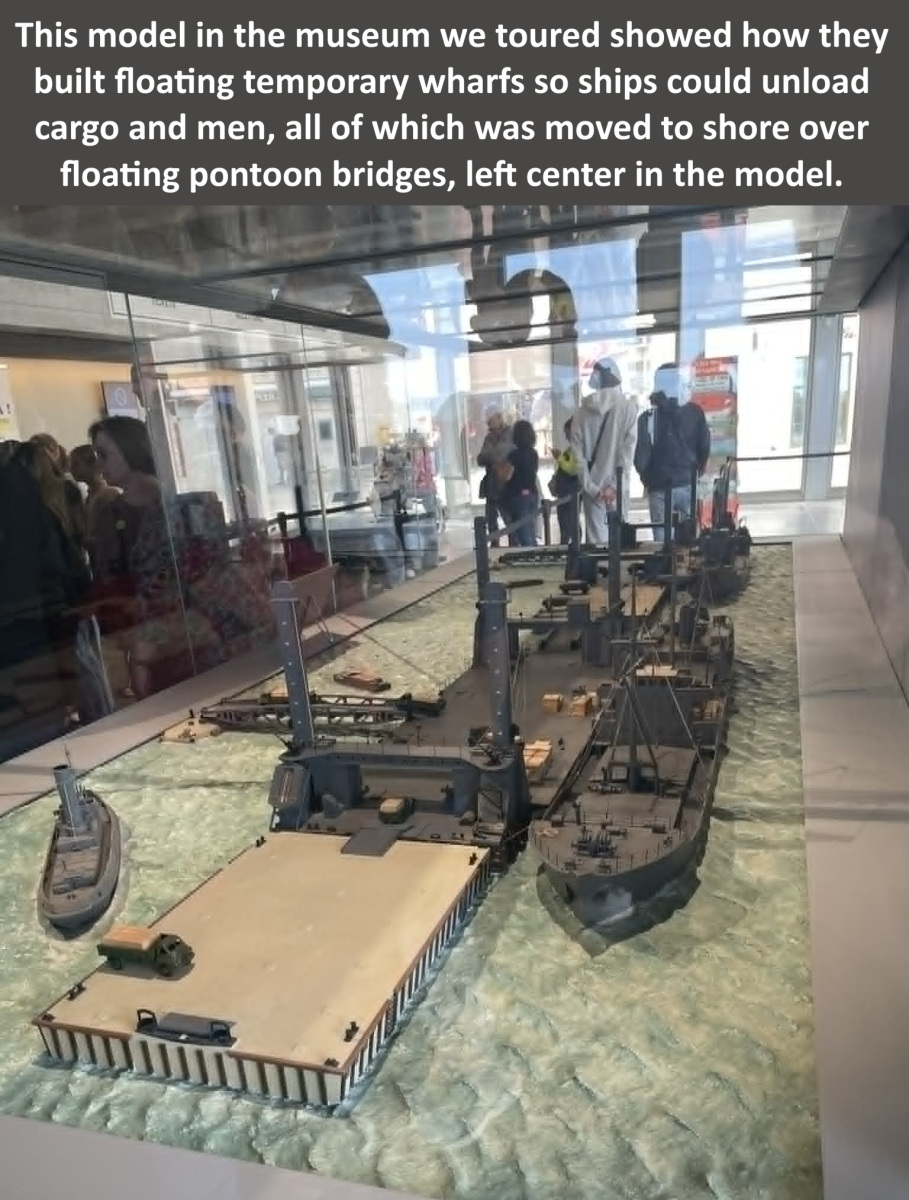
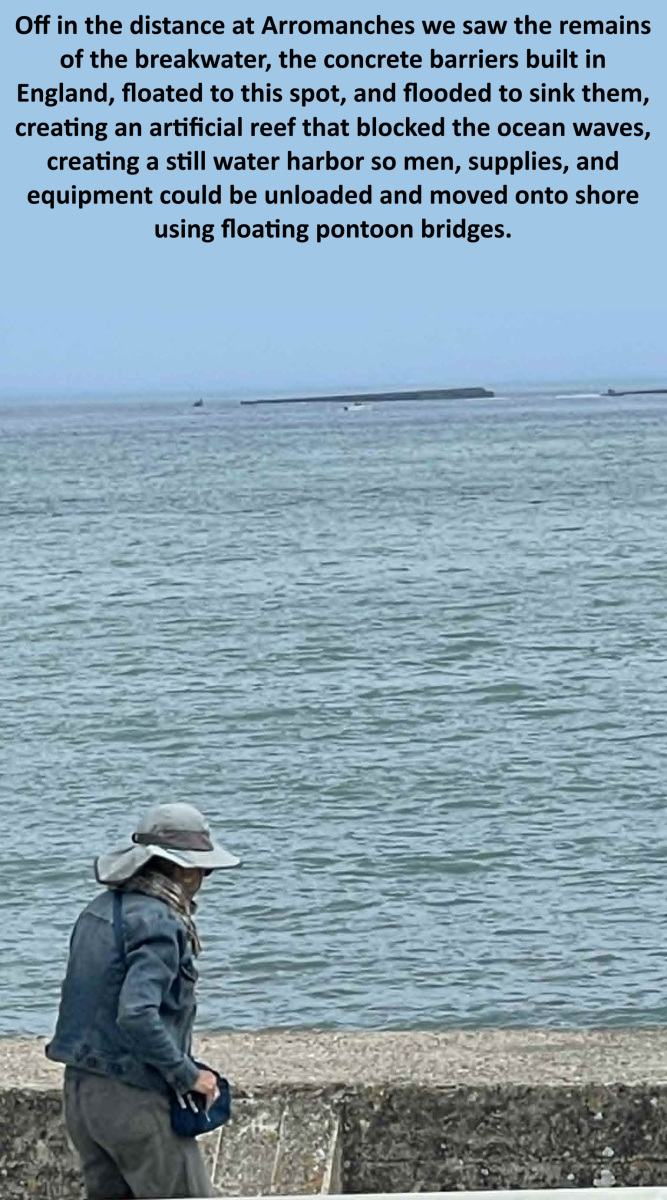
Caissons are basically hollow concrete boxes. Being water-tight, they floated and could be towed in place, then filled with water to sink them, creating a “breakwater,” a barrier against English Channel waves off the Normandy beaches, to create a still-water port. Then inside that port, they brought floating wharfs where ships could unload in the still, deep water, and they created floating pontoon bridges to carry troops, supplies and equipment from these wharfs to shore.
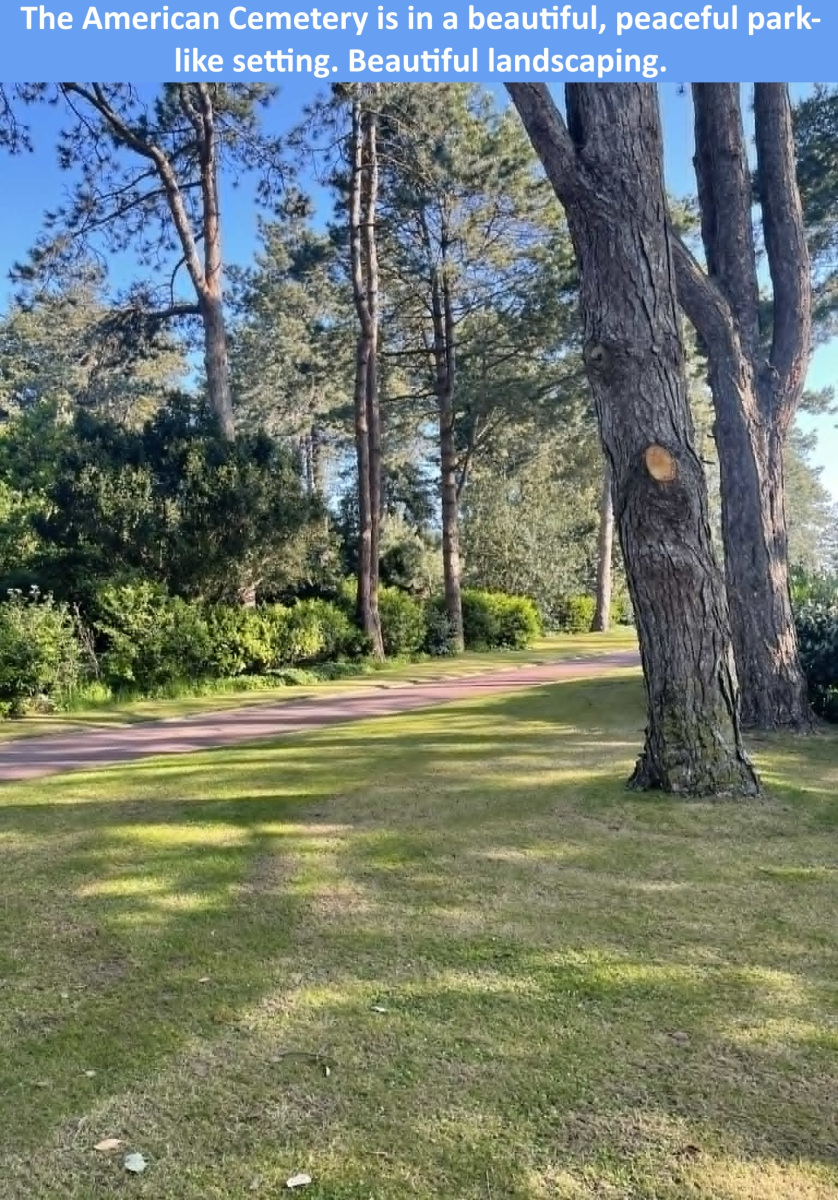
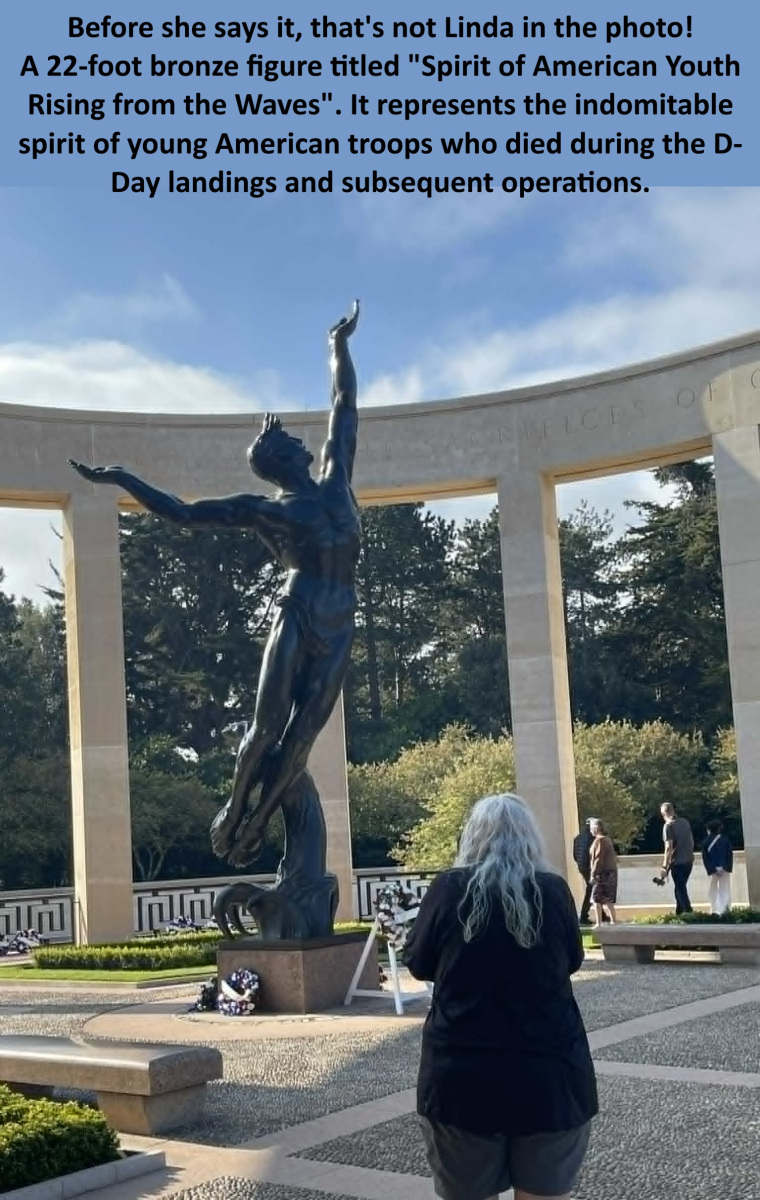
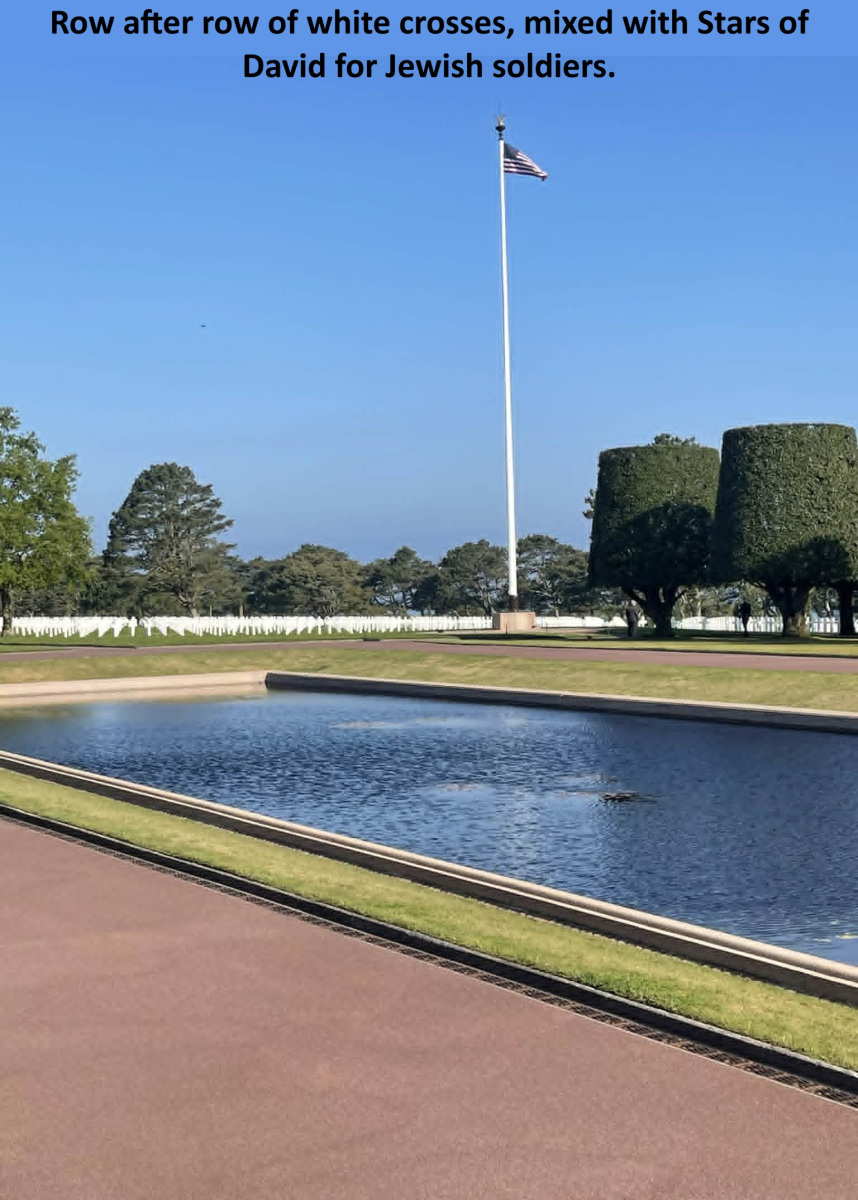
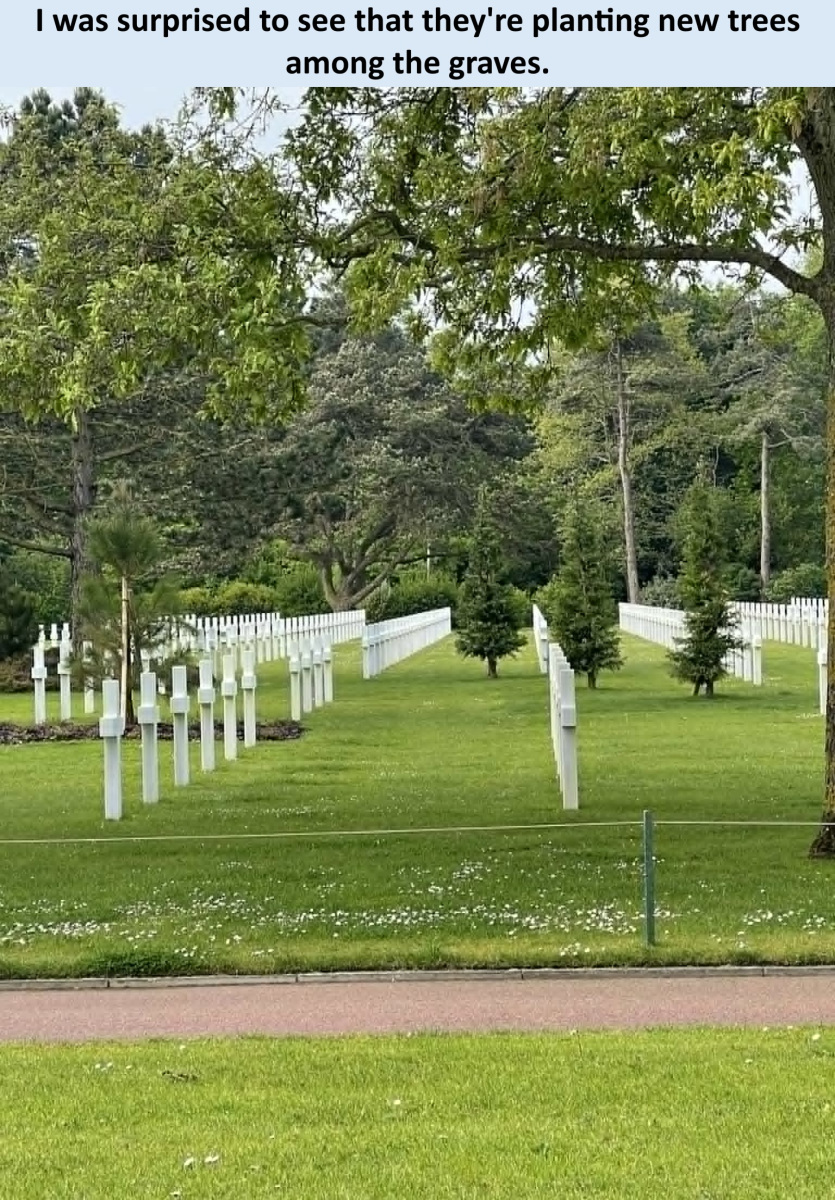
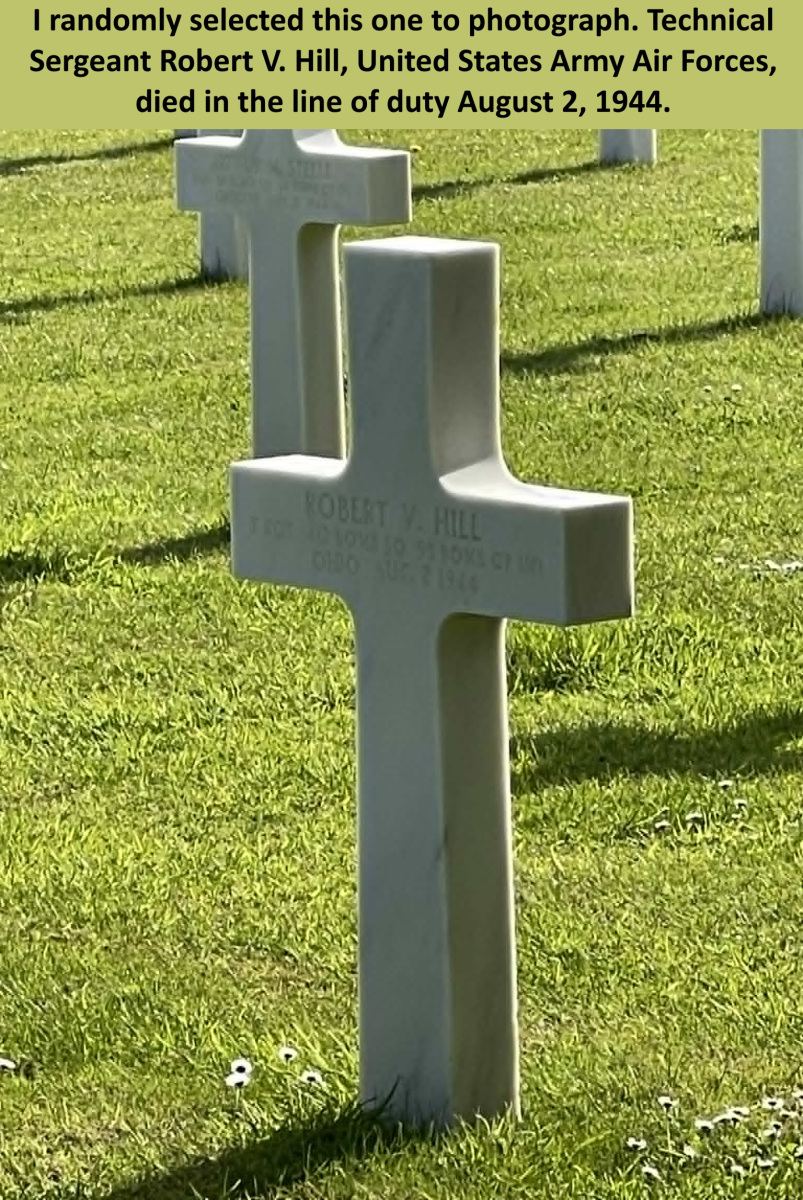
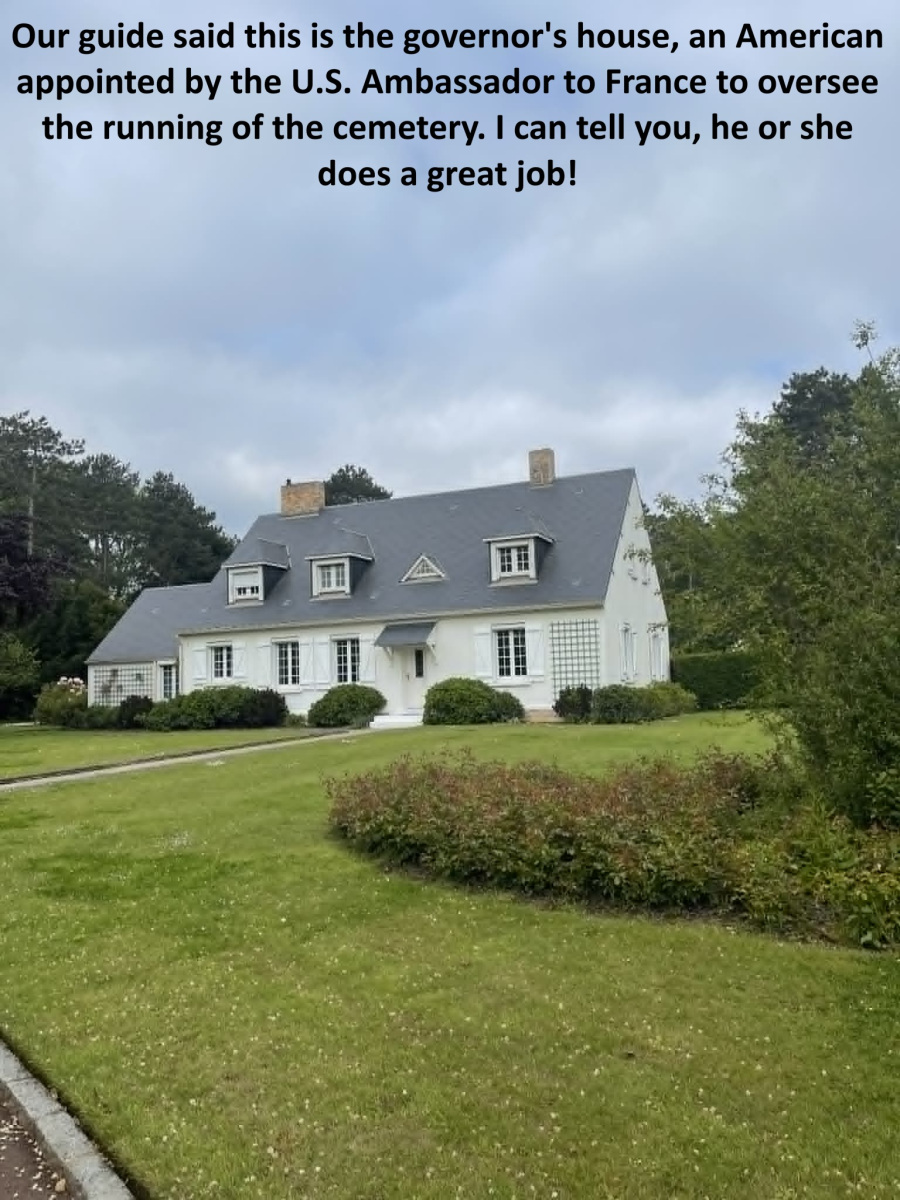
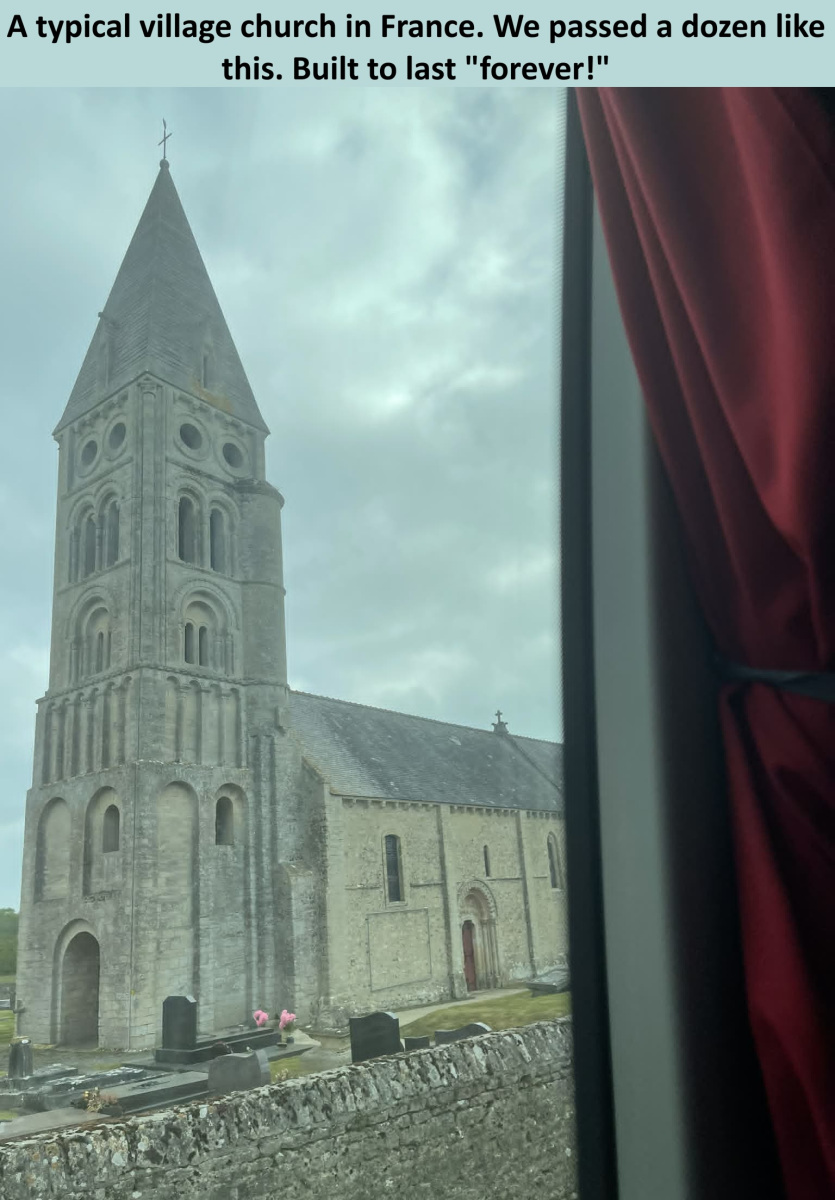
Of the Americans who died on D-Day and in the following weeks of the Normandy invasion, most were taken back home for burial. The American Cemetery holds the graves of the rest. France gave the land to the US for the cemetery, and it’s maintained and overseen by Americans. It’s in a beautiful setting. See the uploaded photo captions for more of the story.



American Cemetery Video
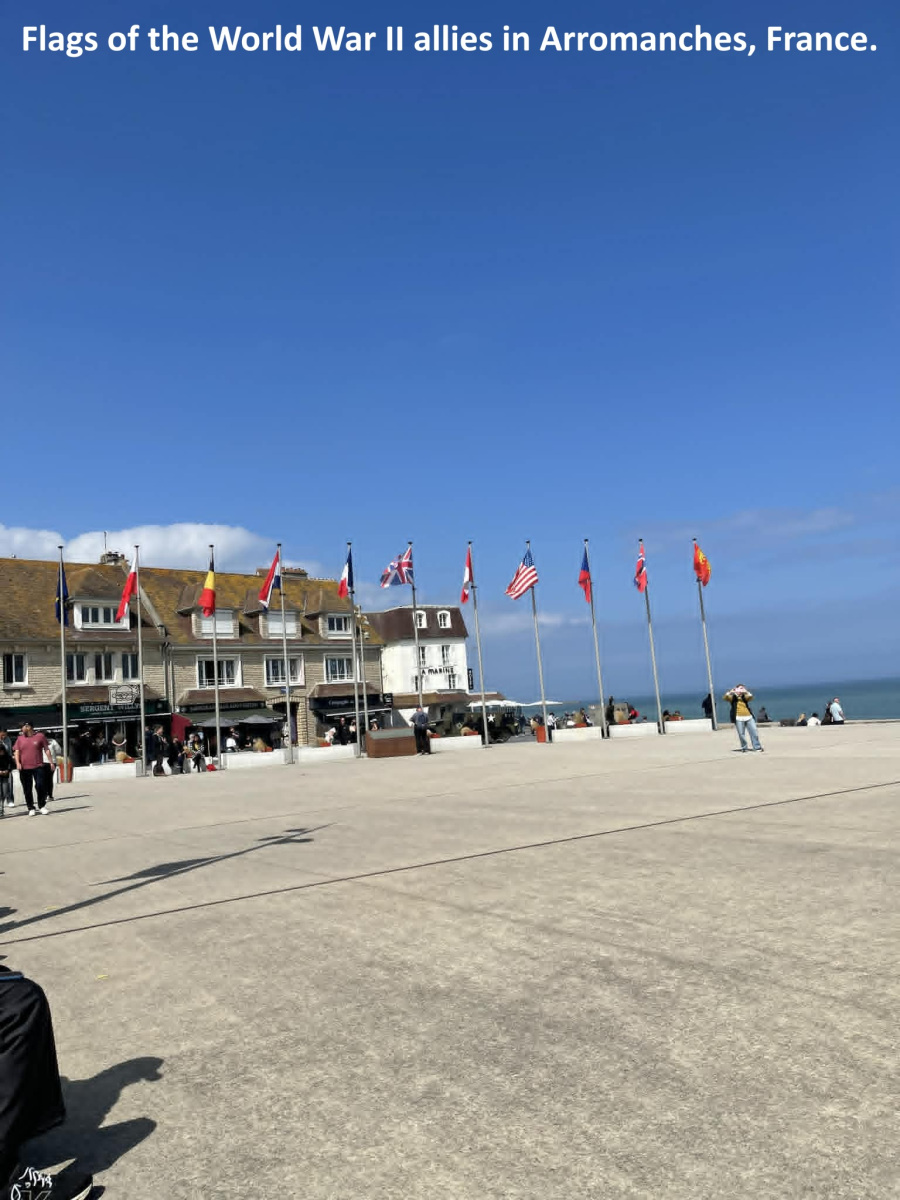
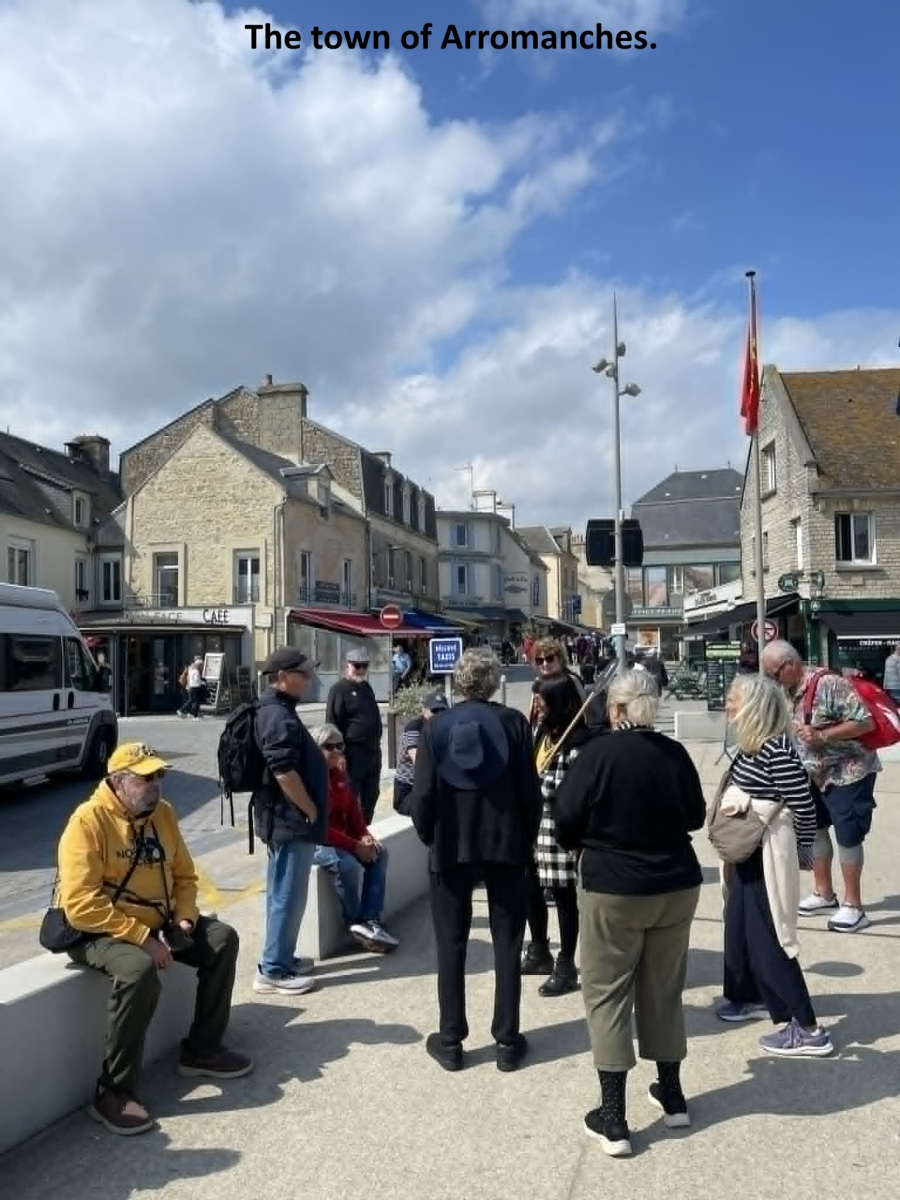
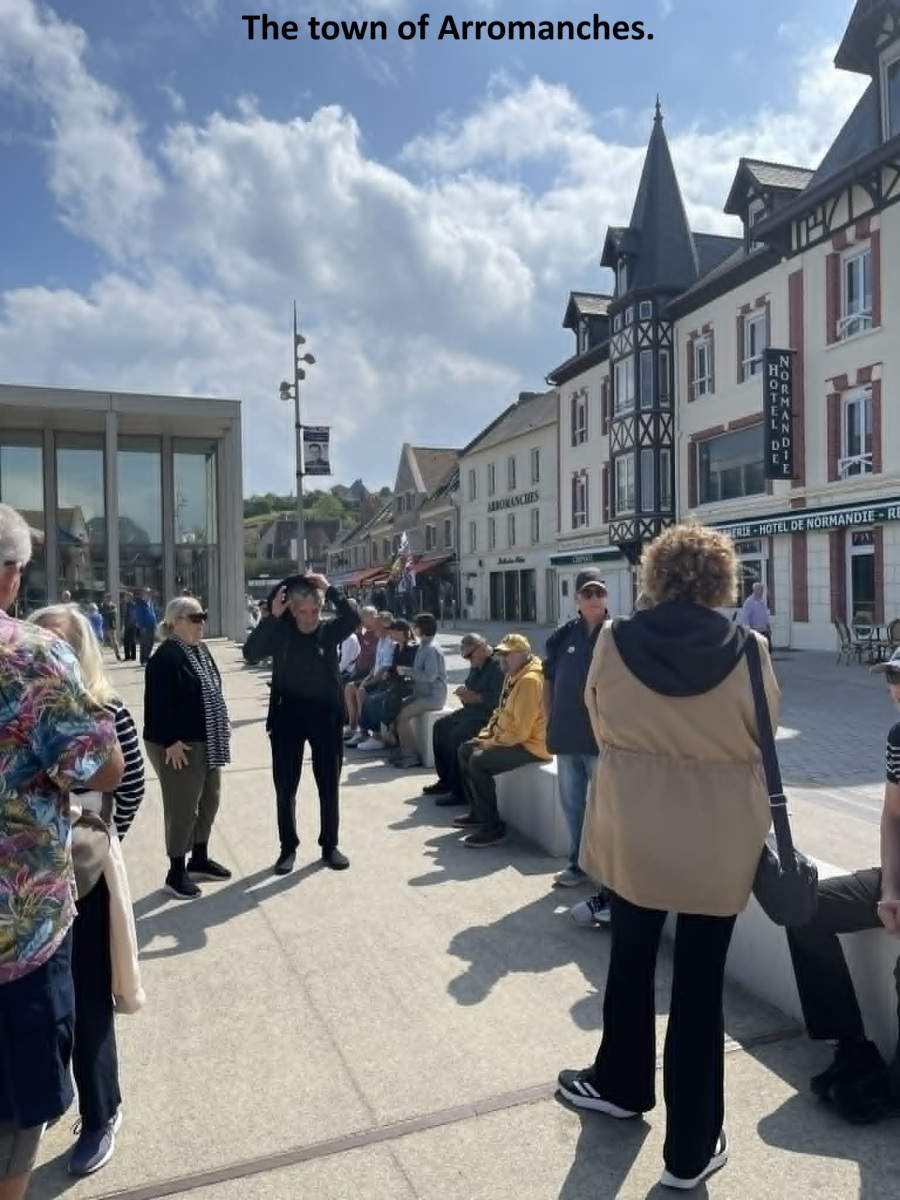
We spent about an hour free to walk about the cemetery, and to look down on Omaha Beach, then we headed to the town of Arromanches, where several segments of the artificial breakwaters still remain to be seen. A similar artificial port was also created at Omaha Beach, but it is long gone.
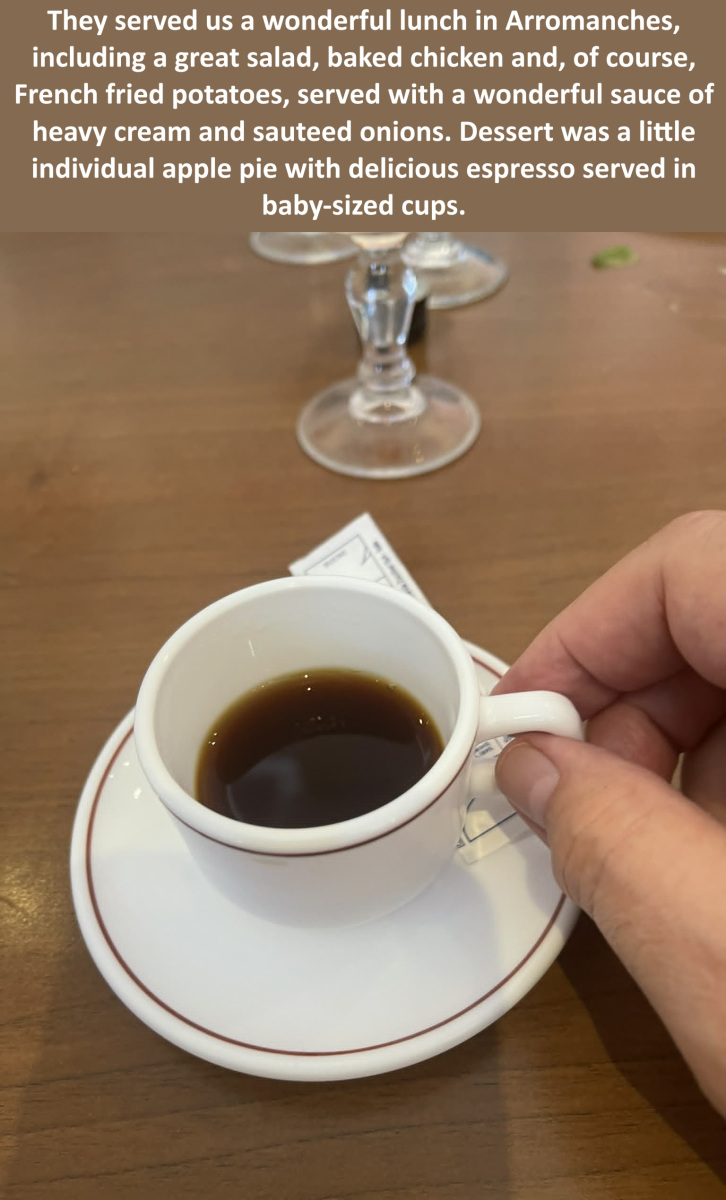
We toured an excellent D-Day museum there, then were treated to a wonderful lunch of French cooking! Normandy is known for it’s cream sauces, and I’m known for loving them, so I cleaned my plate, and did my part to finish off the bottle of delicious French wine they placed on our table.
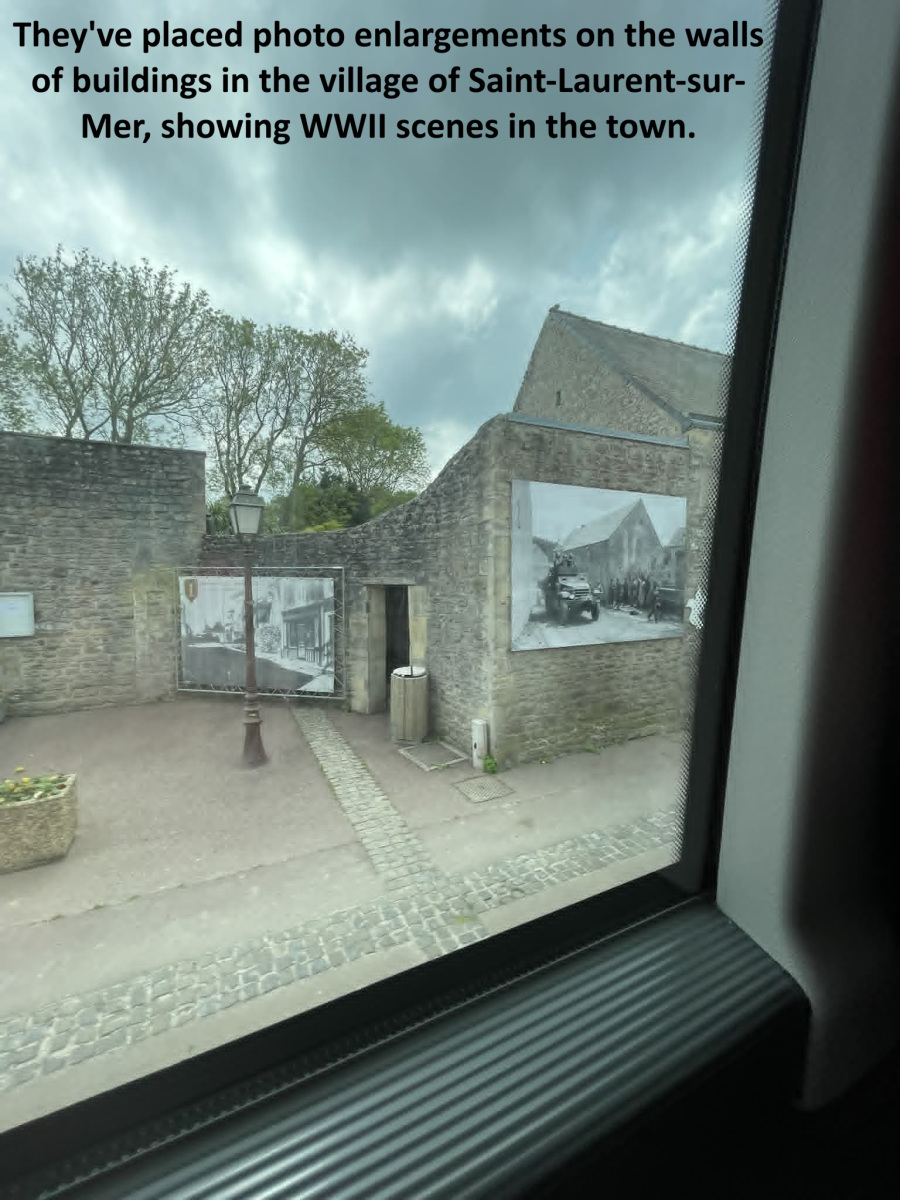
Omaha Beach Video
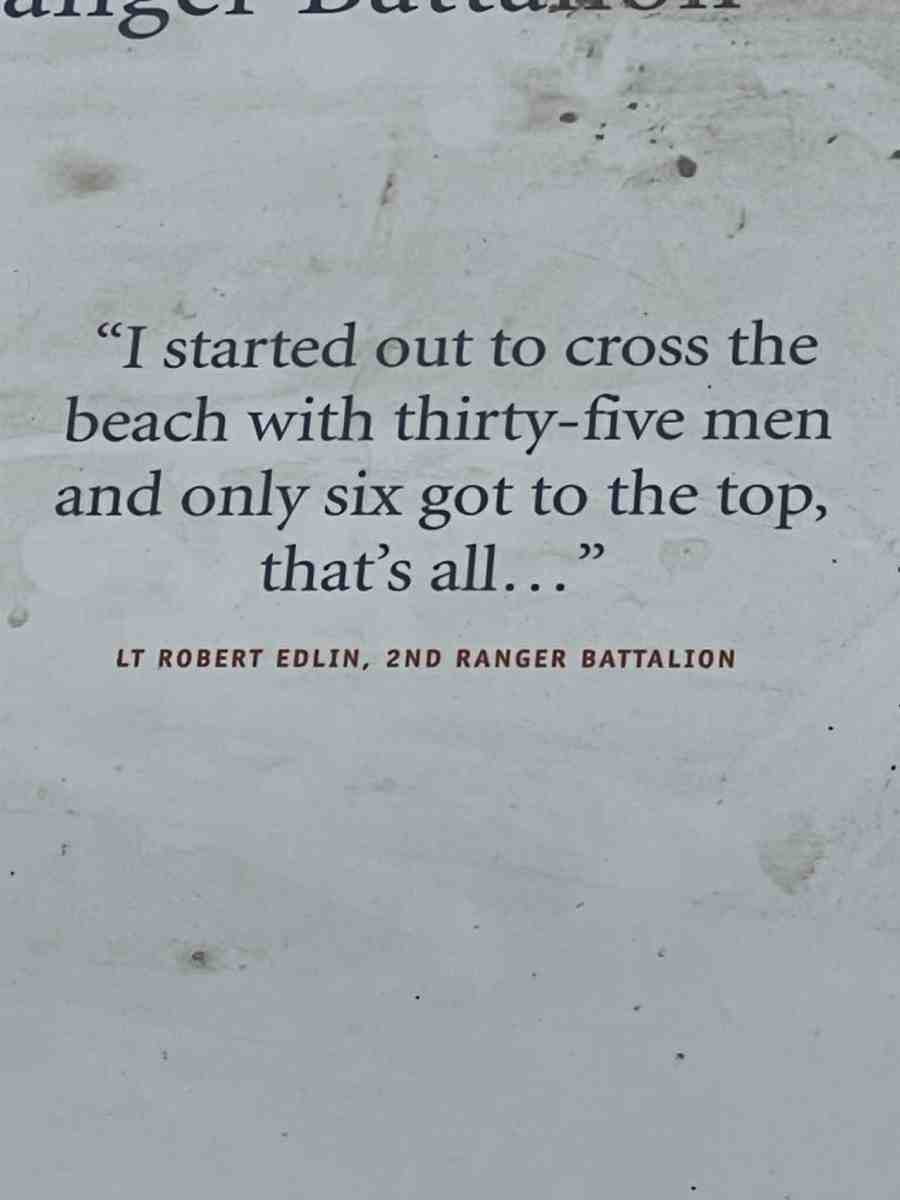
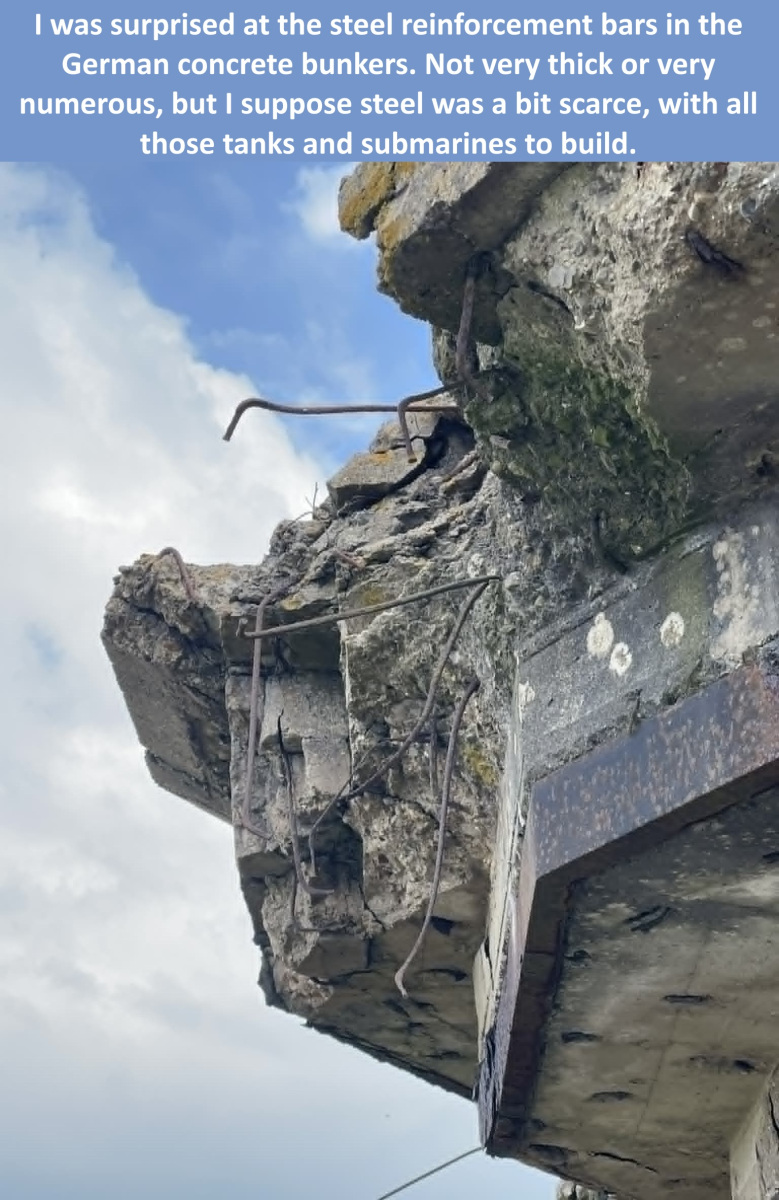
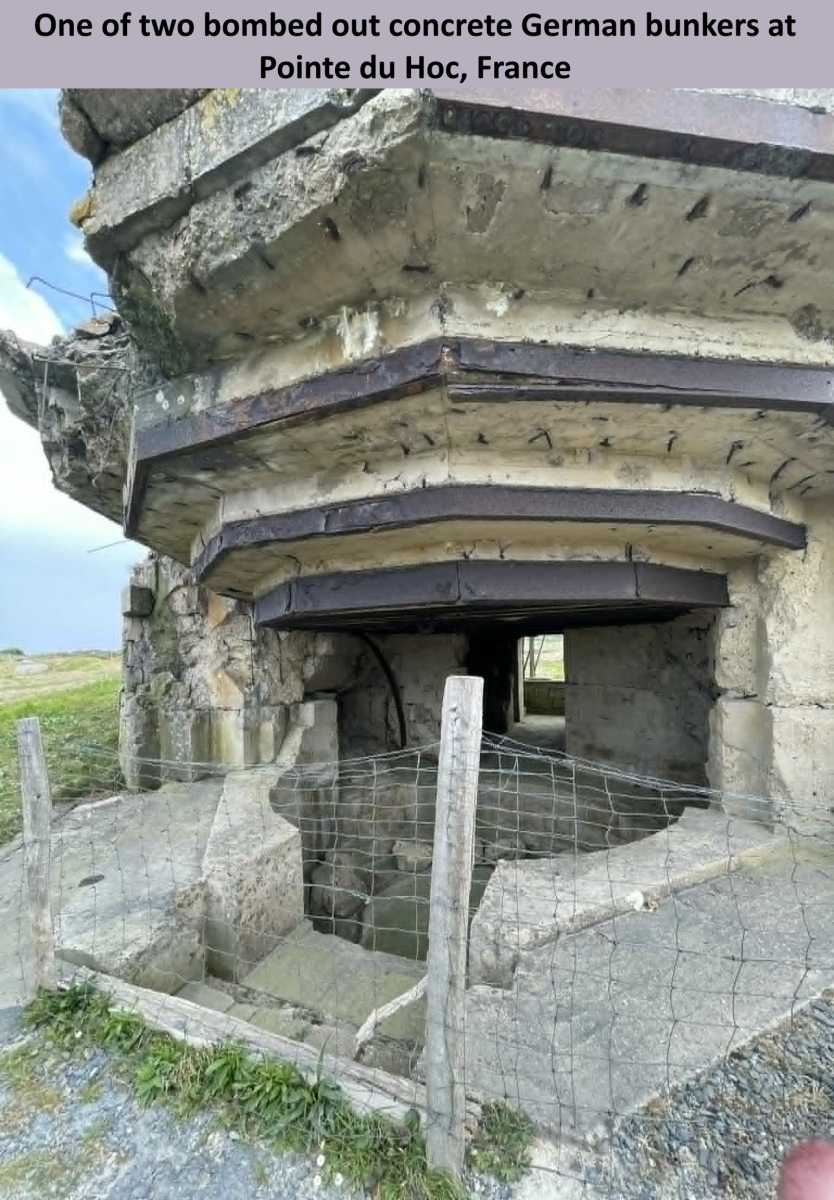
After lunch, we were taken down to sea level and allowed to walk some on the huge, long Omaha beach, where so much history occurred long ago. After that, they took us to some of the German gun emplacements /bunkers that remain on a high cliff at Pointe du Hoc. The Germans had six 155 mm (6-inch) guns in 2 bunkers on Pointe du Hoc, and from there the guns could protect both Omaha and Utah beaches, as well as firing nearly 15 miles at ships at sea. The Germans were in the process of building 6 gun bunkers at Pointe du Hoc, but they only had 2 finished on D-Day.
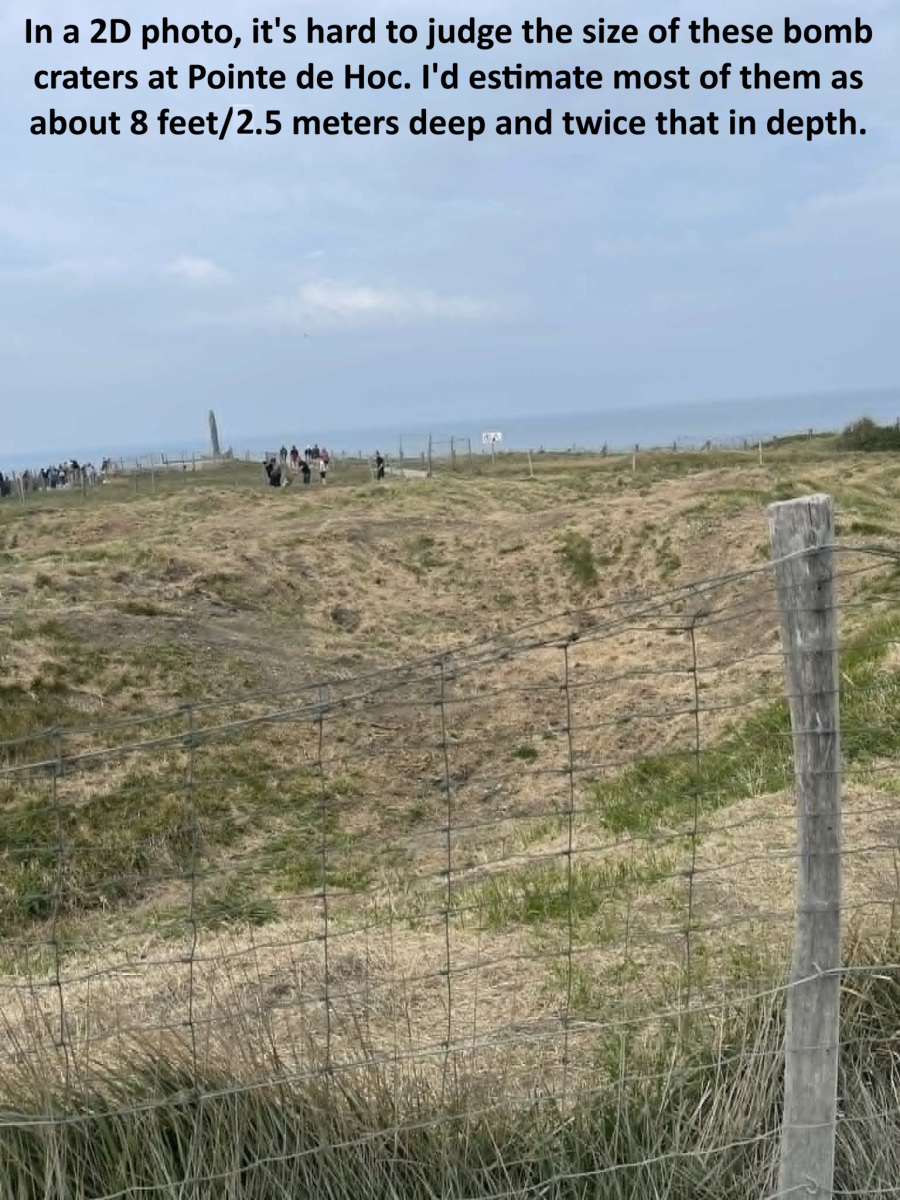
So one of the first jobs of the D-Day invasion was to silence these big guns. They started with aerial bombing, and the big bomb craters are still there at Pointe du Hoc. I’d say the craters are about 8 feet/2.5 meters deep and twice that in diameter. Next paratroopers were dropped with the mission of taking the guns and deactivating them, using thermite grenades that burn hot enough to melt the gun metal, making them unusable.
When the paratroopers finally got to the gun bunkers, they found the guns were gone! The Germans had moved them, hidden them in nearby bushes to protect them from the bombing! The soldiers hunted, finally found the guns, and deactivated them.