Bound for French Polynesia
13 February 2026
Yes, it’s Friday the 13th, so I’m examining our lifeboats. The Queen Mary 2 has 22 lifeboats, with each boat capable of holding 150 people. Additionally, the vessel is equipped with 60 barrels that open to make life rafts, and 2 fast rescue boats, ensuring total lifesaving capacity exceeds 100% of the maximum passenger and crew count, which is around 4,300 to 4,400.
The lifeboats carry enough fuel to travel about 250 miles, so if we have to use them, we’ll be depending on rescue from a larger ship, rather than using the lifeboat to travel to land somewhere. Cruise ship lifeboats are fully equipped with survival essentials for at least 48 hours, featuring 3 liters of water and 2,400 calories of food per person. They include engines for propulsion, flares/smoke signals for signaling, first-aid kits, seasickness medication, oars, fishing gear, and thermal protective aids (I assume that means blankets). Hoping we’re not left asea long enough to need that fishing gear!
So if we have to take to the lifeboats, it won’t be pleasant, but better than being in a life raft, or afloat with a life preserver! For comparison to our modern times, note that after being set adrift following the Bounty mutiny on April 28, 1789, Captain William Bligh navigated a 23-foot open ship’s boat approximately 3,600 to 4,000 nautical miles (roughly 6,500–7,400 km) to safety. Over 47 days, he led 18 loyal crewmen from Tonga to Timor, arriving on June 14, 1789, in one of history’s greatest survival voyages.
My glass of wine and I spent a long time on my balcony last night, watching the lights of Hawaii’s Big Island fade into the distance, knowing I won’t see anything but water from my balcony for the next 5 days, assuming our navigator can find Tahiti. So far he’s been perfect!
14 February 2026
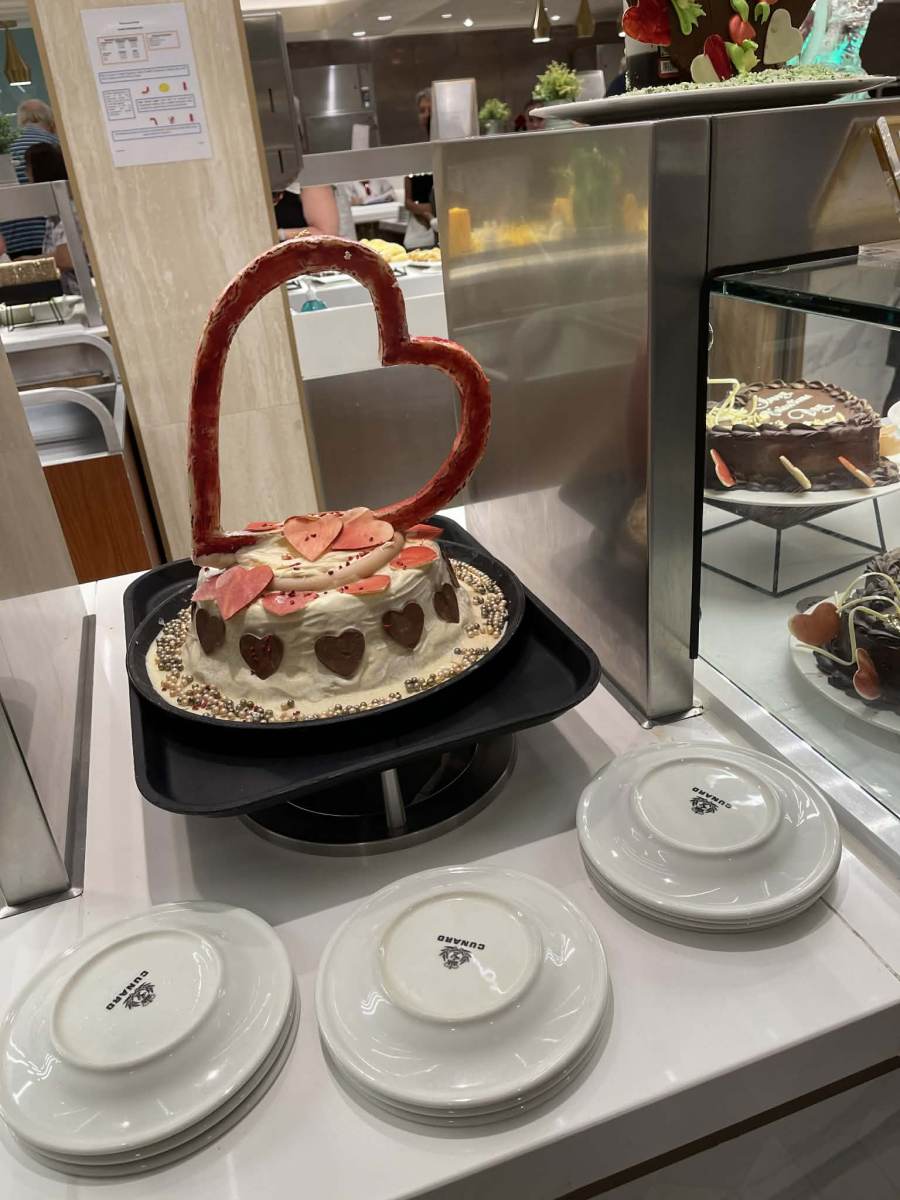
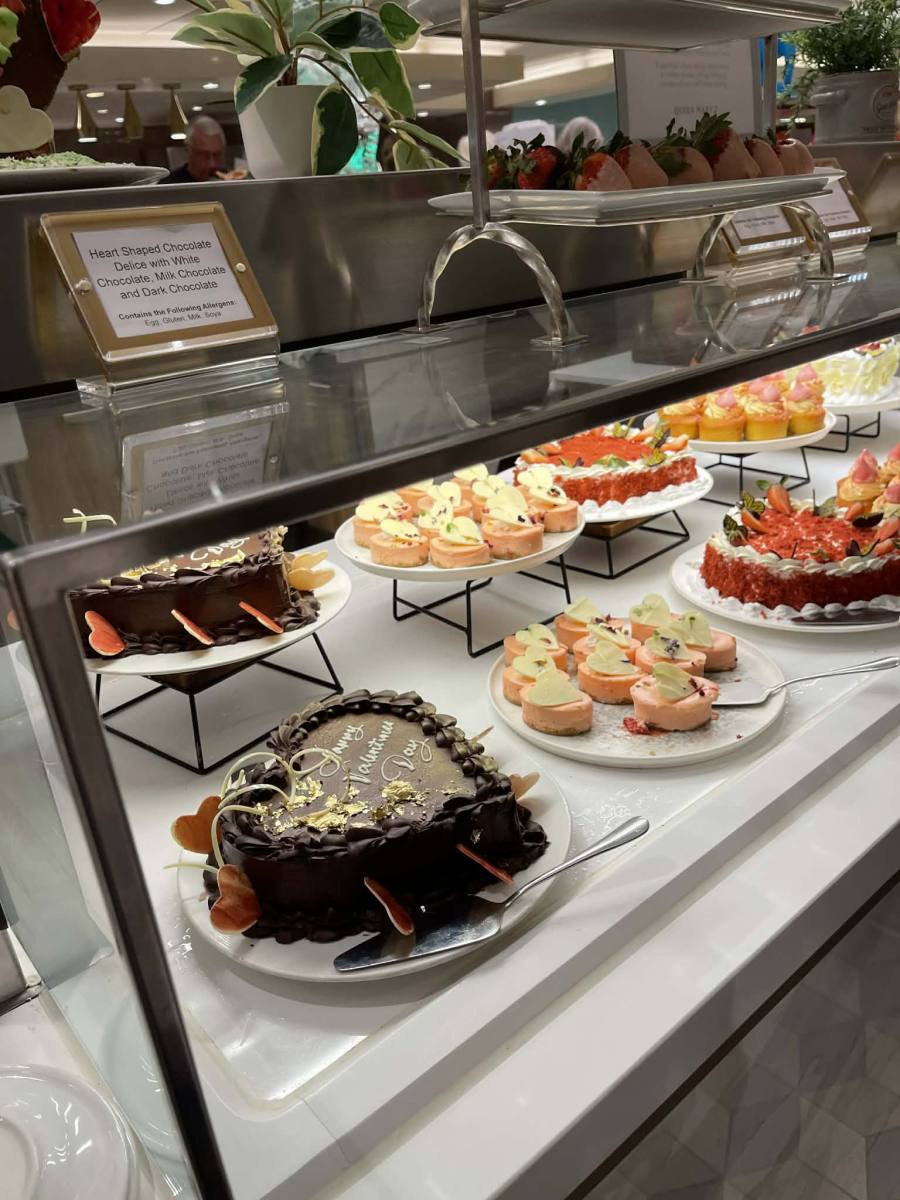
Happy Valentine’s Day. I washed clothes this morning, and a German guy in the launderette with me wished me Happy Valentine’s Day. It’s a world-wide floral conspiracy! Everything was hearts and love today in the buffet. I never get the stuff. I’ve never had a sweet tooth, never craving sweets but preferring the savory, particularly chips and dips! But I can admire the artistry of the desserts, even if I don’t eat them.
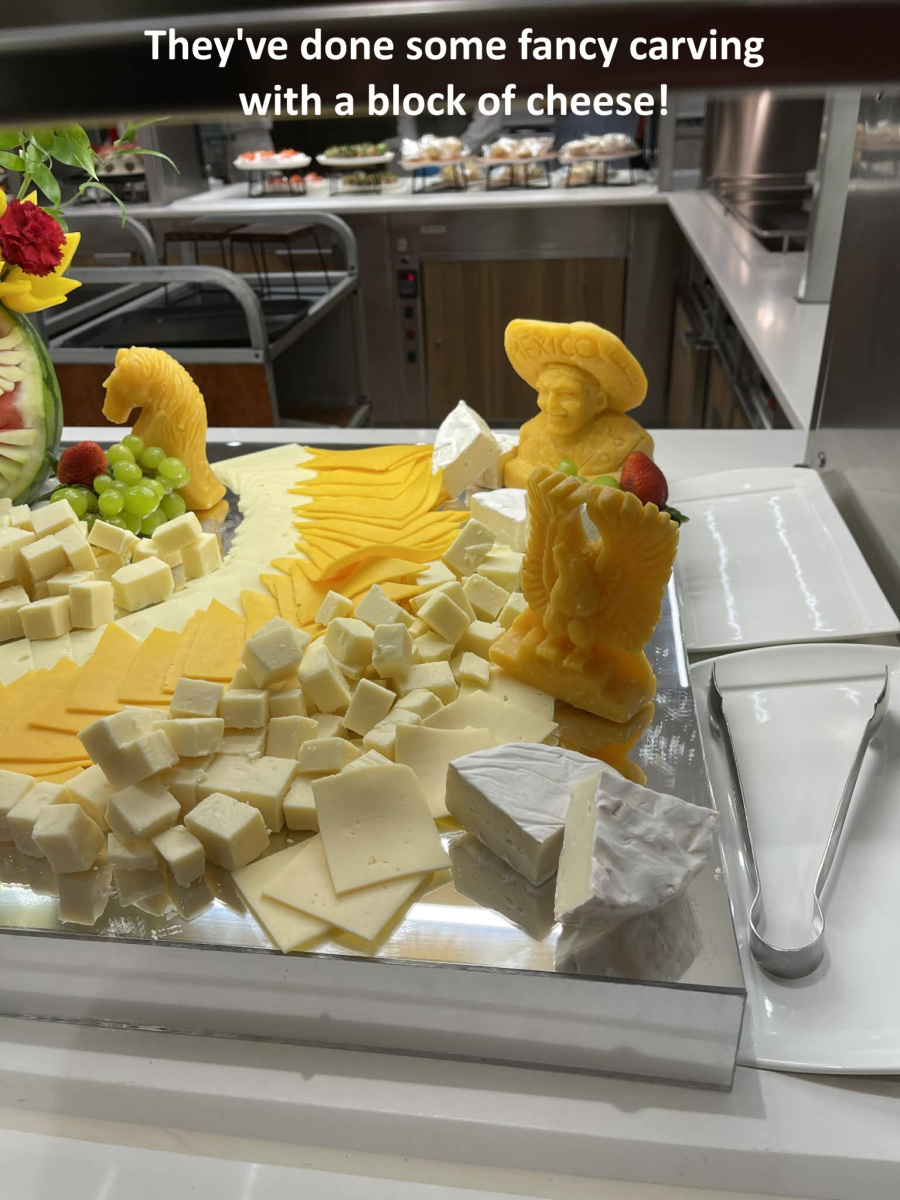
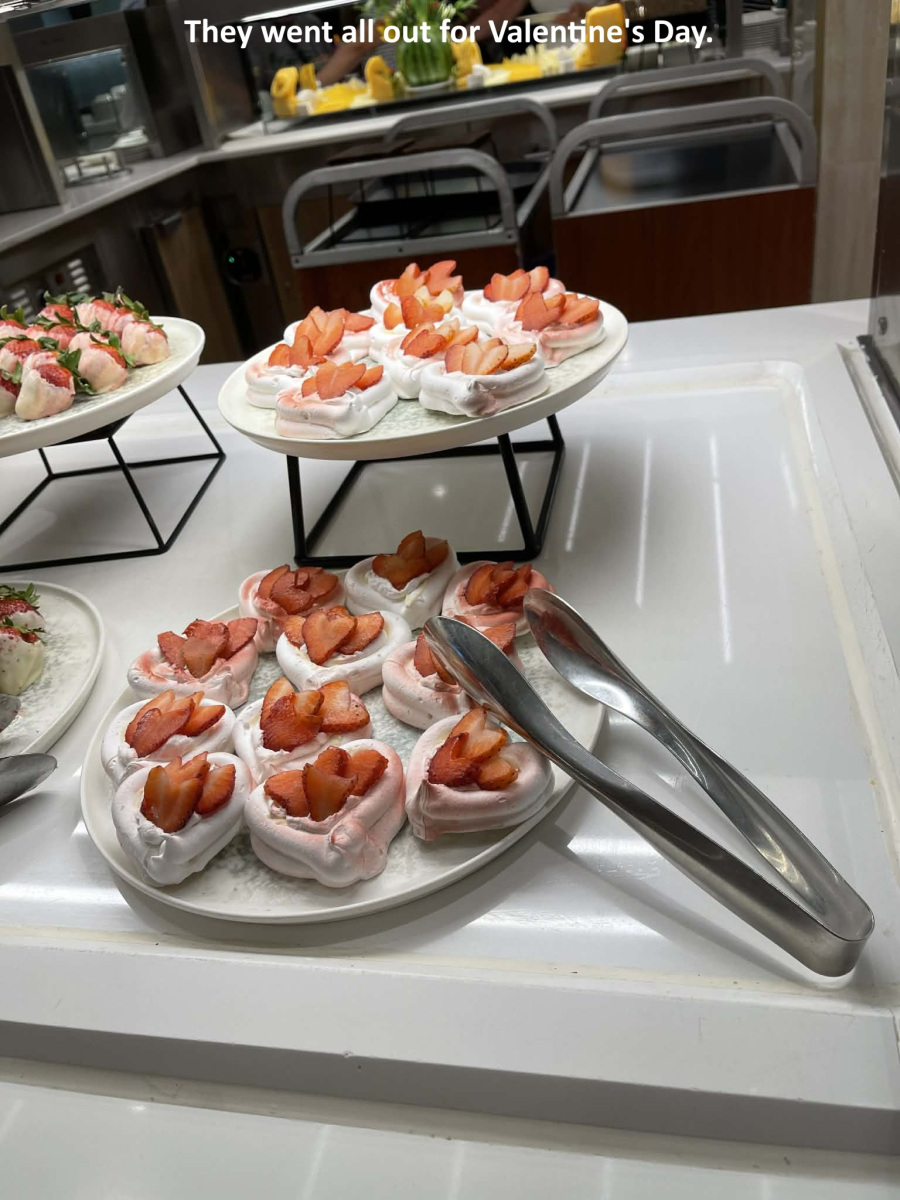
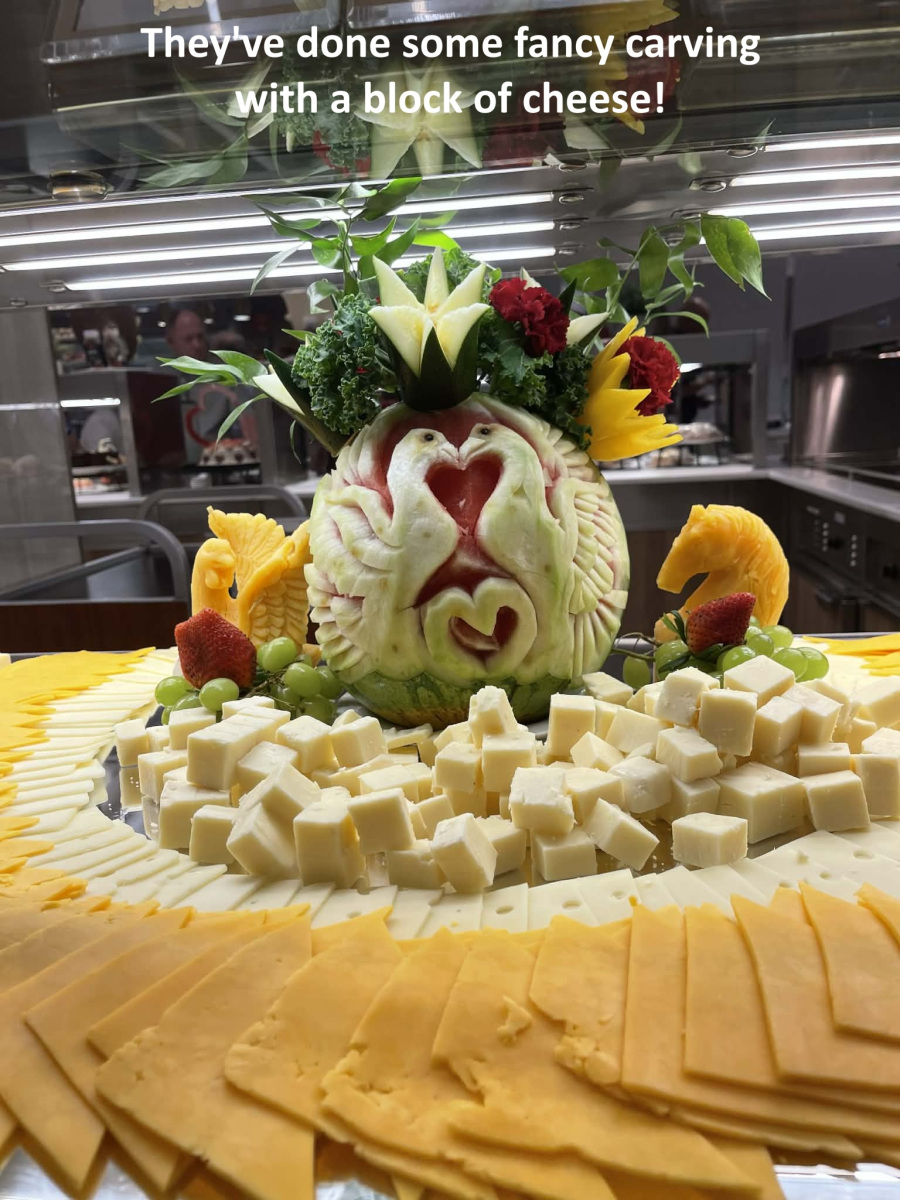
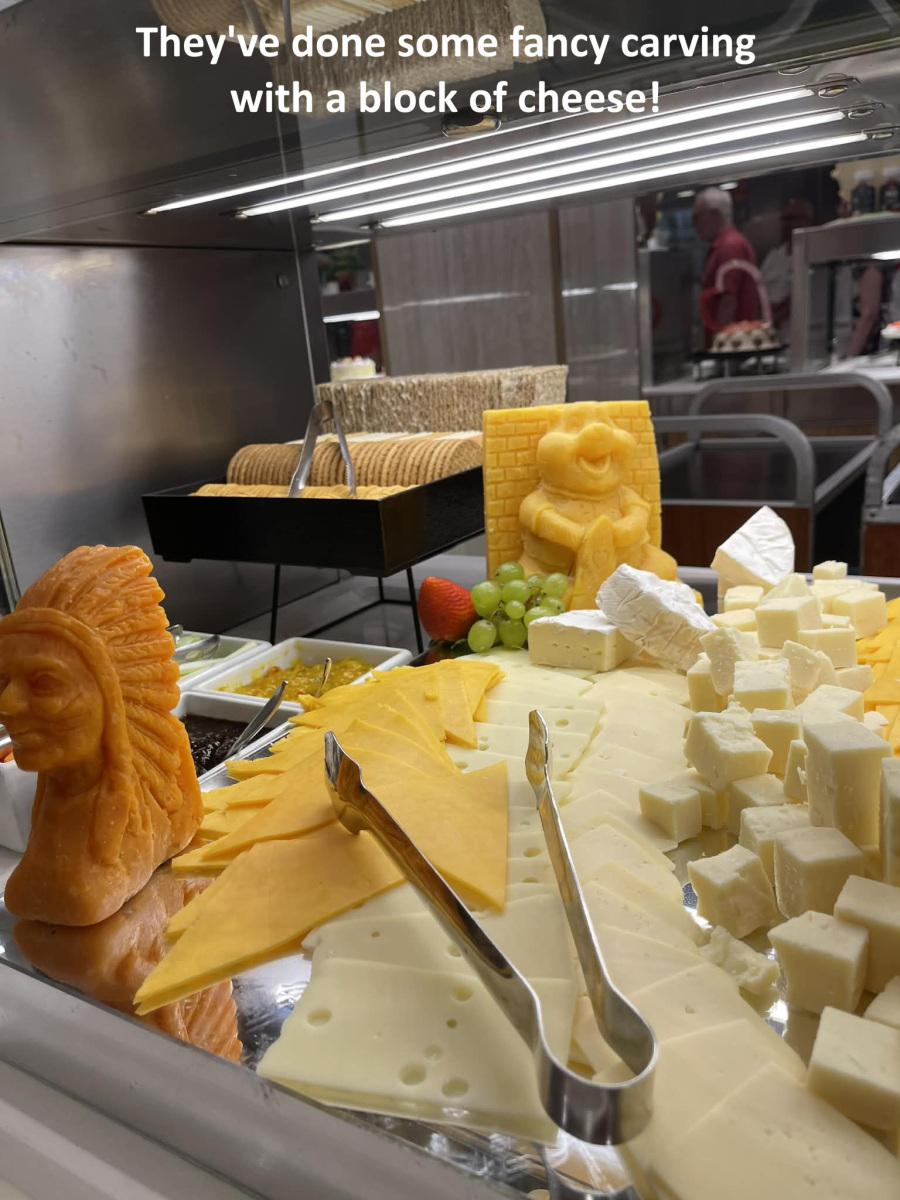
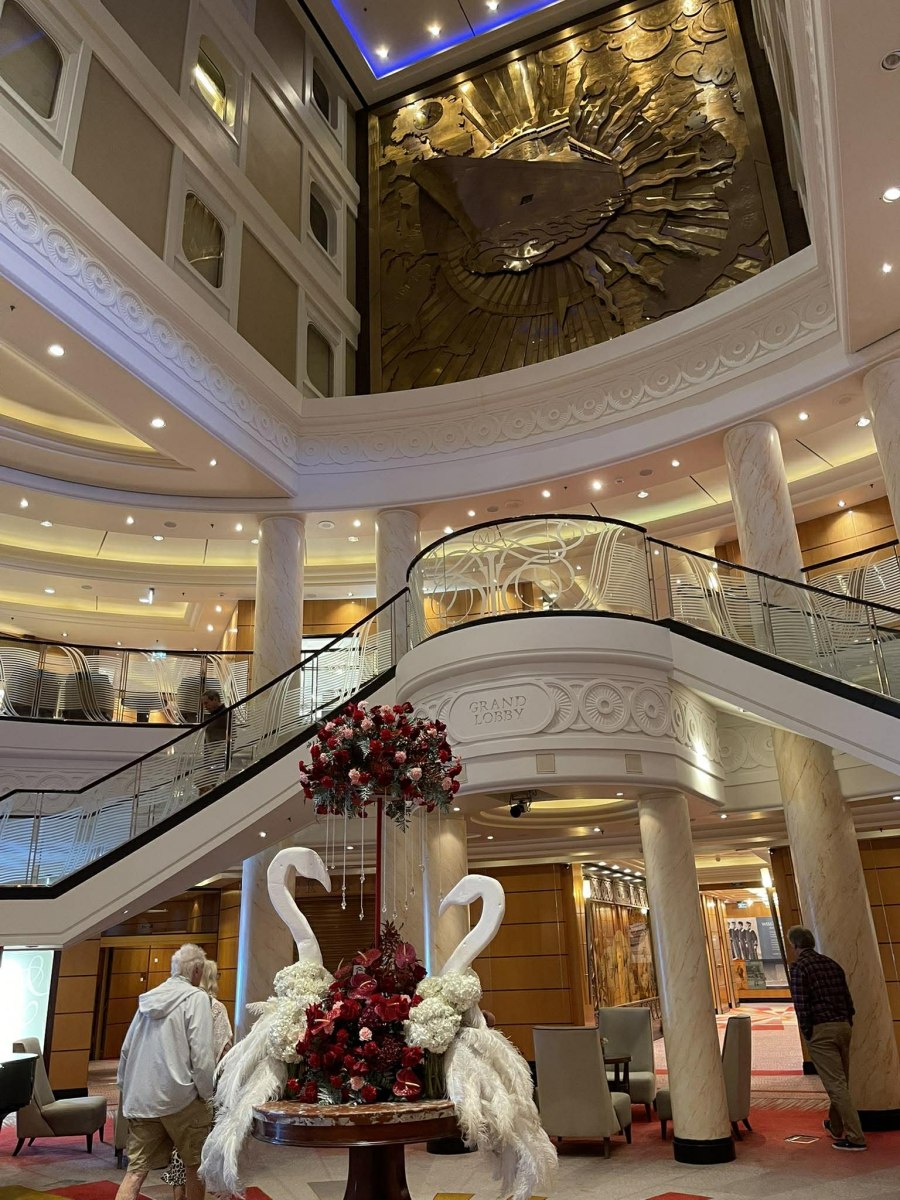
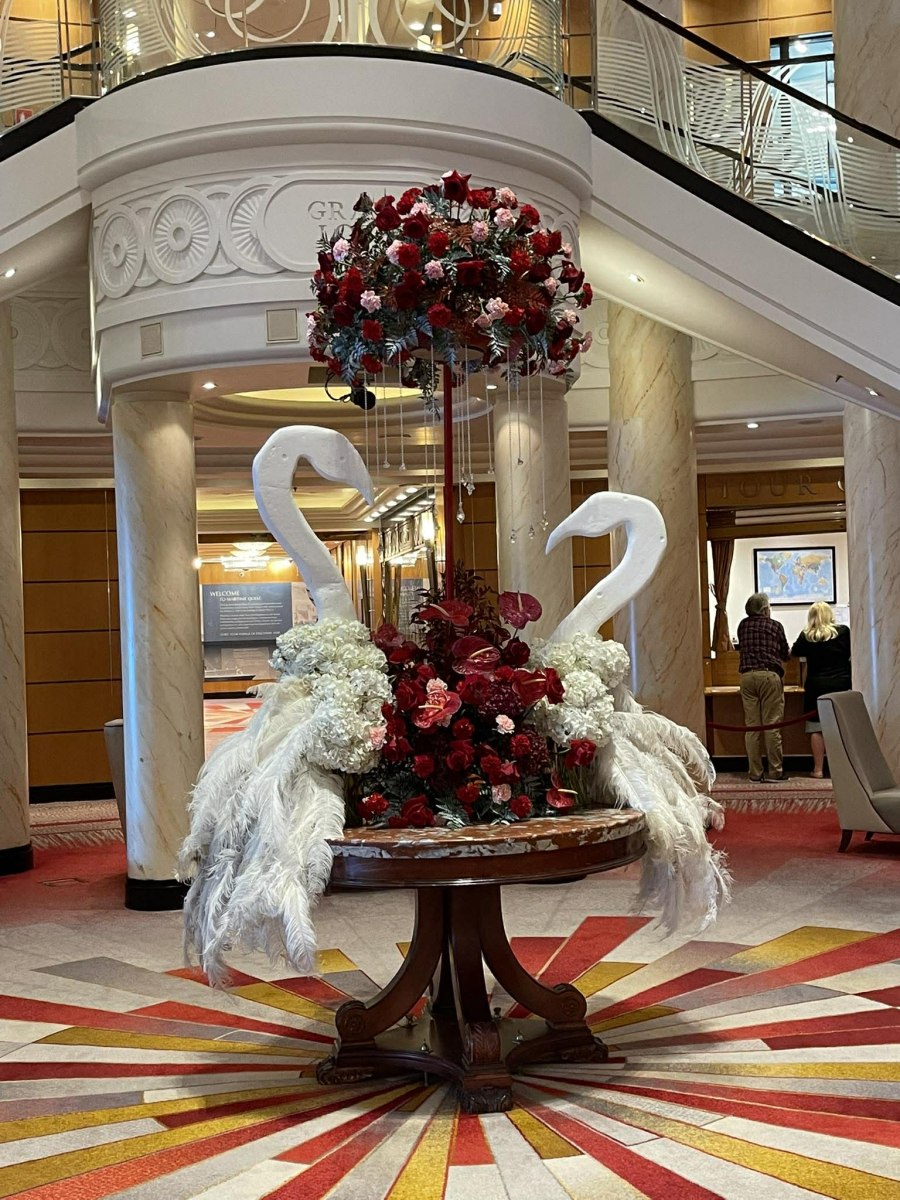
Indeed, this whole trip, so far, has seen much calmer seas than I’ve seen on my several voyages across the north Atlantic. The Pacific Ocean was named by Portuguese explorer Ferdinand Magellan in 1520, who called it Mar Pacífico (meaning “peaceful sea” in both Portuguese and Spanish) because of the calm waters he encountered after a treacherous journey around the tip of South America. We’re definitely in calm waters now, but David and I are still hoping for some big waves. At least we’re sailing through rain today. All this perfect sunny weather gets boring! (Remembering the ice and snow we left, a couple of weeks ago in Arkansas!)
15 February 2026
Alas, it’s feast or famine, but mostly famine. I’m not referring to the food, which is always a feast, but to the great outdoors. Yesterday it was raining too hard to enjoy the ship’s outdoor spaces, and today, as we crossed the equator a few minutes ago, it’s too hot! Even with the ship moving on at the equivalent of 23 miles/hour, it’s just more comfortable inside the air conditioned interior of the ship.
I did manage to solve one major problem. There’s no iced tea on this boat. There is, but it’s only available as a special, off-menu order in the formal dining room. At the buffet, the choices are lemonade, apple juice, cranberry juice, orange juice, coffee and water. But they do have hot water and tea bags, and they have an ice dispenser. I finally realized that I can dunk a tea bag in a cup of hot water, then pour that over a glass completely full of ice, and it makes pretty good iced tea. I’m saved!
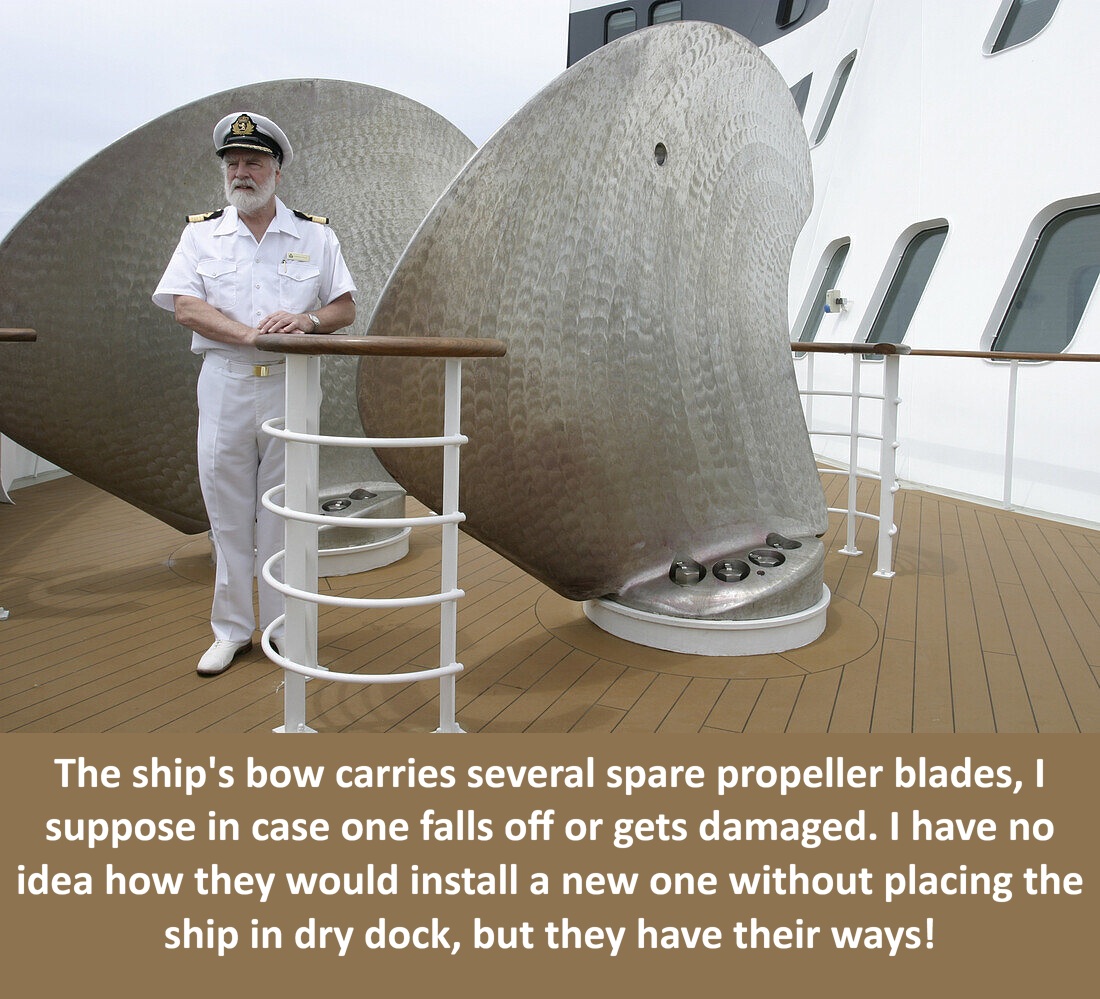
As we continue charging south toward Tahiti, you may wonder, well, a couple of you may wonder, about the ship’s propulsion and speed. Like my beloved Tesla, QM2 is all electric! We’re driven by four electric motors turning the four huge propellers. Two of the motors are able to rotate through 360 degrees, so in addition to driving us forward, they can be turned to thrust left, right, or even backward. Combined with the bow thrusters, aimed sideways at the front of the ship, the ship can move sideways, or spin in a complete circle, without need for tug boats to position it.
The electricity that turns all these thrusters, as well as providing our air conditioning and lighting and a lot more, is created by 4 huge diesel motors and 2 natural gas turbines, turning electrical generators. QM2 generates enough electricity to supply a city of 125,000 people.
QM2 has plenty of surplus capacity. Though we generally move along at speeds of around 20 knots, QM2 can move us at 30 knots if she needs to, to assure that we always arrive on time at our next destination. You can imagine the disaster if the ship didn’t arrive on time. Thousands of missed airplane reservations, as well as thousands of new passengers, arriving to board a ship that is not there to board. Staying on schedule is critical to these big ships.
One last tidbit: don’t ever speak of our speed in “knots per hour!” That’s just not done. Our current speed is 20 knots. Period. Speaking of knots per hour gets you immediately pegged as a landlubber, and nothing you say after that can be taken seriously!
17 February 2026
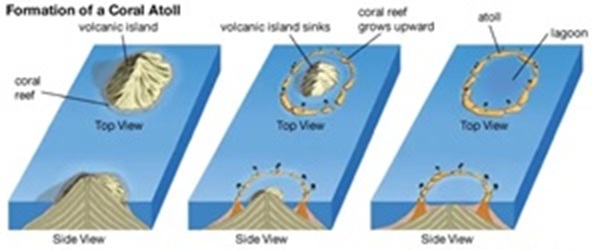
How about little island geology? Most, though not all, of the Pacific islands are of volcanic origin. Long ago, lava from a magma “hot spot” on the sea bed spills its lava onto the ocean floor, and over millions of years the lava builds up layer upon layer until the volcanic mountain breaks the surface and an island is formed. Eventually, coral reefs form around the edges of the island.
Over millions of more years, the shifting tectonic plates move the island away from the hot spot on the sea bed and the island stops growing. Generally, the tall peak of the volcano eventually disappears, both subsiding under its own weight, and through erosion. In the end, all that’s left is the ring of coral that formed around the island, while the one time island becomes a lagoon surrounded by the coral. This is called an atoll. The world’s largest atoll is Kwajalein Atoll in the Marshall Islands.
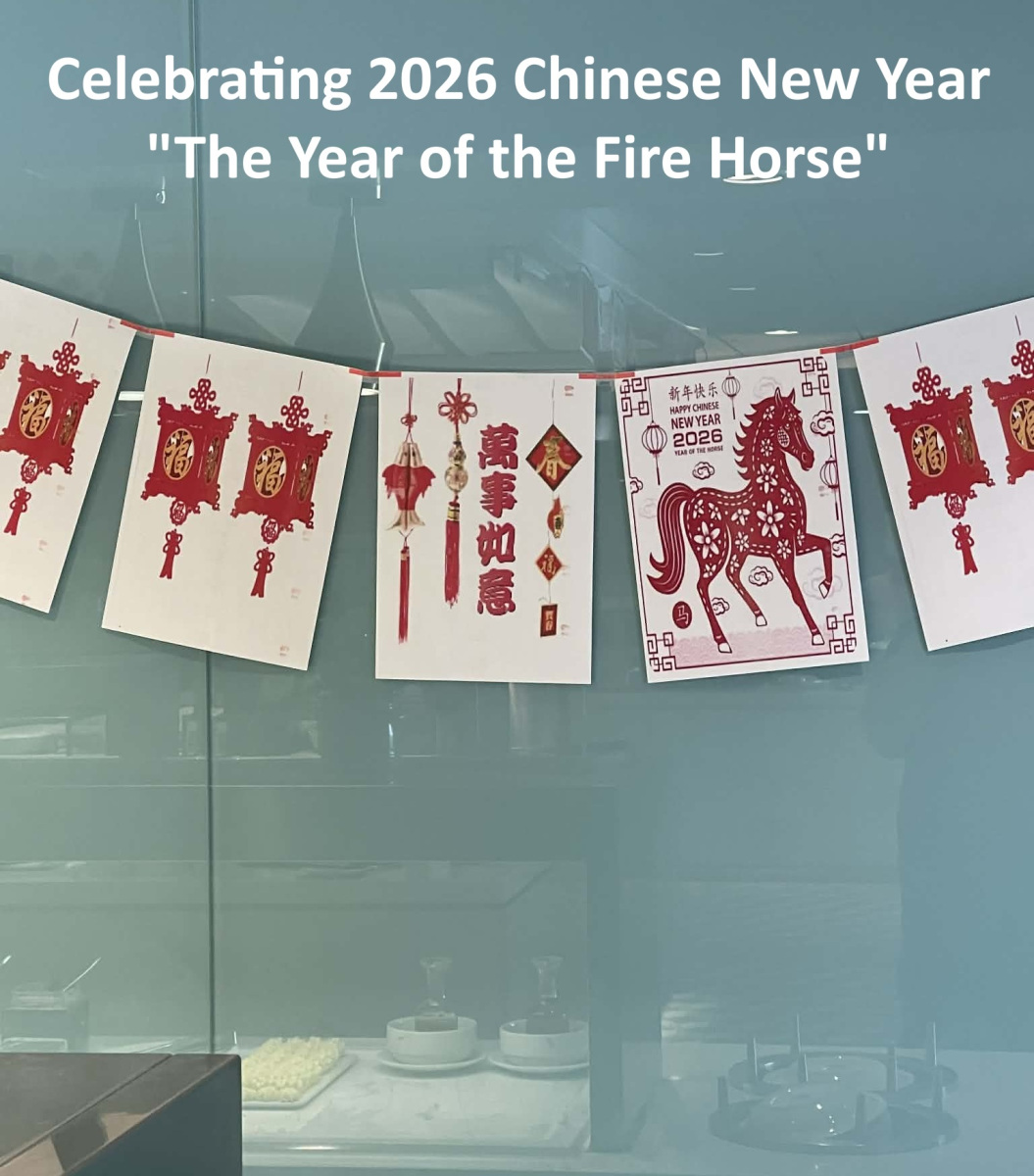
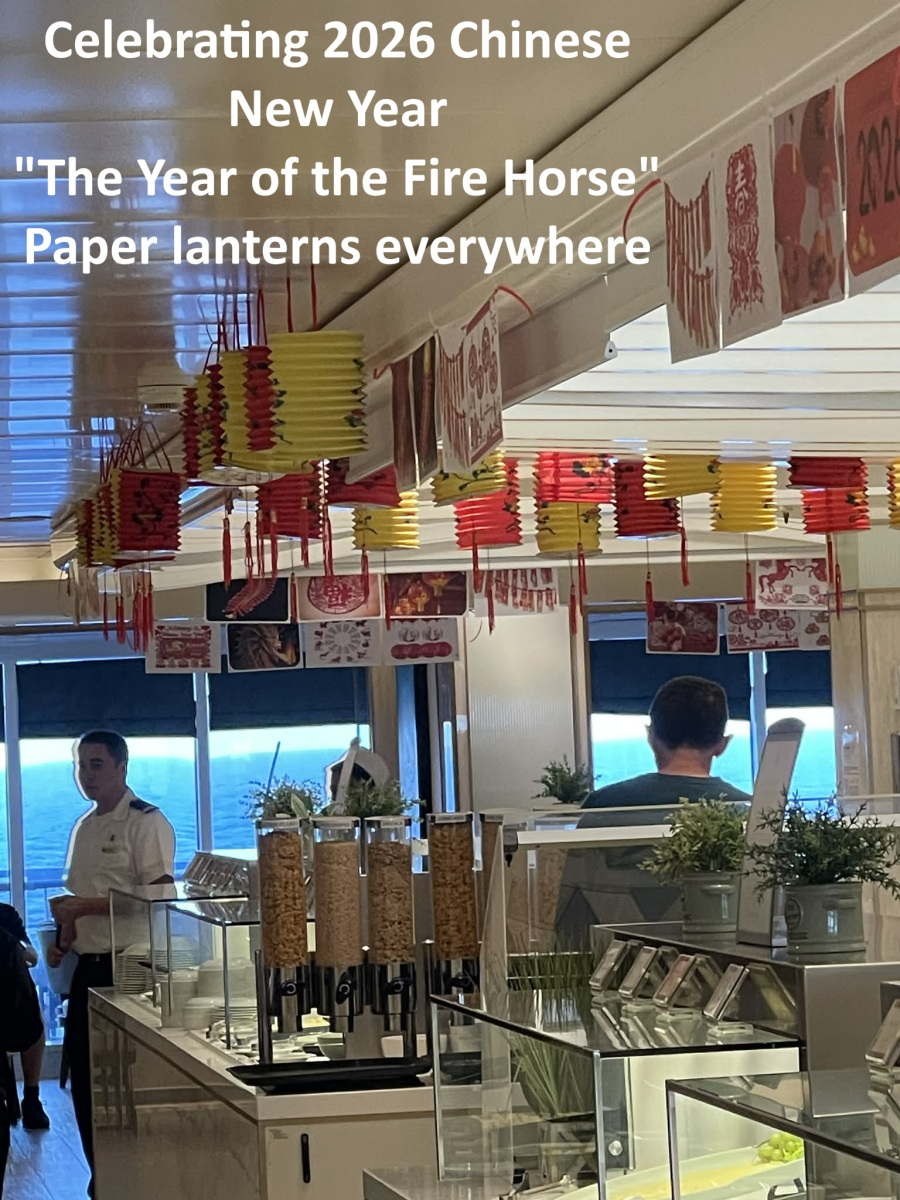
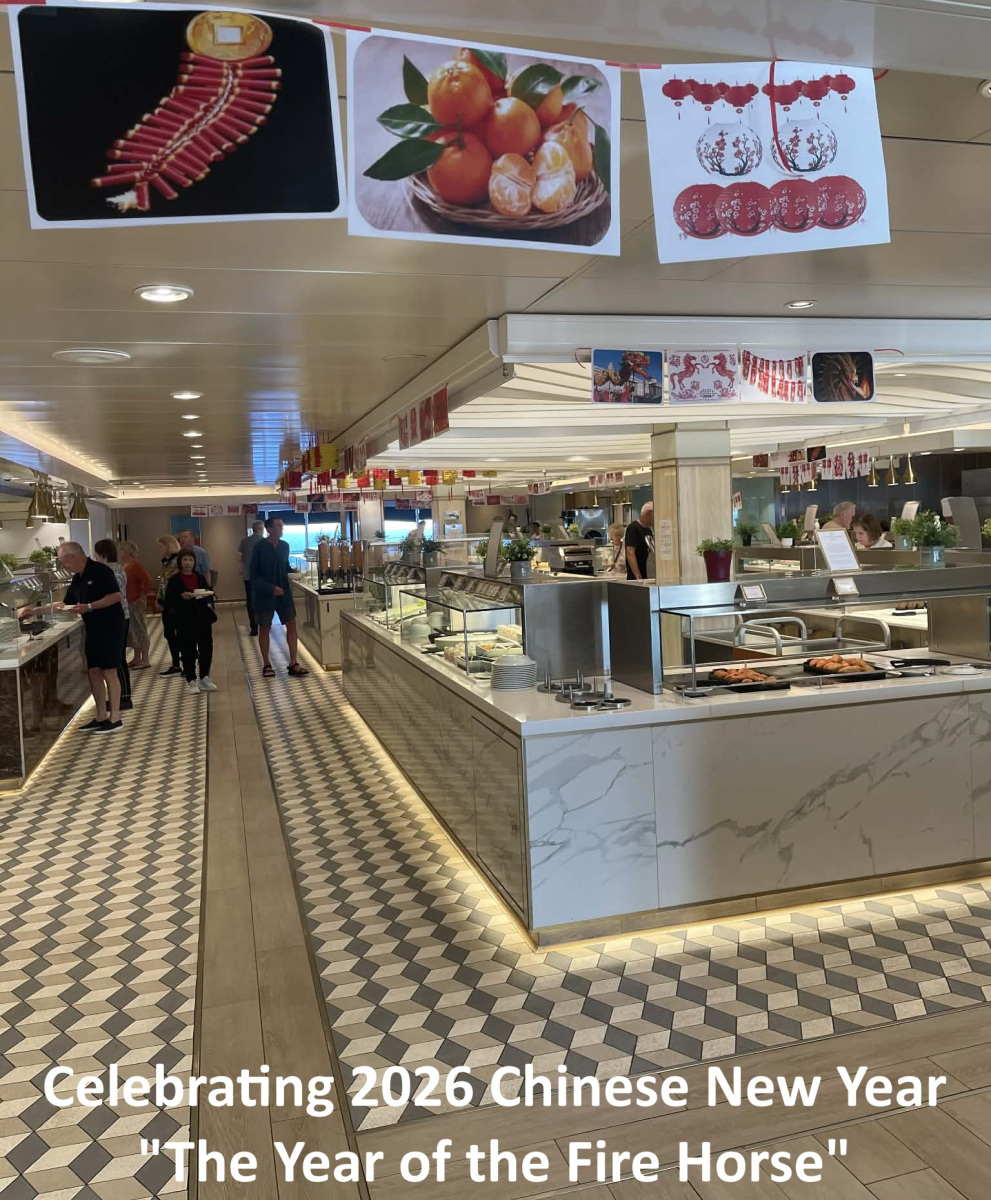
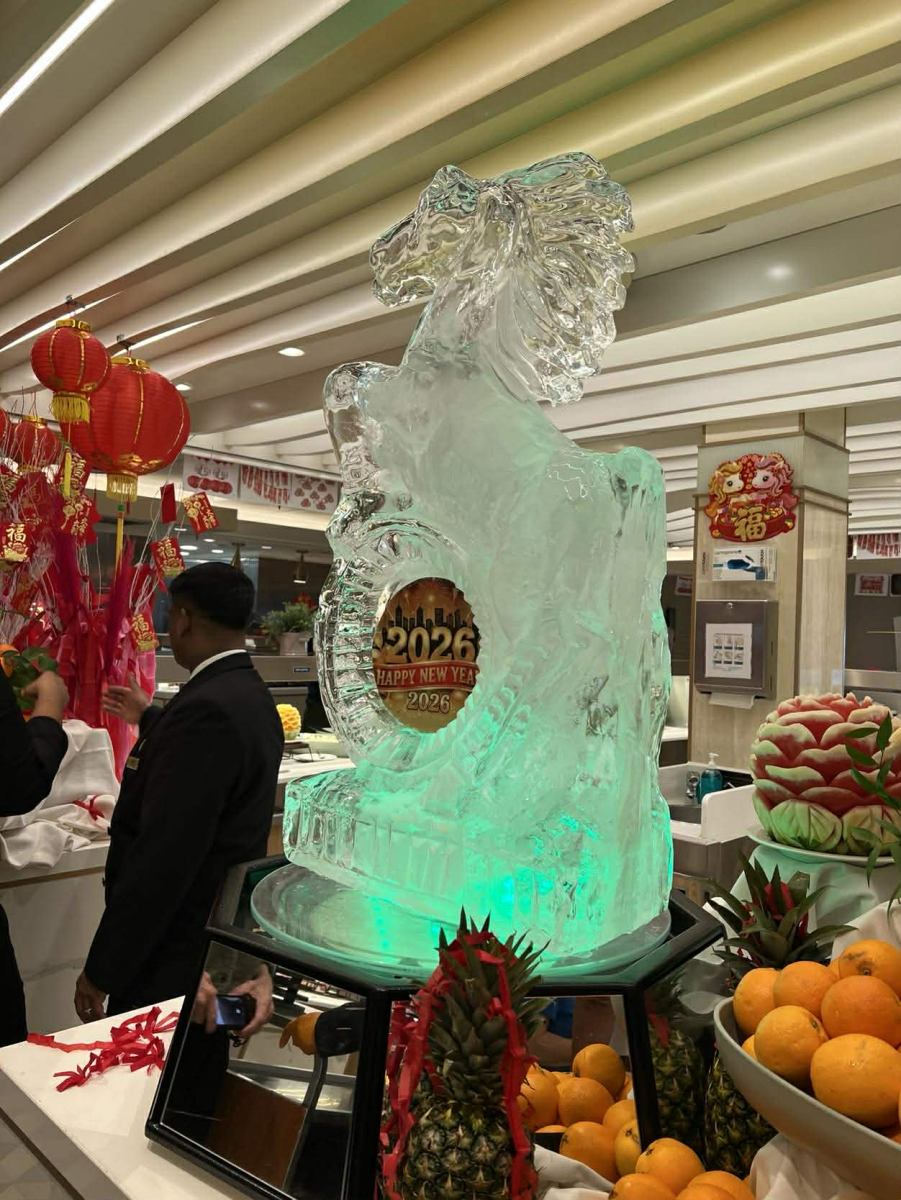
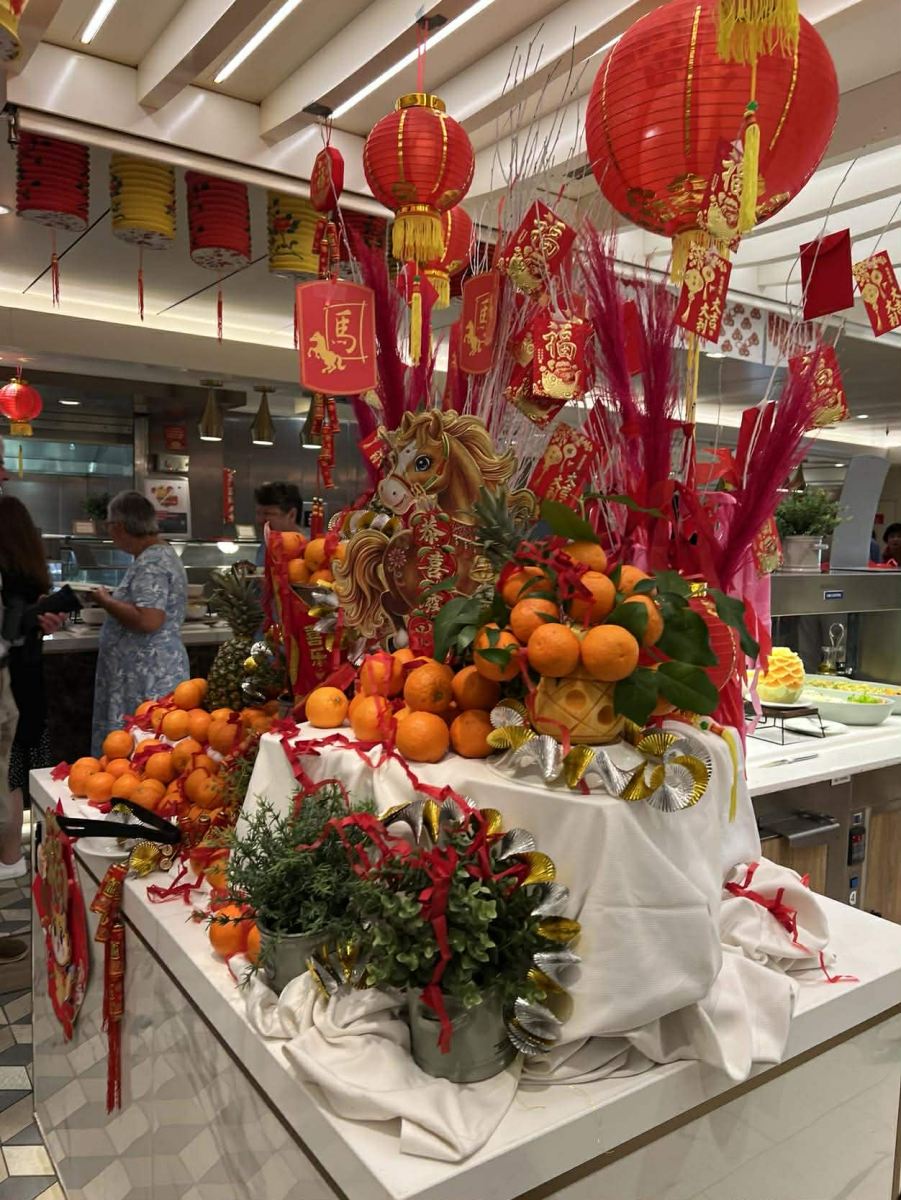
 The Valentine hearts have disappeared and Chinese New Year has taken over aboard QM2. This is the Year of the Horse. Horse years include people born in 1942, 1954, 1966, 1978, 1990, 2002, 2014, and 2026. Horses are born with traits like being active, energetic, and independent. My sister and I are horses. For some reason, this year is a rarity, the Year of the Fire Horse, which makes it special, somehow.
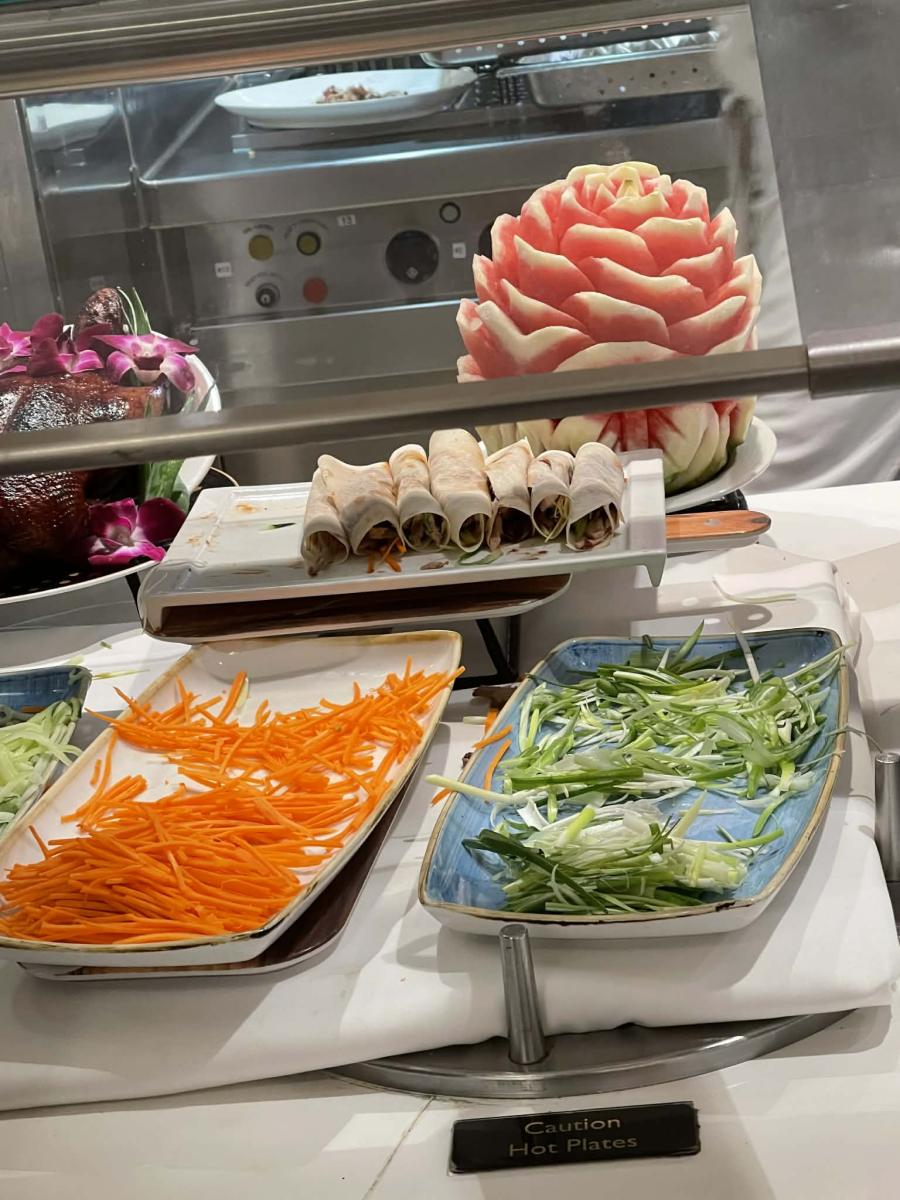
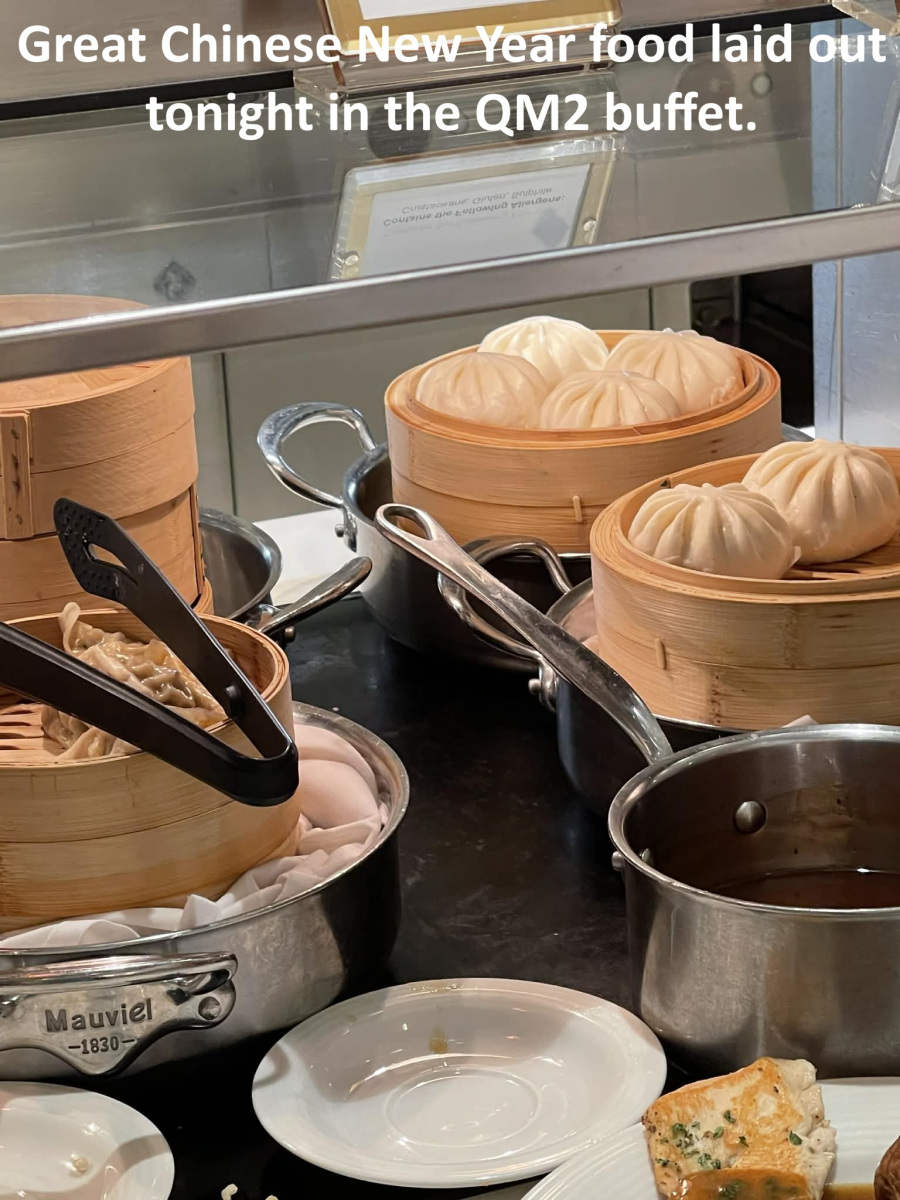
I ate in the buffet tonight, and they had an amazing array of Chinese foods in observance of Chinese New Year. I’m sure they had some great offerings in the formal dining room, too. I’ve noticed that most of the people in formal dinner attire, even on casual nights, speak with a British accent.
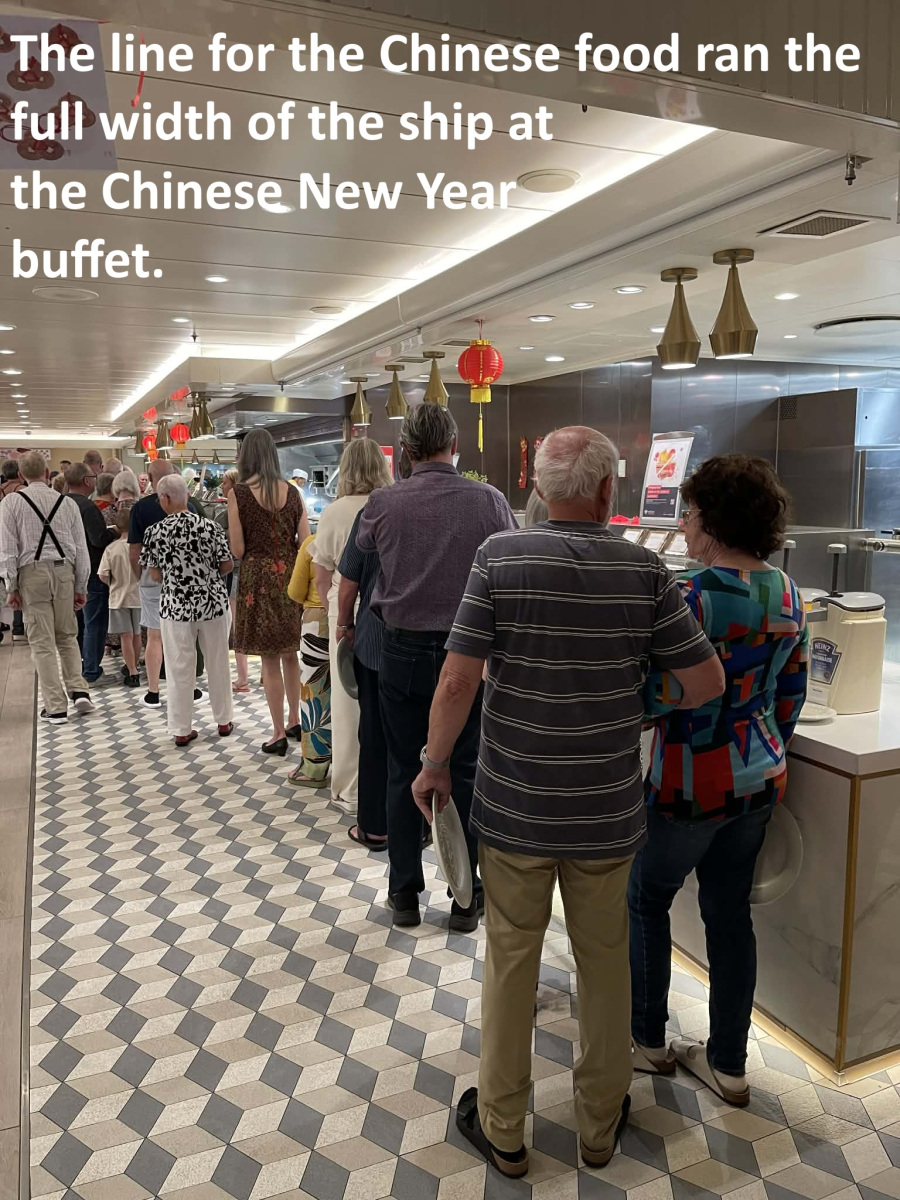
There was a long line, the longest I’ve ever seen in the buffet, wanting the wonderful Chinese food. They even had Peking Duck. But I wasn’t hungry enough to put up with the queue, so I opted for BBQ ribs (very tender and juicy), a baked potato with plenty of real butter, and one of their excellent dinner rolls. I did OK!