Canary Islands
25 April 2026
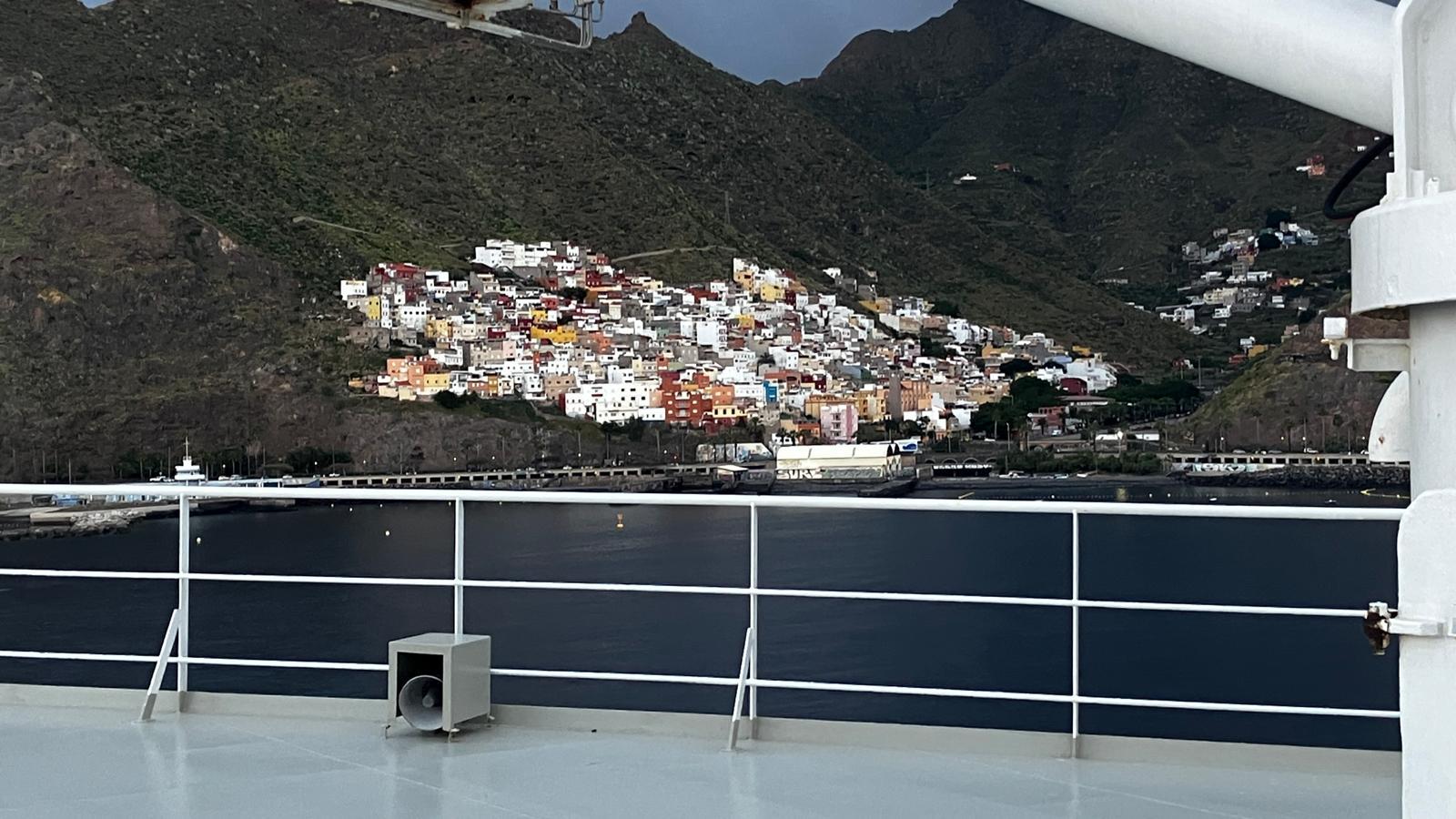
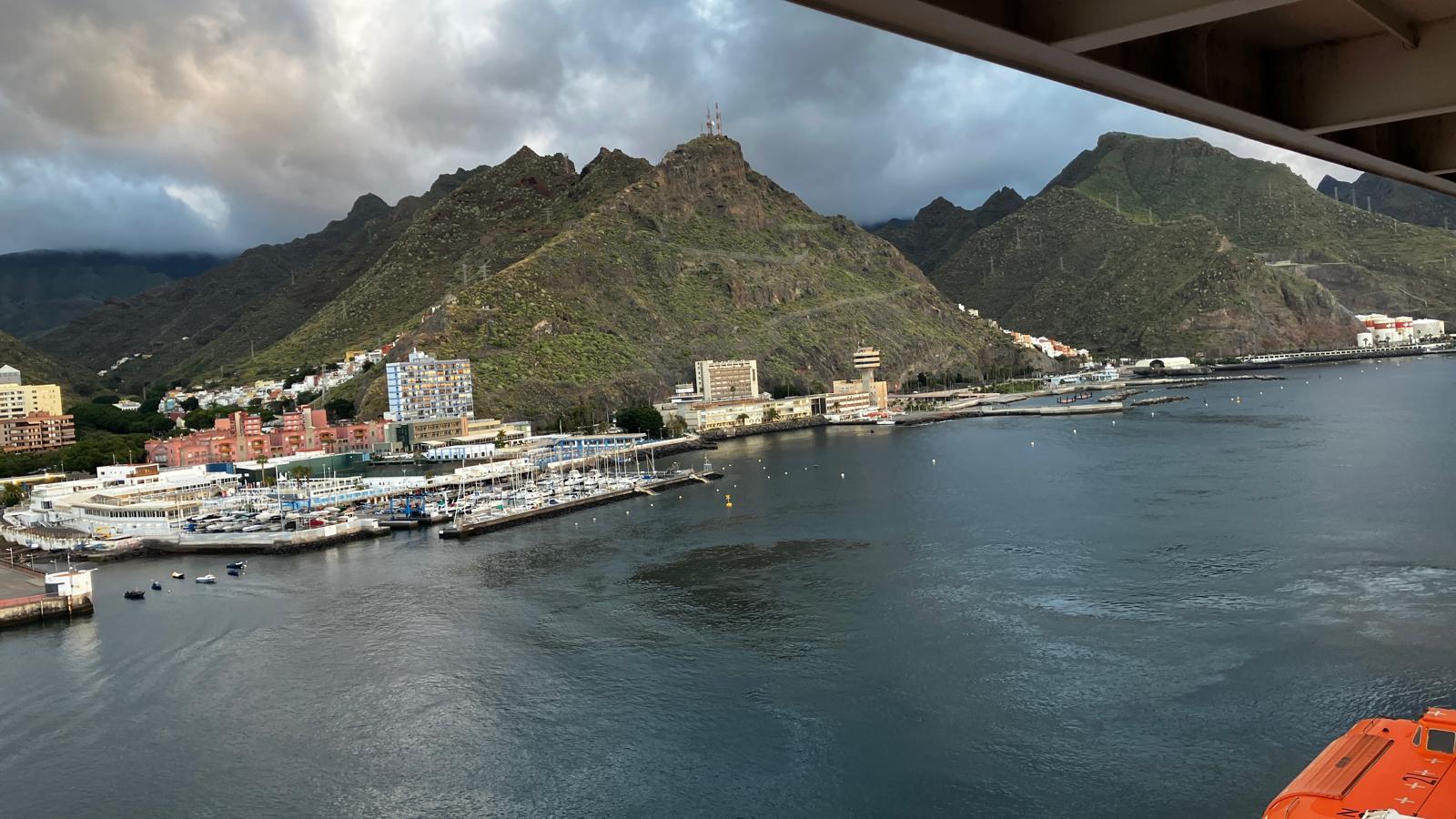
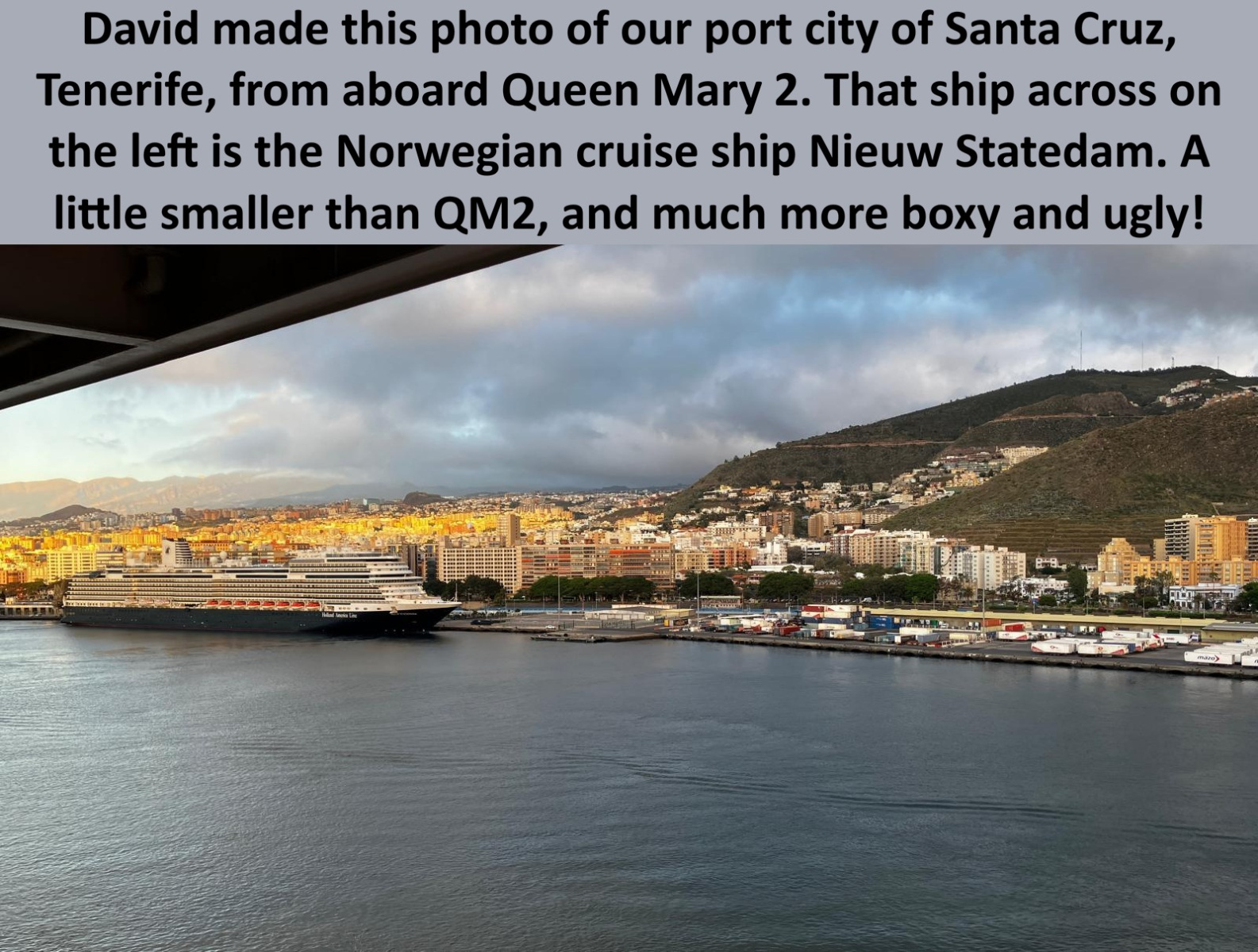
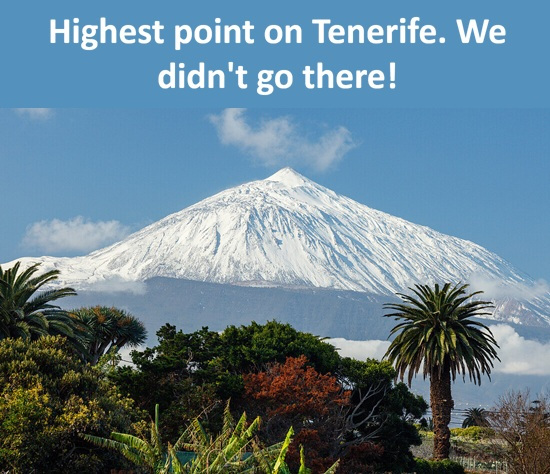
Today Queen Mary 2 arrived at Tenerife (sounds like teh·nr·EE·fay), the largest island of the Canary Islands, with Spain’s highest mountain, at 12,188 ft/3,715 m. It’s the 3rd highest volcano on earth, after Mauna Loa and Mauna Kea in Hawaii. For comparison, if you’ve been to the visitor center atop Rocky Mountain National Park, that’s 11,796 feet/3,595 meters. The Castilian (Spanish) colonization of the islands began in 1402, so these islands have been Spanish a long time.
You might say that the Canary Islands are to Spain as Hawaii is to the United States, a paradise of volcanic origin, highly developed and modern, and quite a contrast to the nearby places we just left, Walvis Bay, Namibia and Dakar, Senegal. We’re about 200 miles/320 km off the coast of North Africa, and in another world.
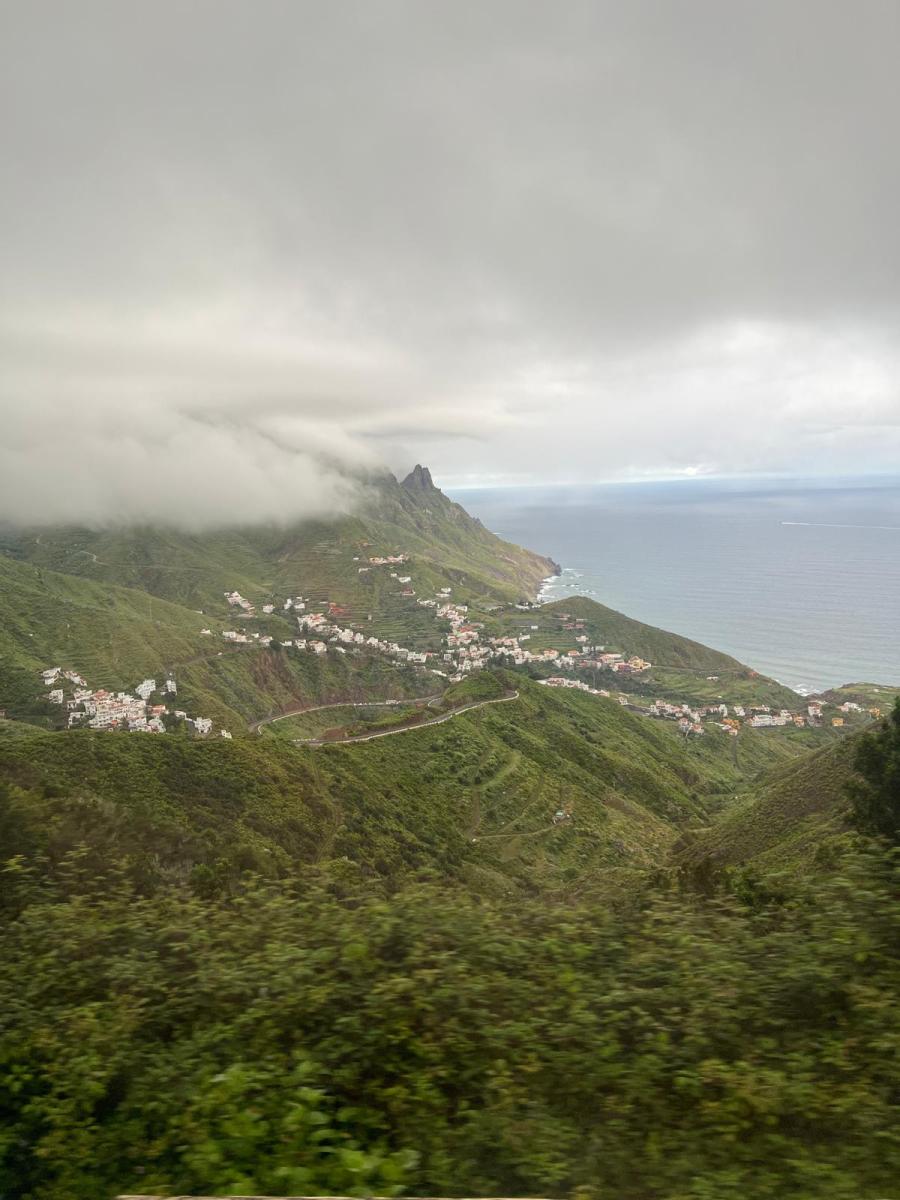
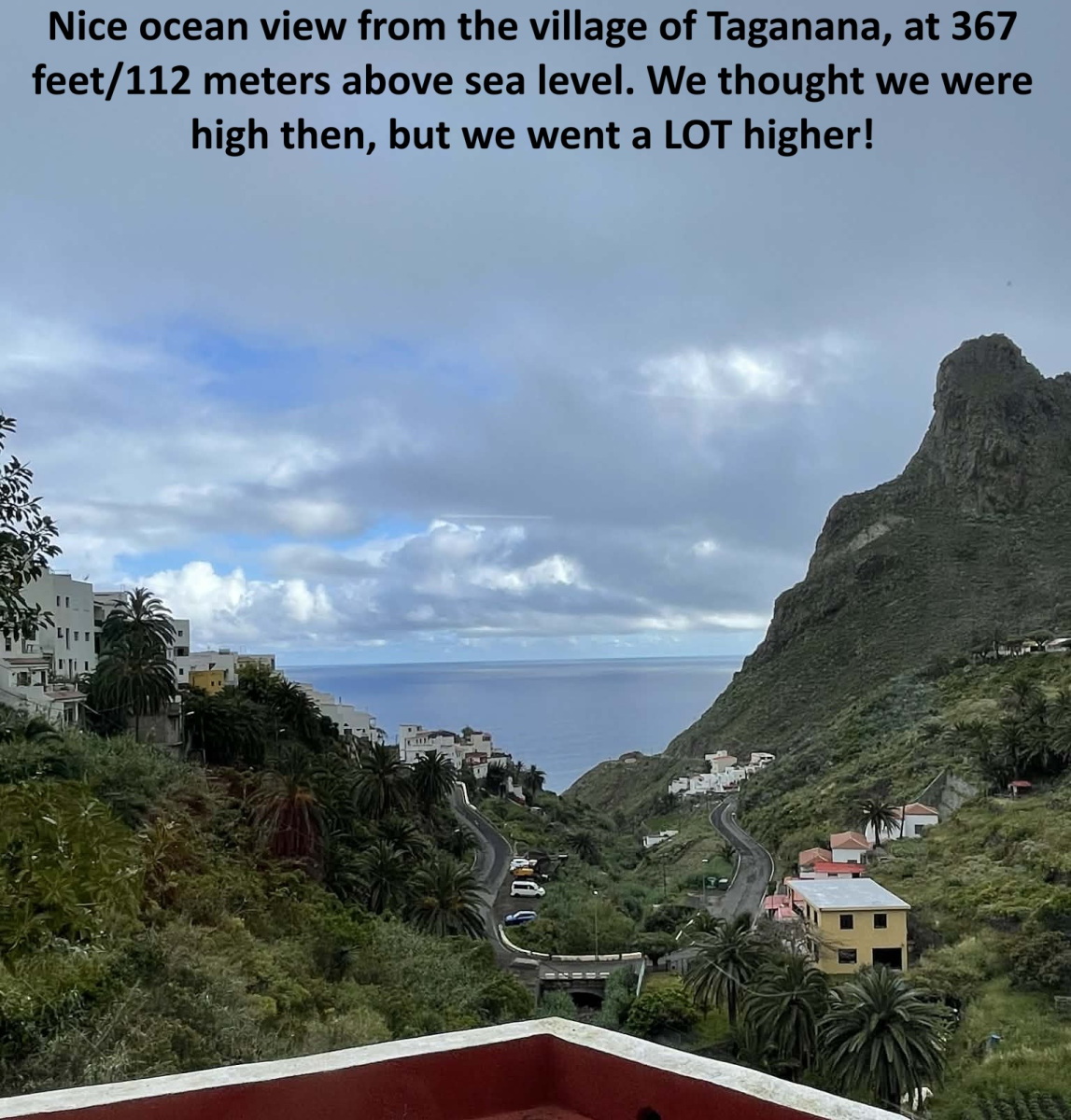
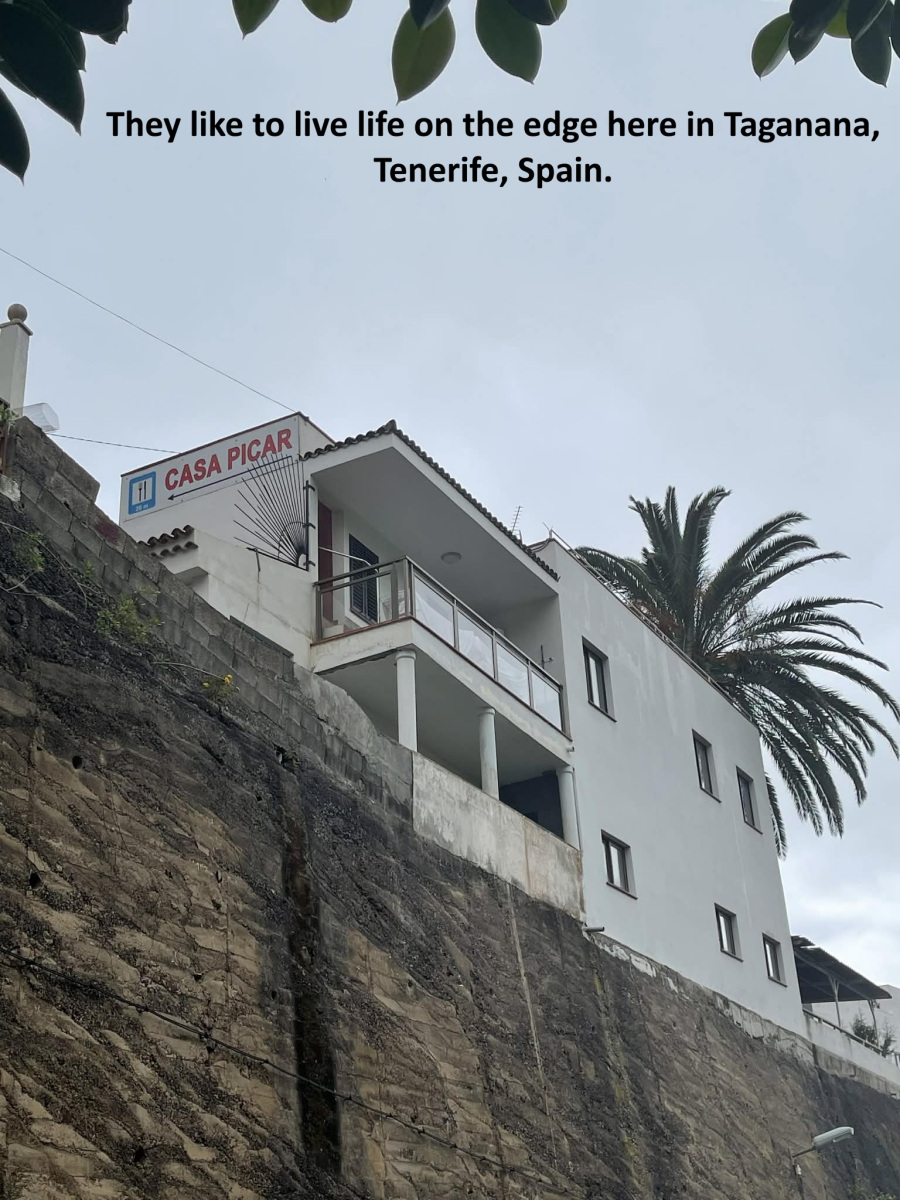
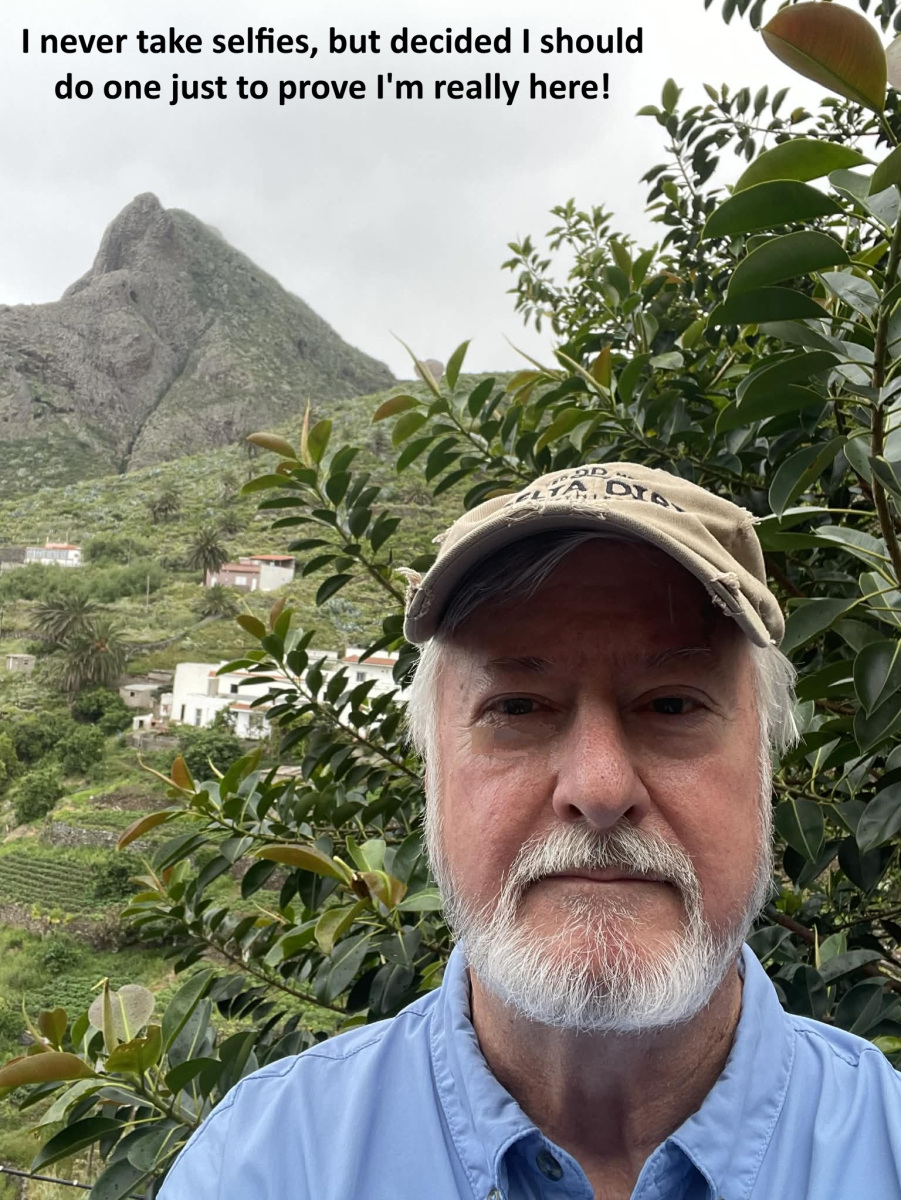
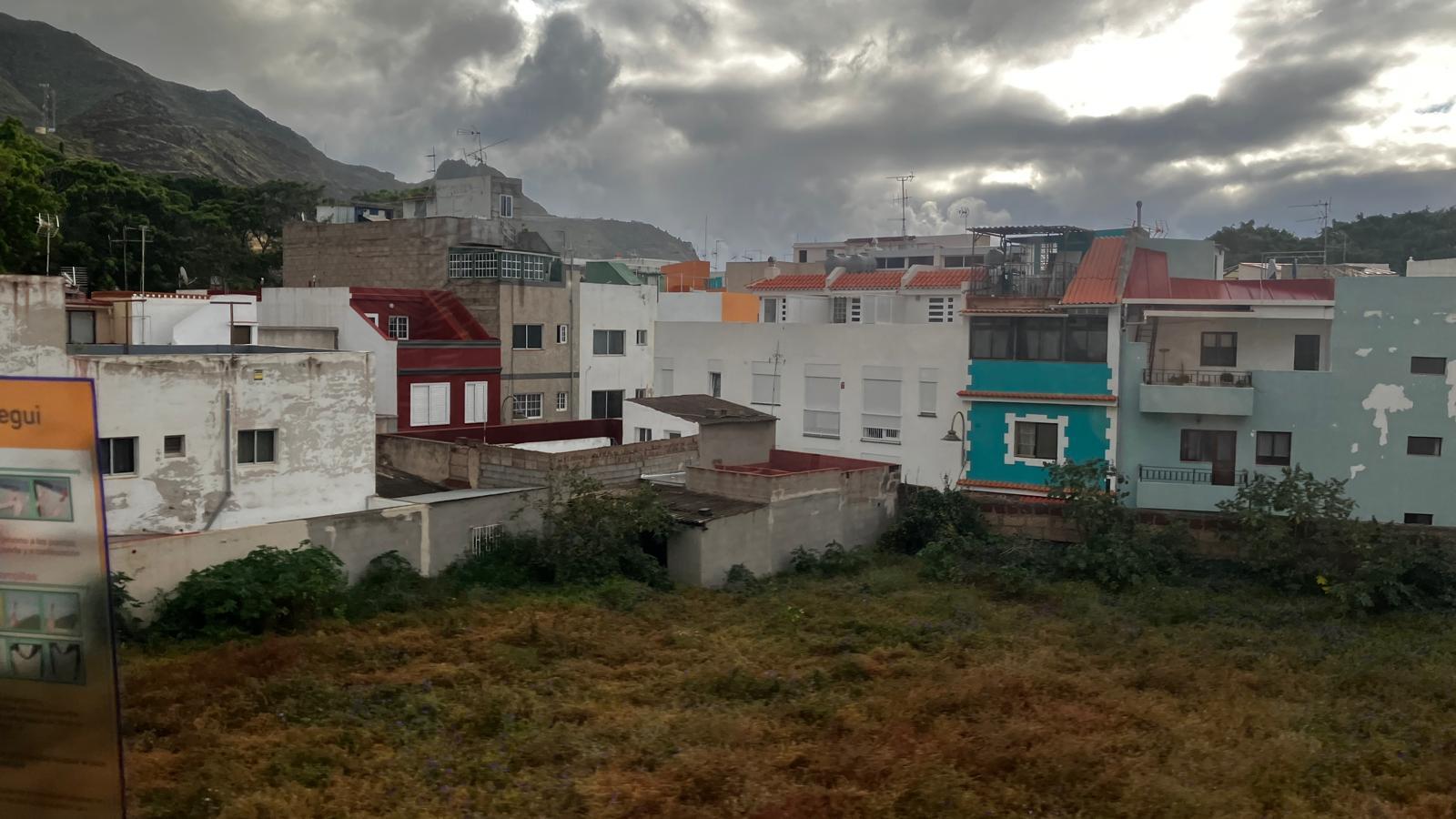
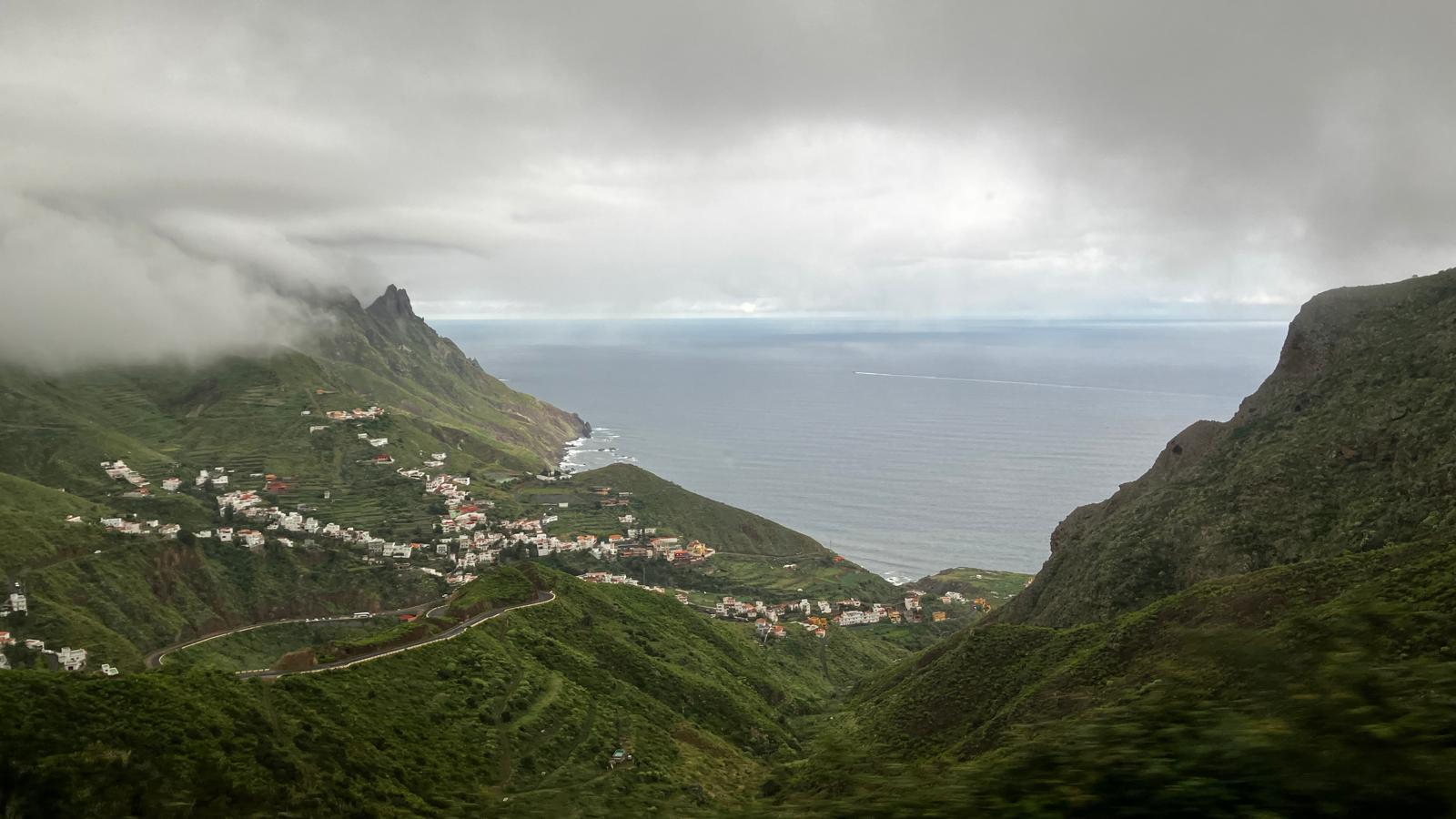
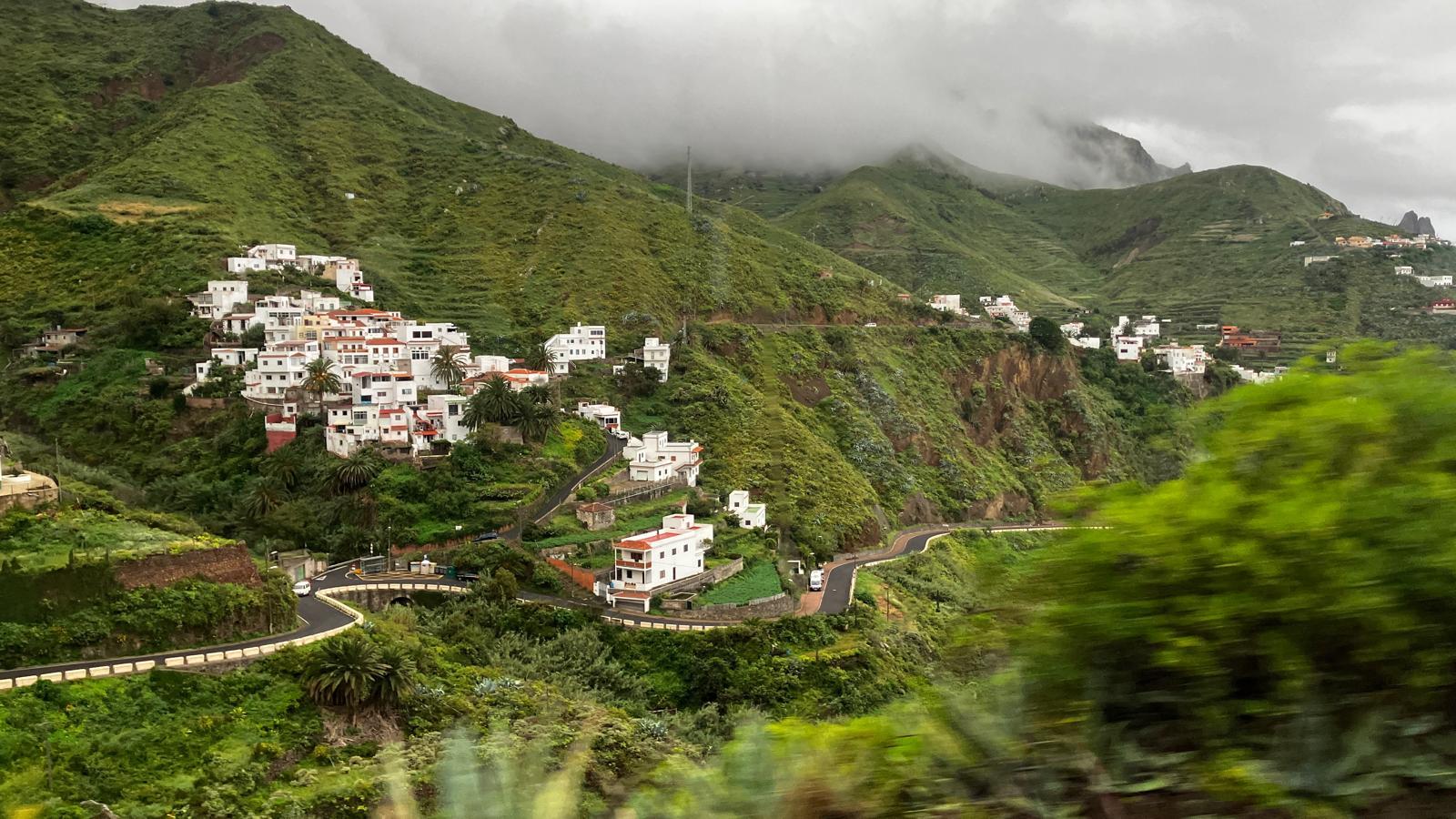
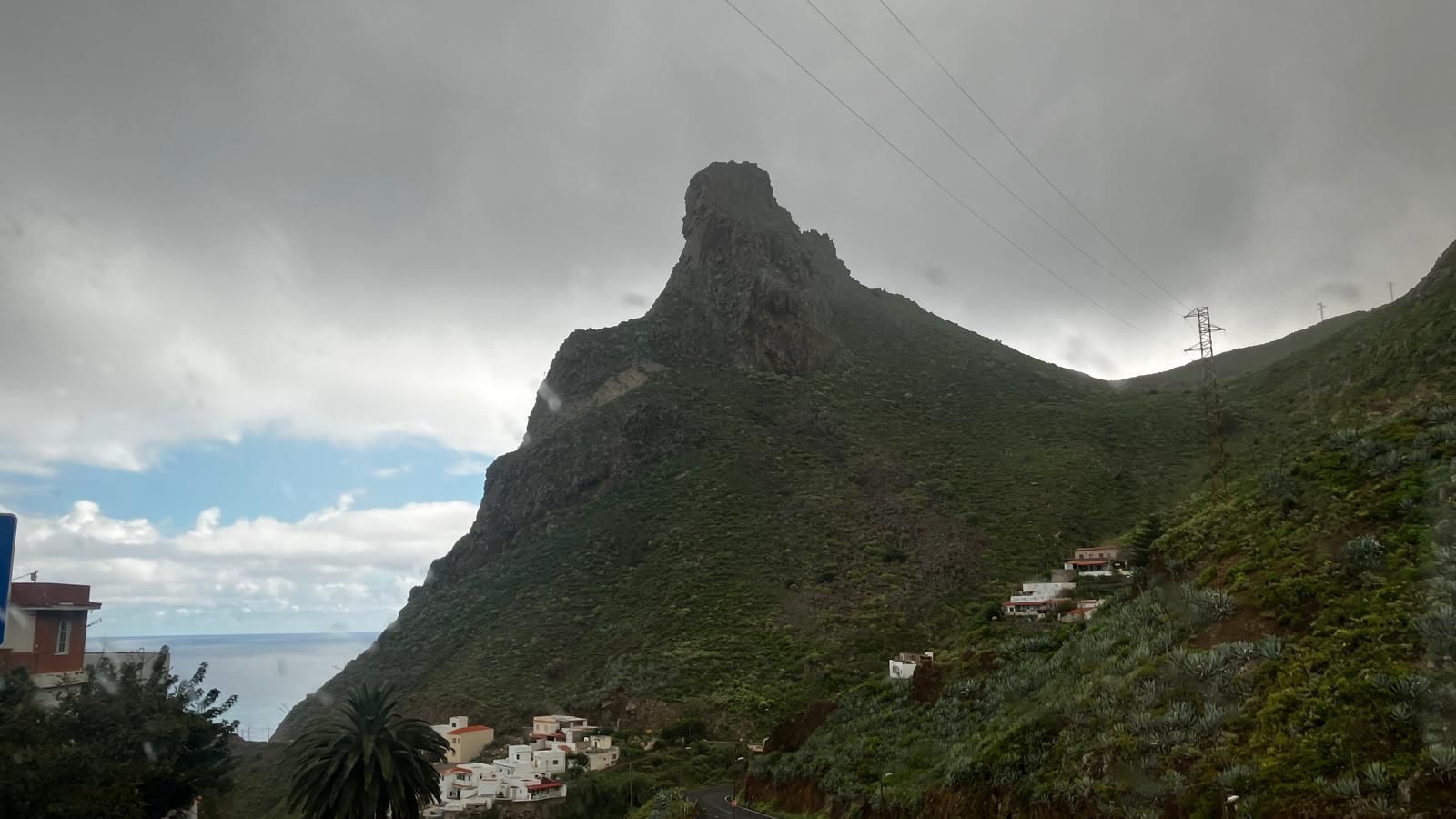
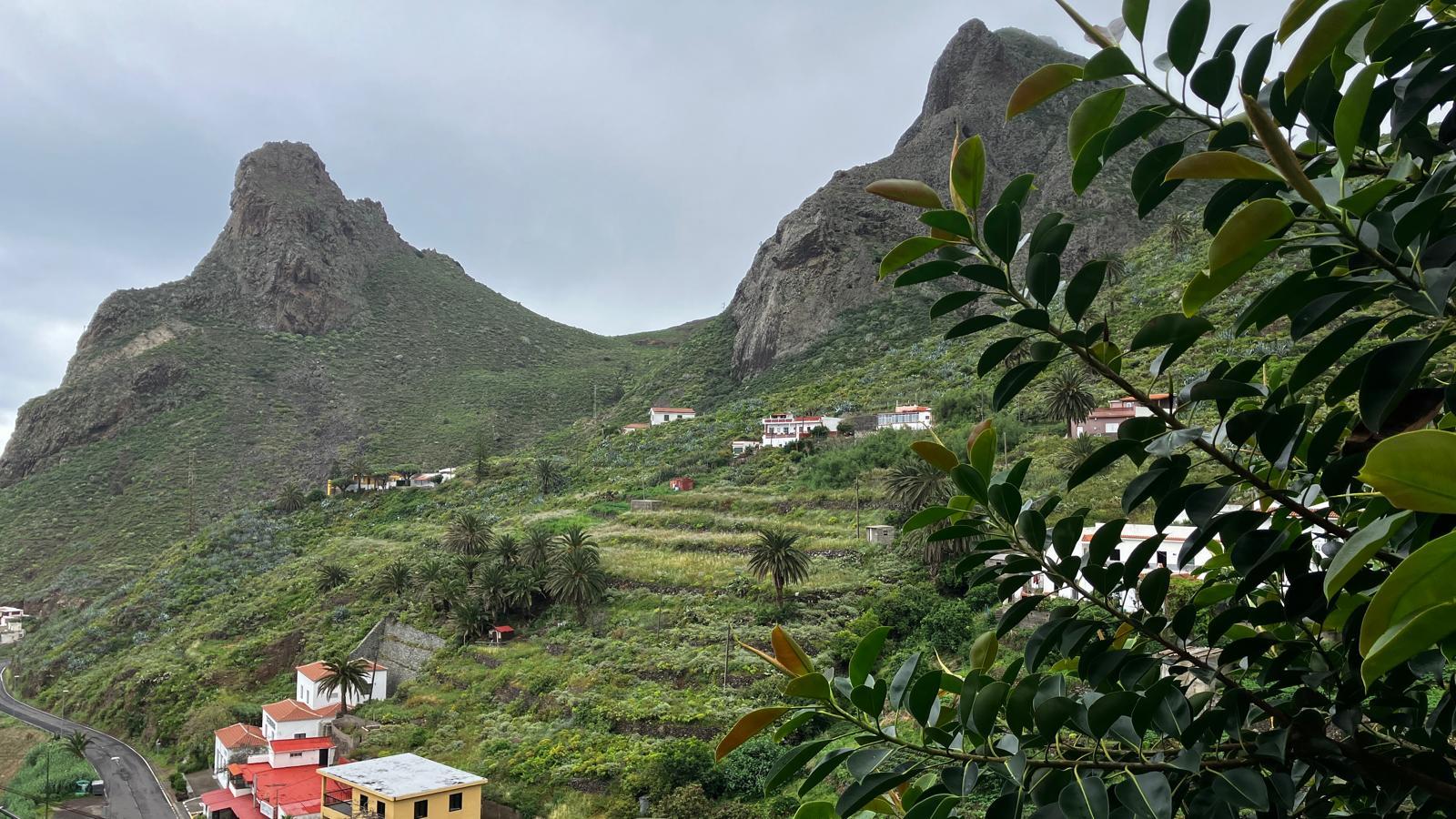
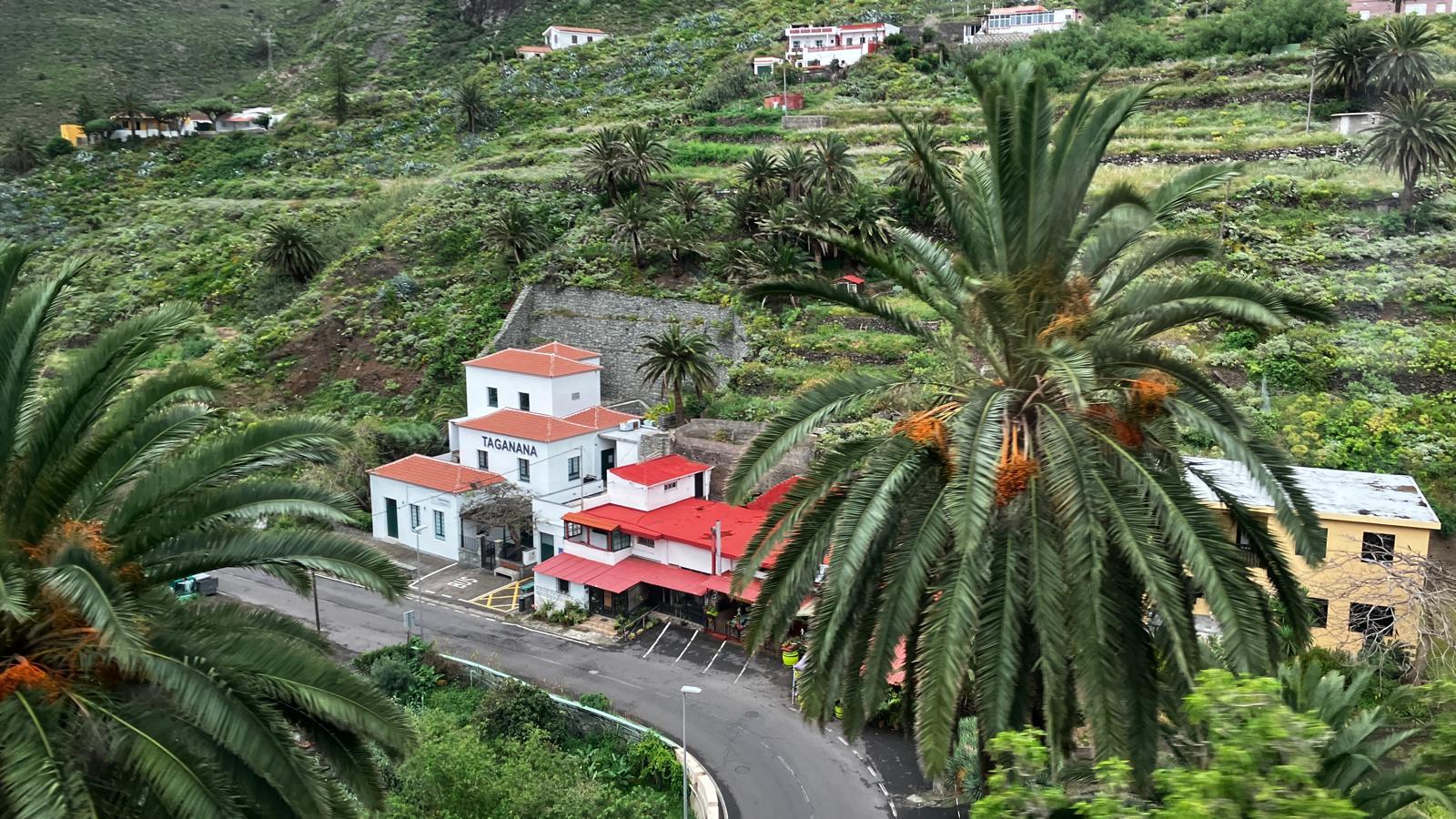
We took a 4-hour scenic bus tour today, winding up switchback roads to the top of ancient volcanoes, now eroded down to “just” 3,360 ft/1,024 meters above sea level. We didn’t go to the really high parts of the island. We stopped part-way up at a village called Taganana for a bathroom break at a restaurant that served us local wine and little finger sandwiches of goat cheese and an olive on bread. Unlike the countries of northern Europe, if you visit someone in Spain, they’ll usually give you a little wine and something to eat!
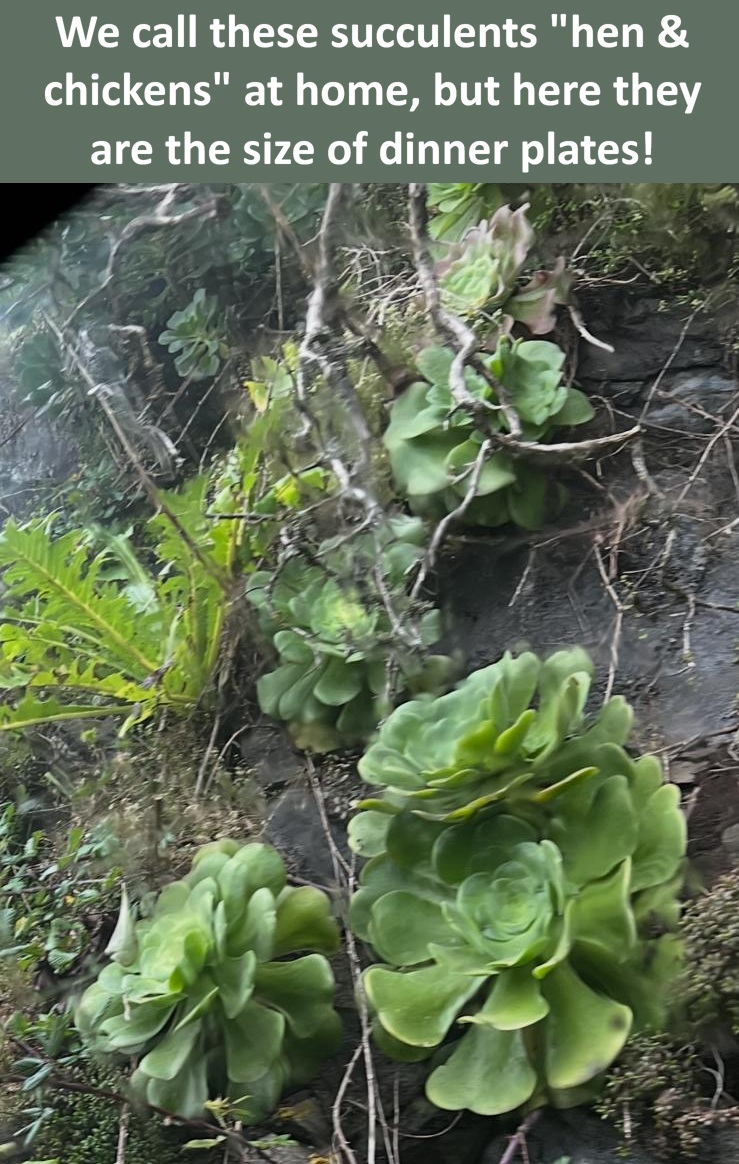
When we got to the top of the mountain, we were in a “cloud forest,” a rain forest at high altitude. Indeed, we were up in the clouds so we couldn’t see anything far off, but the change in vegetation was amazing. Below the clouds everything was cactus and succulent plants. Not a single plant over 3 feet tall. But once we got into the clouds, that changed.
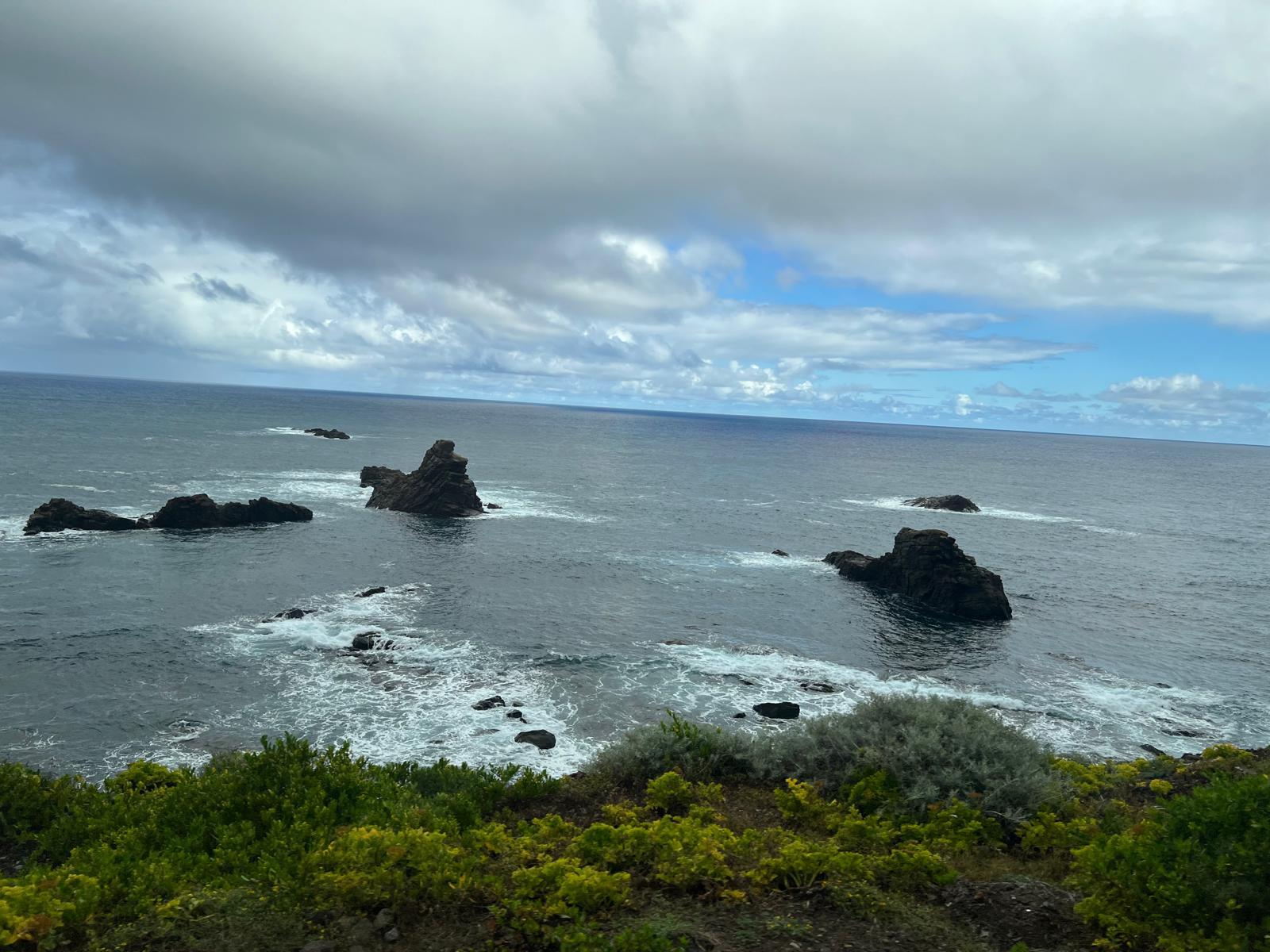
The cloud forest has enough moisture to support larger plants, like trees, ferns, and wild flowers. It was very beautiful. I’ll post some photos of the day that the Bowlins and I took.
Our guide was quite opinionated and he talked for 4 hours, giving some local information but mostly talking about Spanish politics and the problems he sees with the national government. He seemed to be more a fan of the late Spanish dictator Francisco Franco, who he said studied the United States and came to realize that, to have a healthy economy, Spain needs a middle class, people with money to spend, rather than just the rich who like to sit on their money and the poor who have no money to spend. He said under the current government, it’s hard to save any money and get ahead in life.
He explained the three theories for the name of the Canary Islands, and all three centered on dogs, canines. Apparently, there were a lot of dogs here long ago, and the people found them very tasty!! Canary birds are native to these islands, though the wild ones are not as pure yellow as the domesticated ones. So the birds are named for the islands, rather than the islands being named for the birds.
Wine and Cheese in Taganana Video