Senegal
22 April 2026
Dakar, Senegal, was the first place to welcome us, this morning, with fireboats spraying water in the harbor when we arrived. QM2 responded to the honor by sounding it’s big, deep, ship’s horn. It was still dark out and they probably woke the whole town! I don’t think many ocean liners call on Dakar, so they went all out to welcome us.
THREE Harbor Pilots Come Aboard
Not one, not two, but THREE pilots joined QM2 to guide us into the Dakar harbor. I suspect two of them just wanted to see QM2. I don’t blame them!
Dakar Fire Boats Welcome Video
Dakar Fire Boats Welcome Video 2
Dakar Fire Boats Welcome Video 3
Dakar, a capital city of 1.3 million, is on the western-most point of Africa. It’s on a cape that sticks a few miles out into the Atlantic, bringing us the closest to home since we left Hawaii. In 1677, France gained control of Dakar, which had become a minor hub in the Atlantic slave trade. The French ruled here until 1959, and French is still the official national language for road signs and teaching in school, though they generally speak a local African language among themselves. Islam is the religion of 97% of the population, but they drive on the right side of the road, like a Christian.
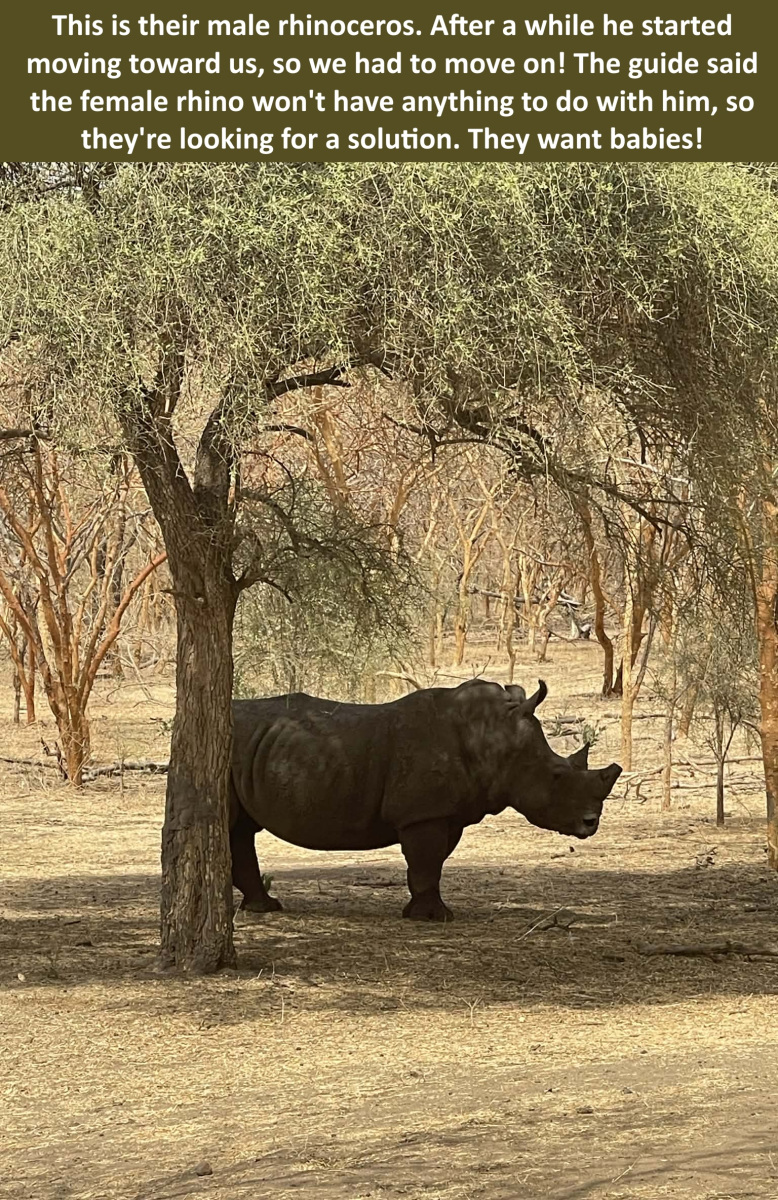
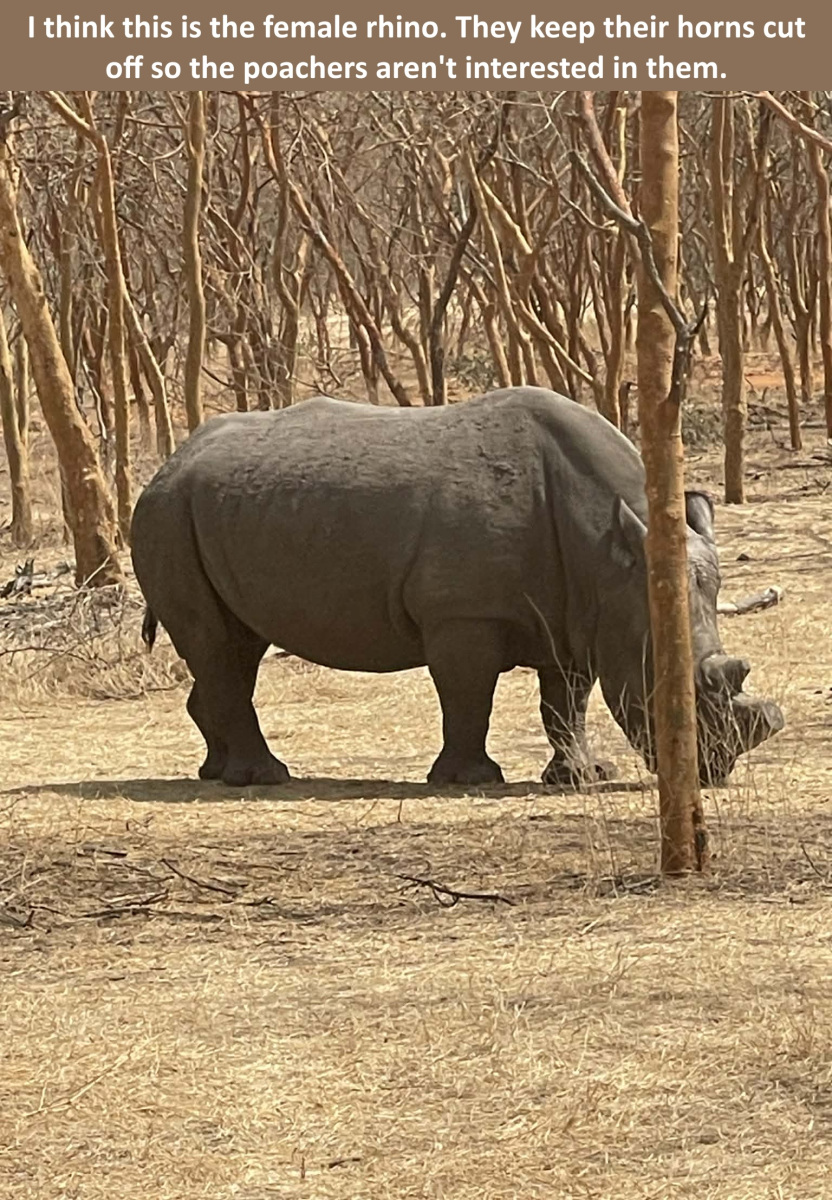
Today was the big safari, and I’m too tired to write more now, but will give a full report, with lots of photos and videos, tomorrow. I’ll just say that we saw rhinos, one did start lumbering toward us, and we sped away in the nick of time! Now we’re 2 days at sea, headed for Tenerife, the largest of Spain’s Canary Islands.
23 April 2026
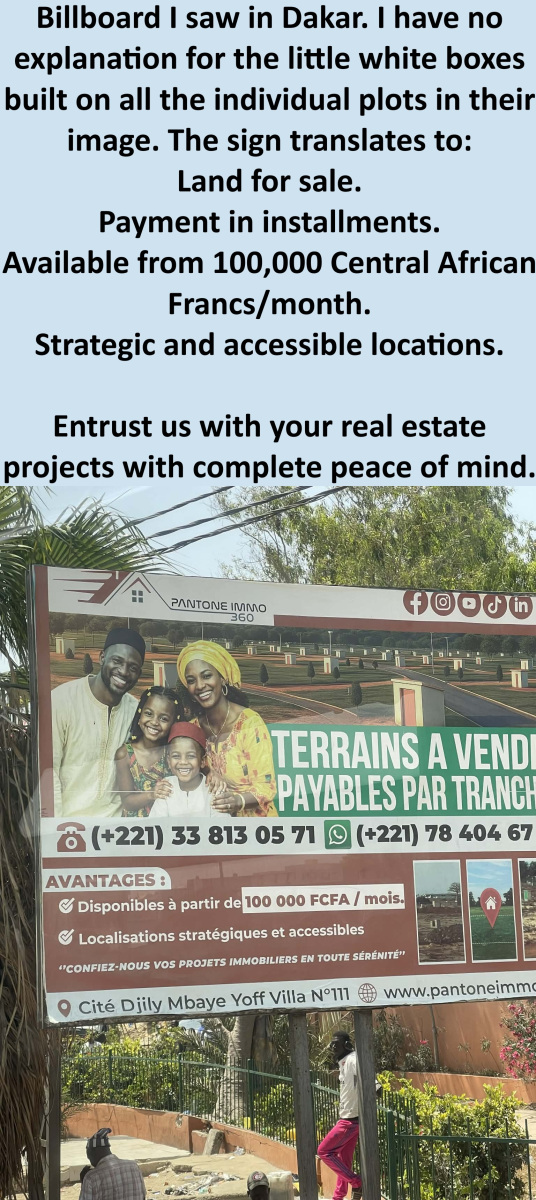
So, the story of yesterday in Dakar, Senegal. I’ll try to do justice to what I saw in the one-day excursion. I was fascinated by the place, and got the feeling I was in “the real Africa” of 2026. Still developing, but a long way ahead of what one may expect. Both in the city and in the countryside, it seems like there are more new buildings under construction than existing buildings!
Being a national capital, all the foreign embassies are there. They drove us along a cliff with beautiful ocean views, in neighborhoods reminding me of Beverly Hills, Los Angeles. That’s where most rich countries like USA and Saudi Arabia have their embassies. I noticed the poorer country embassies were in dirty run-down buildings in the city center, far from the ocean views.
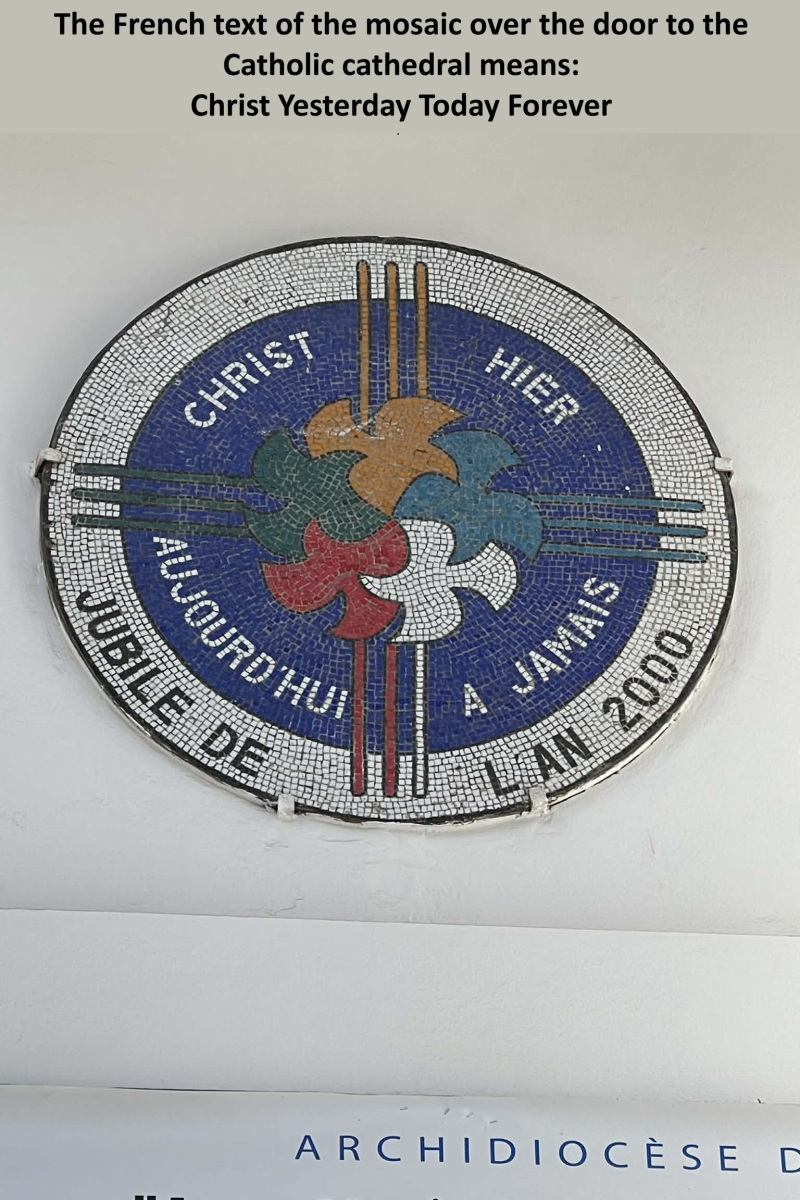
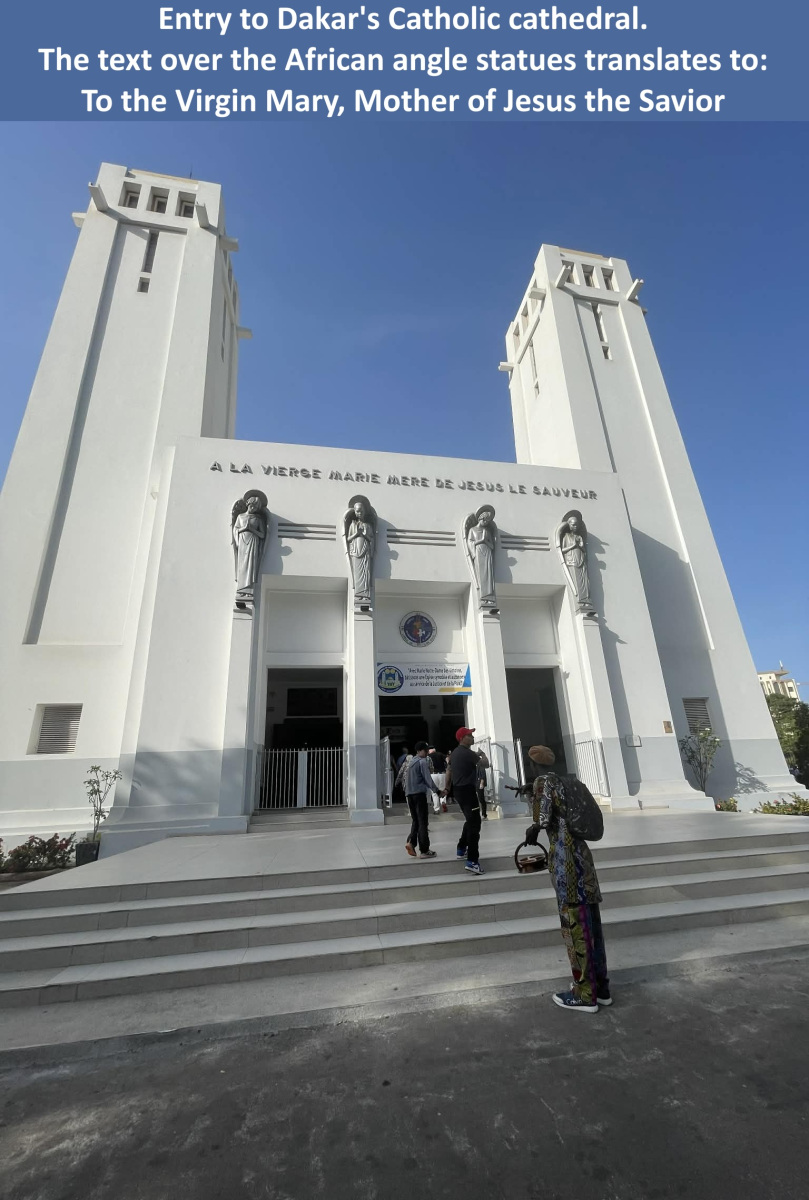
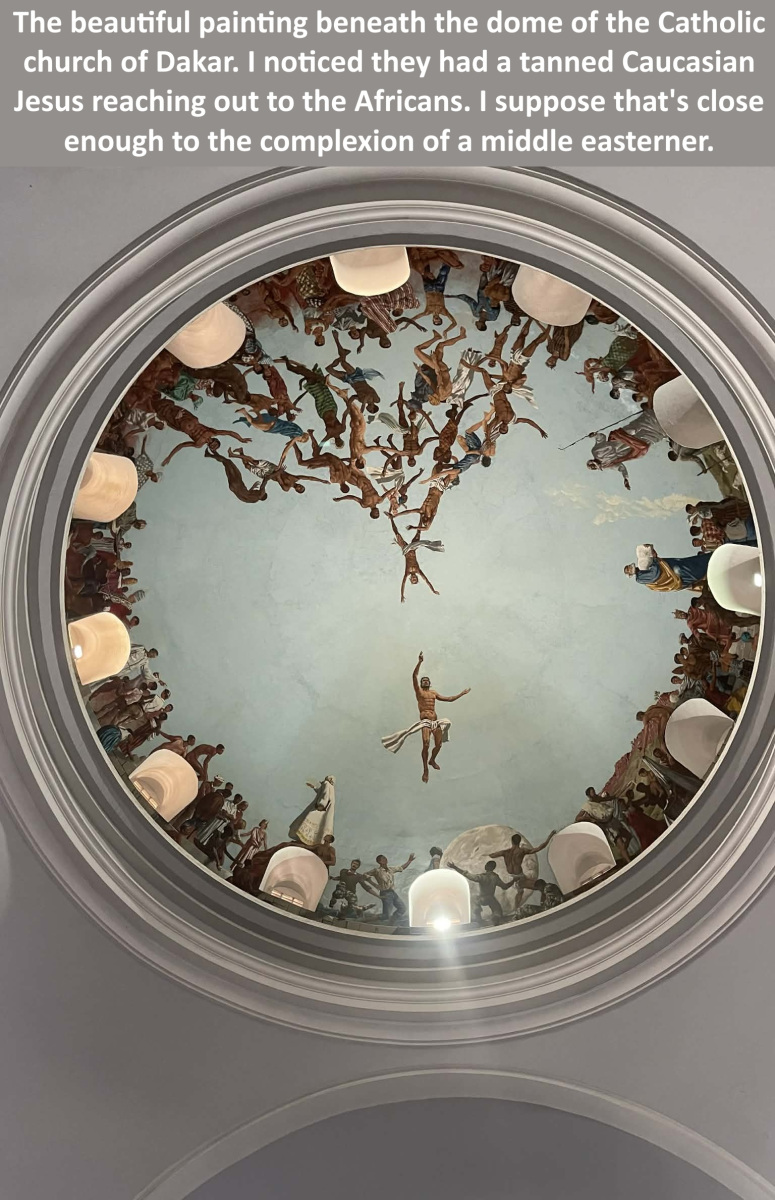
I’ll let the captions on the photos I’ll post do most of the talking. It was the longest excursion day of the trip, though one of the least tiring. We gathered for the bus ride at 7:45 a.m. (for a change, the bus was 10 steps from the ship gangway, rather than a 200 yard walk away), and got back to the ship at 6:15 p.m., but it was the least walking we’ve had on an excursion. They first took us to the local Catholic cathedral, because that’s what they always seem to do, even in a 97% Moslem country! It was a beautiful building for such a poor country.
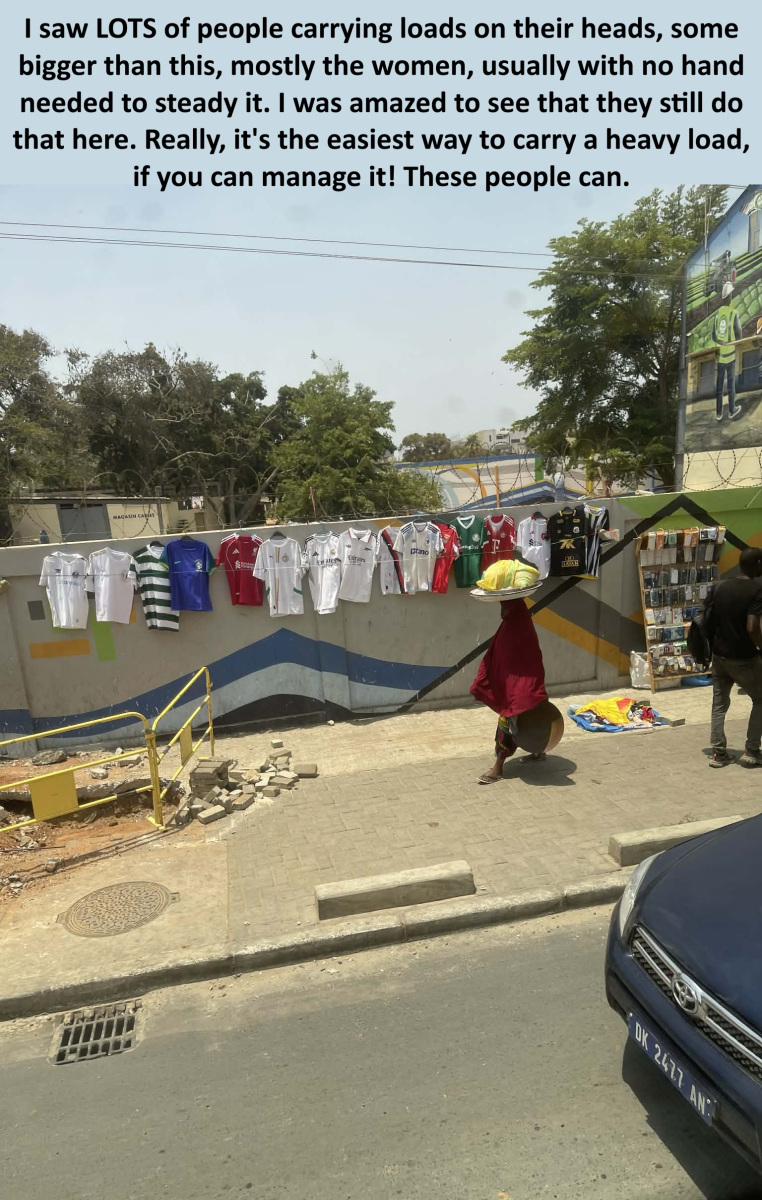
I quickly noticed that, though it was about 70F/20C, all the locals were in jackets and dressed for winter. I suppose it’s natural, since the locals are genetically adapted for living in a hot climate, and a perfect day to me is a chilly day to them.
Dakar is the main banking location for all the countries in west central Africa, so there were big bank buildings everywhere downtown. Our guide commented that there’s a lot of money in Dakar, but none of it is in local pockets.
Dakar reminded me a lot of Durban, South Africa. Big, crowded, greatly in need to a good cleaning and a new paint job, but, where Durban had barbed wire and electric fences everywhere for security, Dakar seems to replace that with security guards. I’m assuming most of them are private, not public, but many are armed and they are everywhere. I felt perfectly safe. The people were all smiles and friendly.
I noticed a lot of very tall, very thin people. Thin as in athletically fit, not thin as in hungry. The guide said there is no McDonalds in Senegal, but they do have one KFC. I was reminded of the Watusi, the very tall African tribe also known as “The Tutsi,” an ethnic group in Rwanda that was almost wiped out in the genocide of 1994.
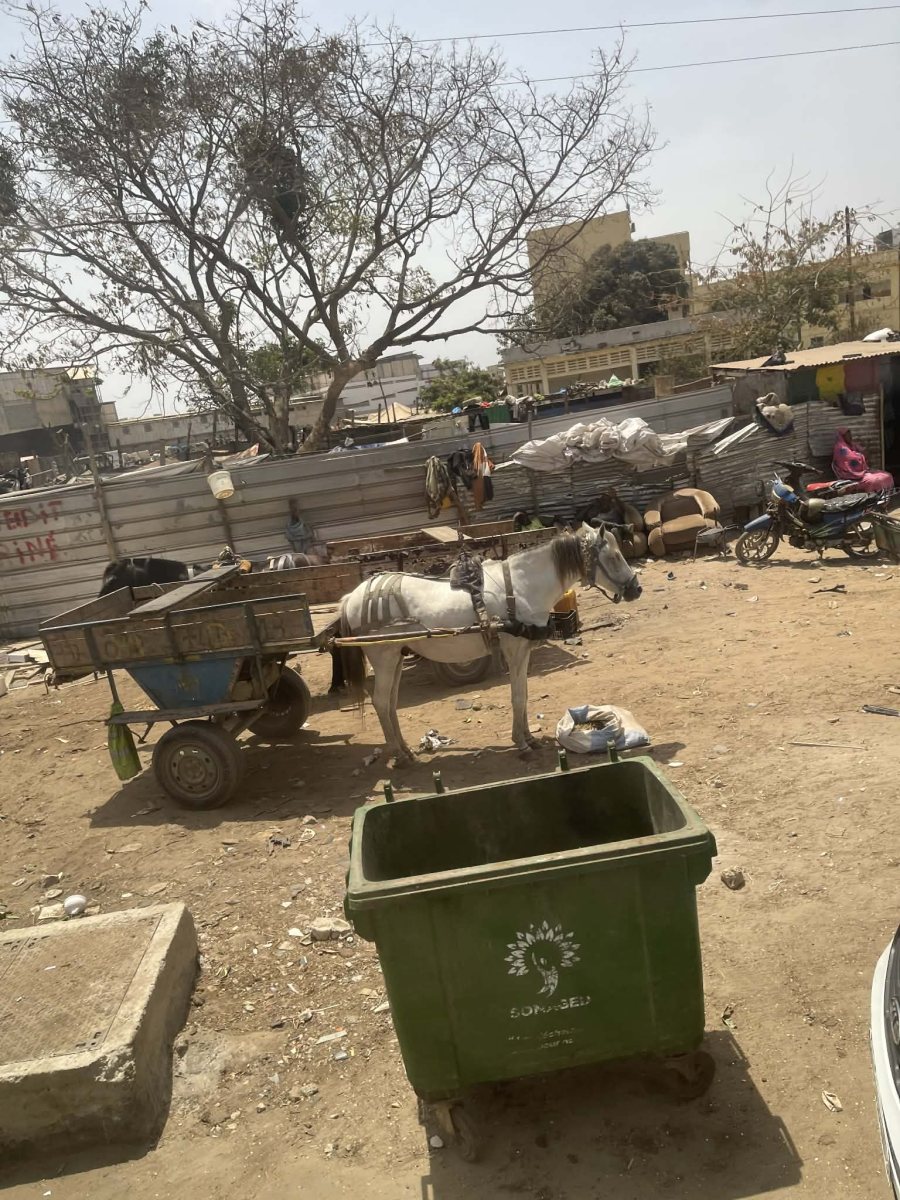
There were goats everywhere, some tied up, some wandering free, and I saw quite a few horse-drawn carts hauling freight around town. As seems to be common, our first visit was to the local Catholic church.
But that’s when it dawned on me, in a country like Senegal, that when you wash your hands, you’re washing them with “suspect” water, meaning your hands still may spread local bacteria to which we travelers are not immune. I mentioned it to someone from our bus at lunch, and he said the soap will take care of things. Later it dawned on me, though: how is it you get that soap off your hands? You rinse them with local water. So I always followed with hand sanitizer after washing my hands.
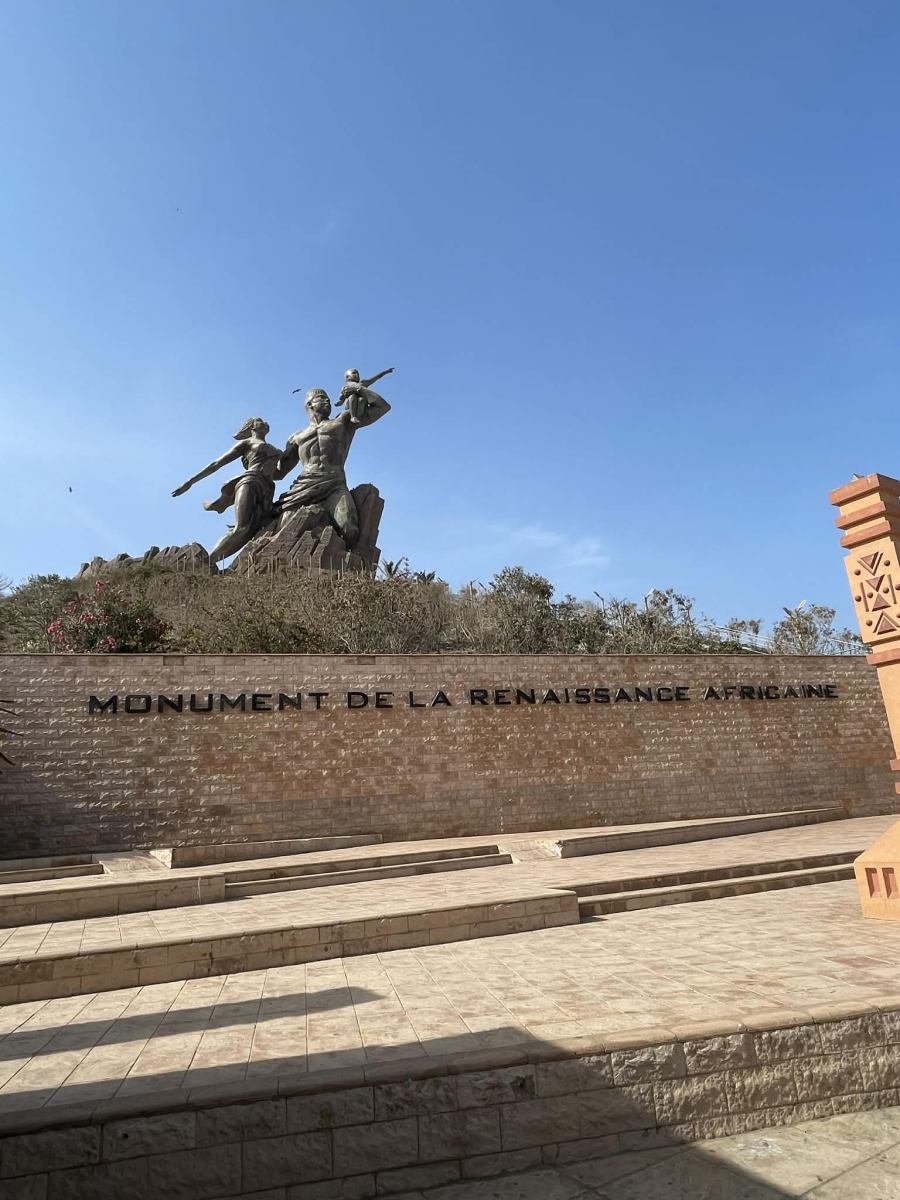
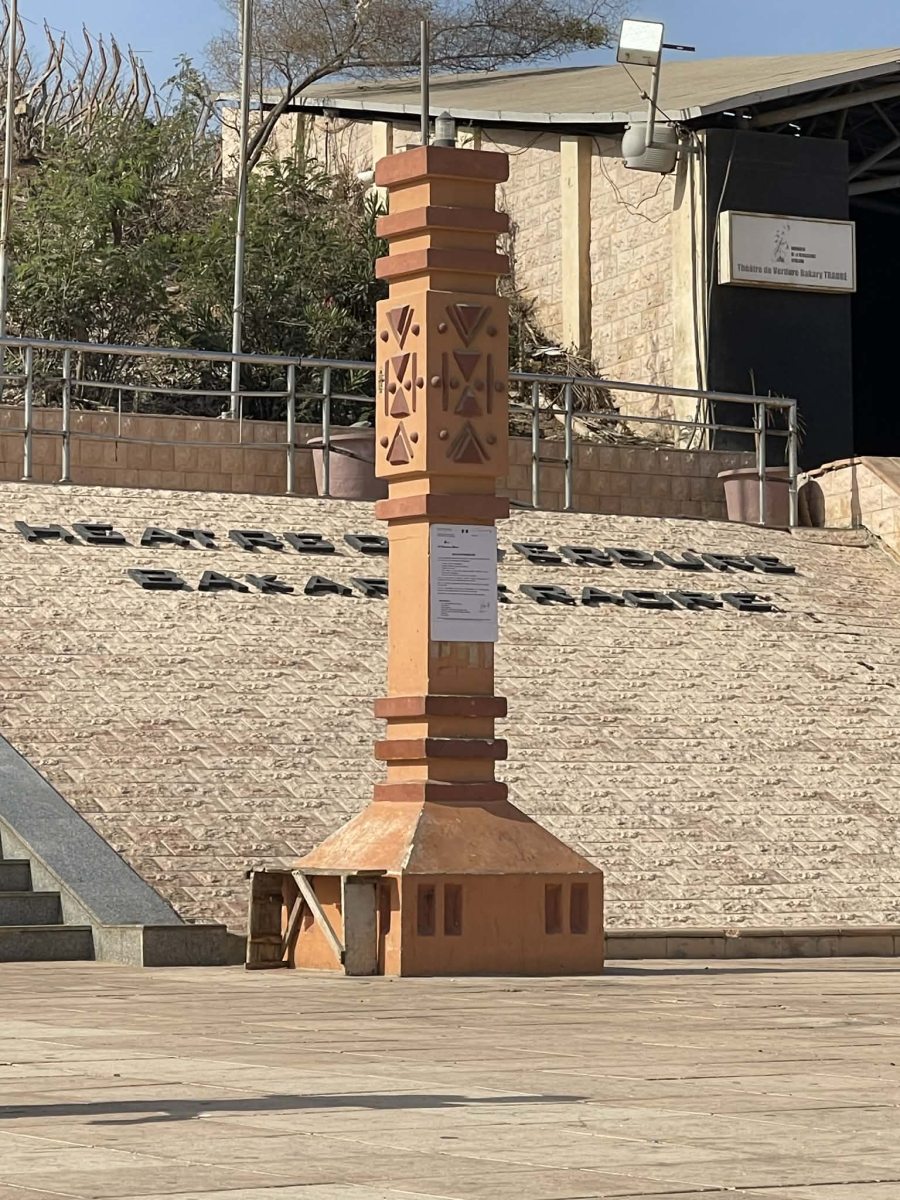
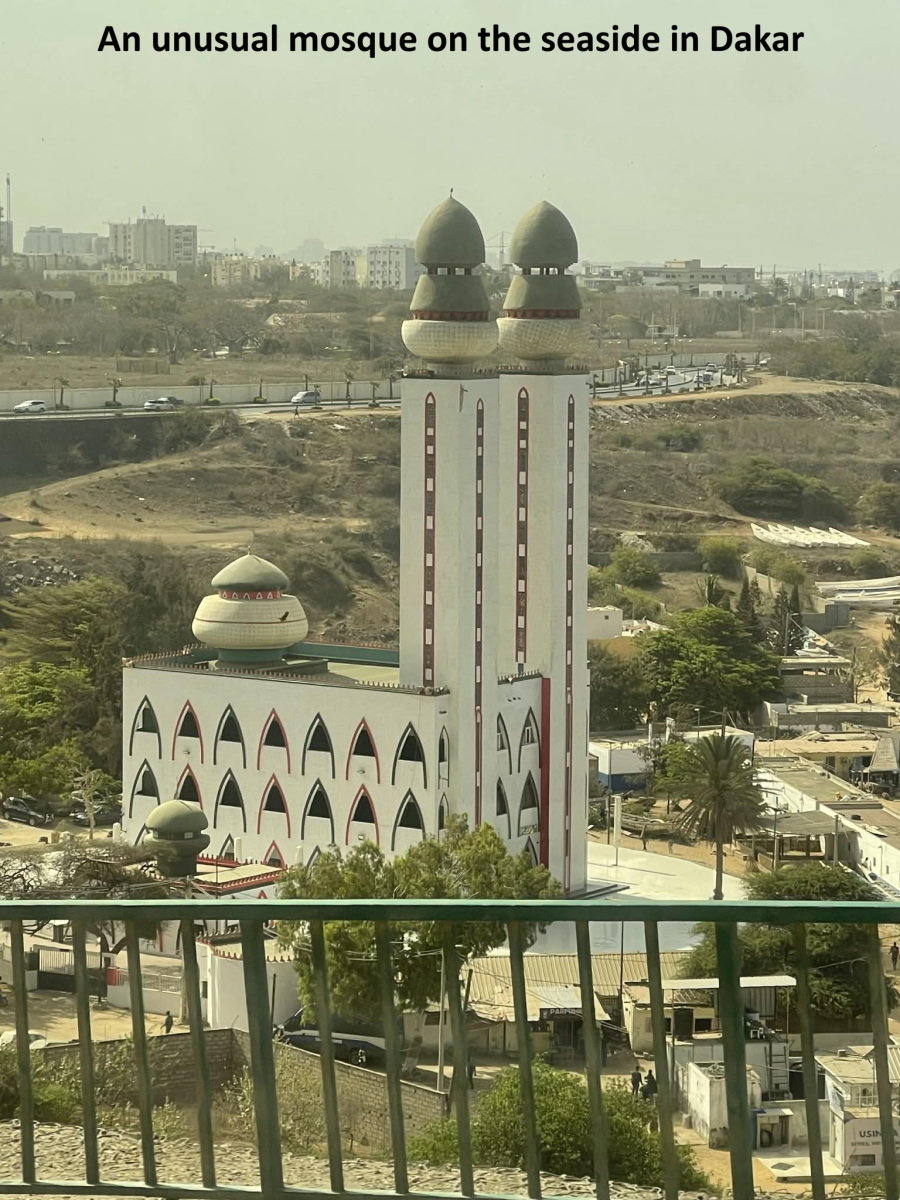
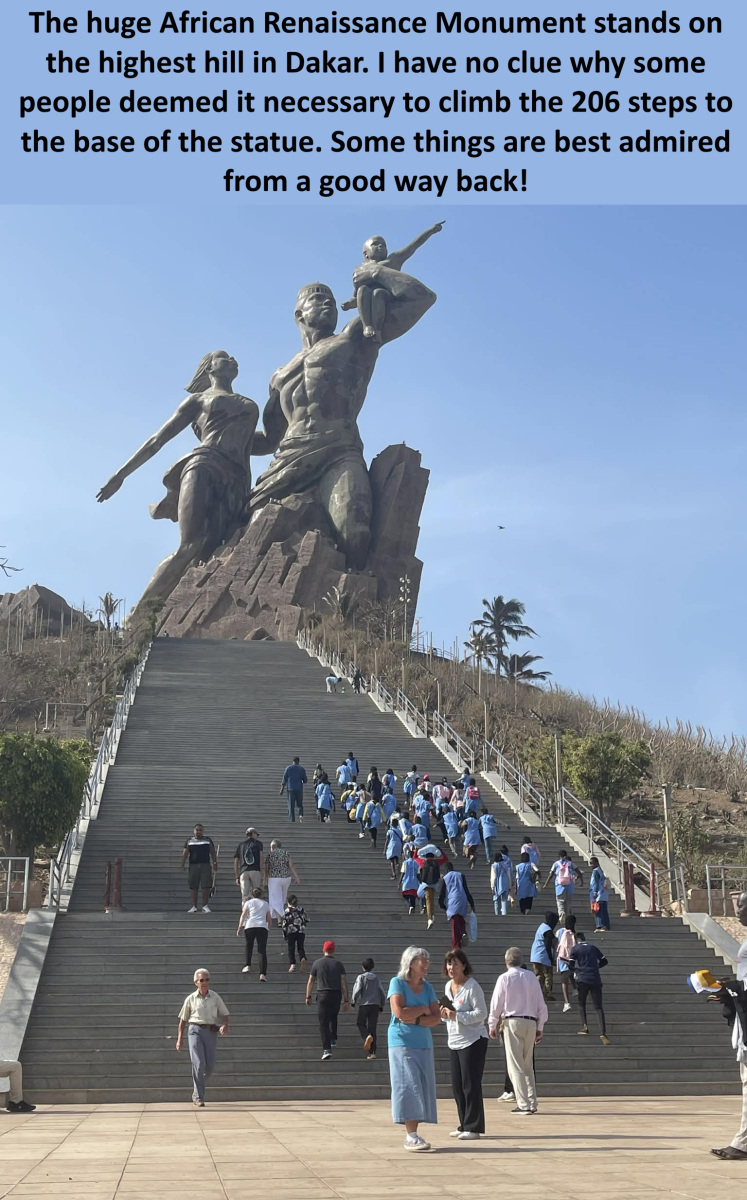
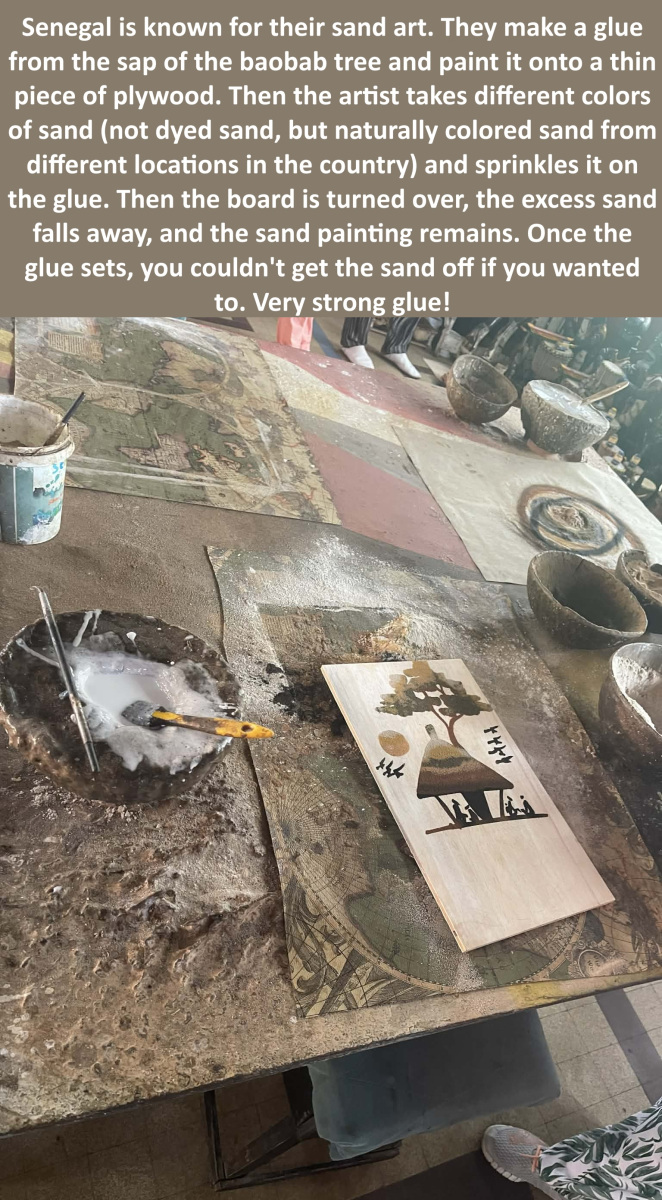
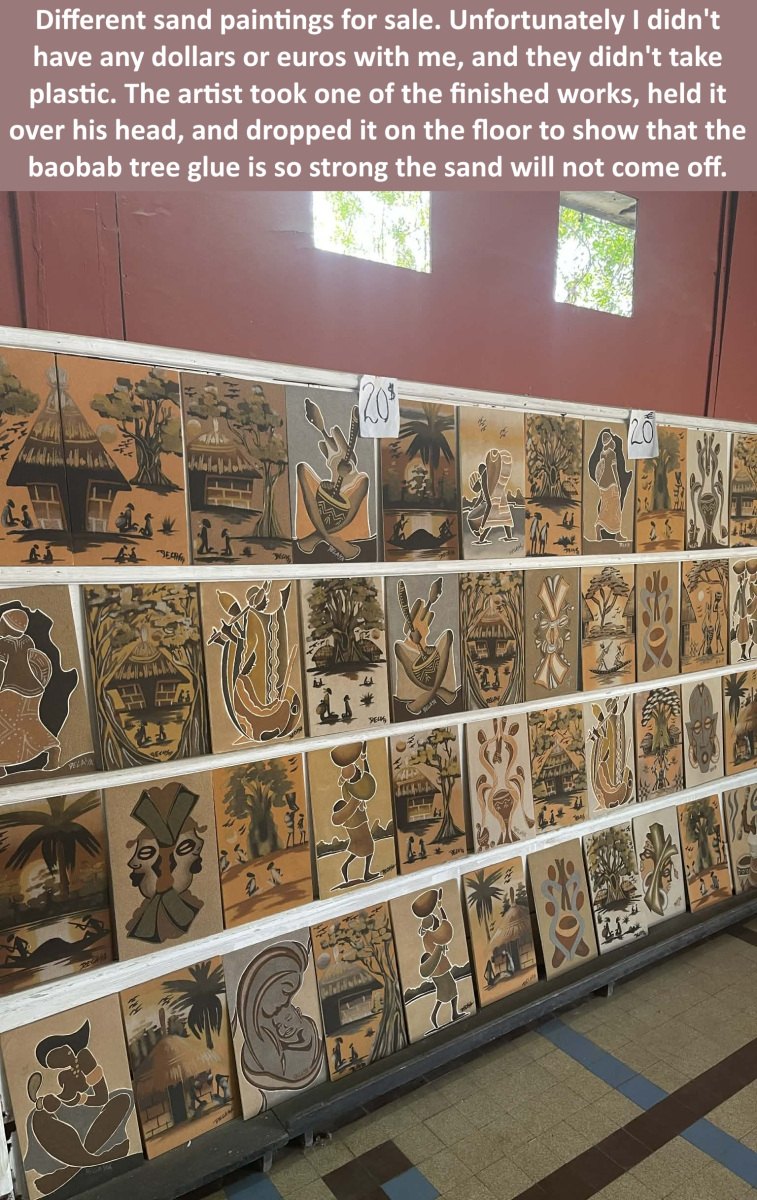
Dakar Art Studio Creating Sand Art in Dakar
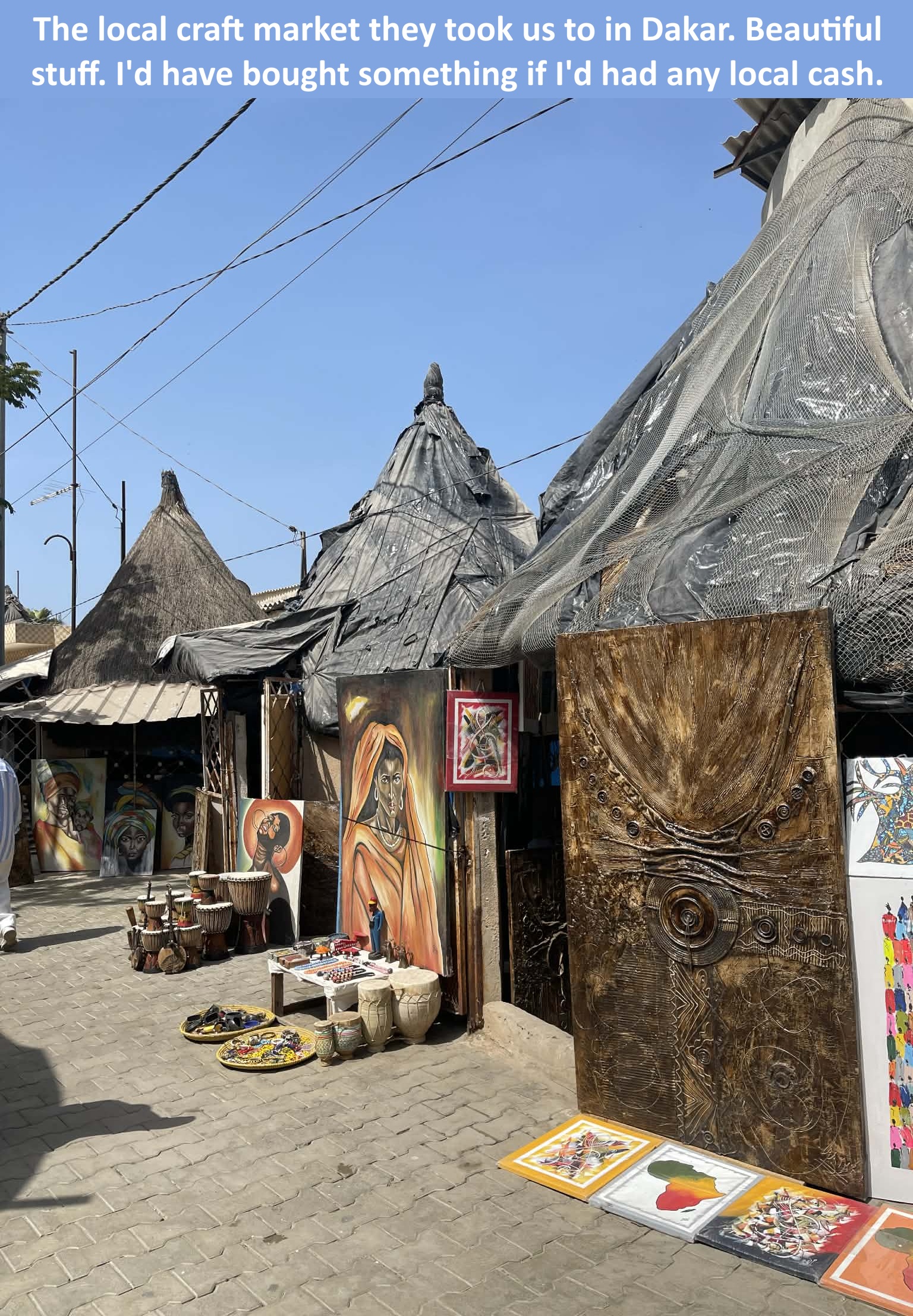
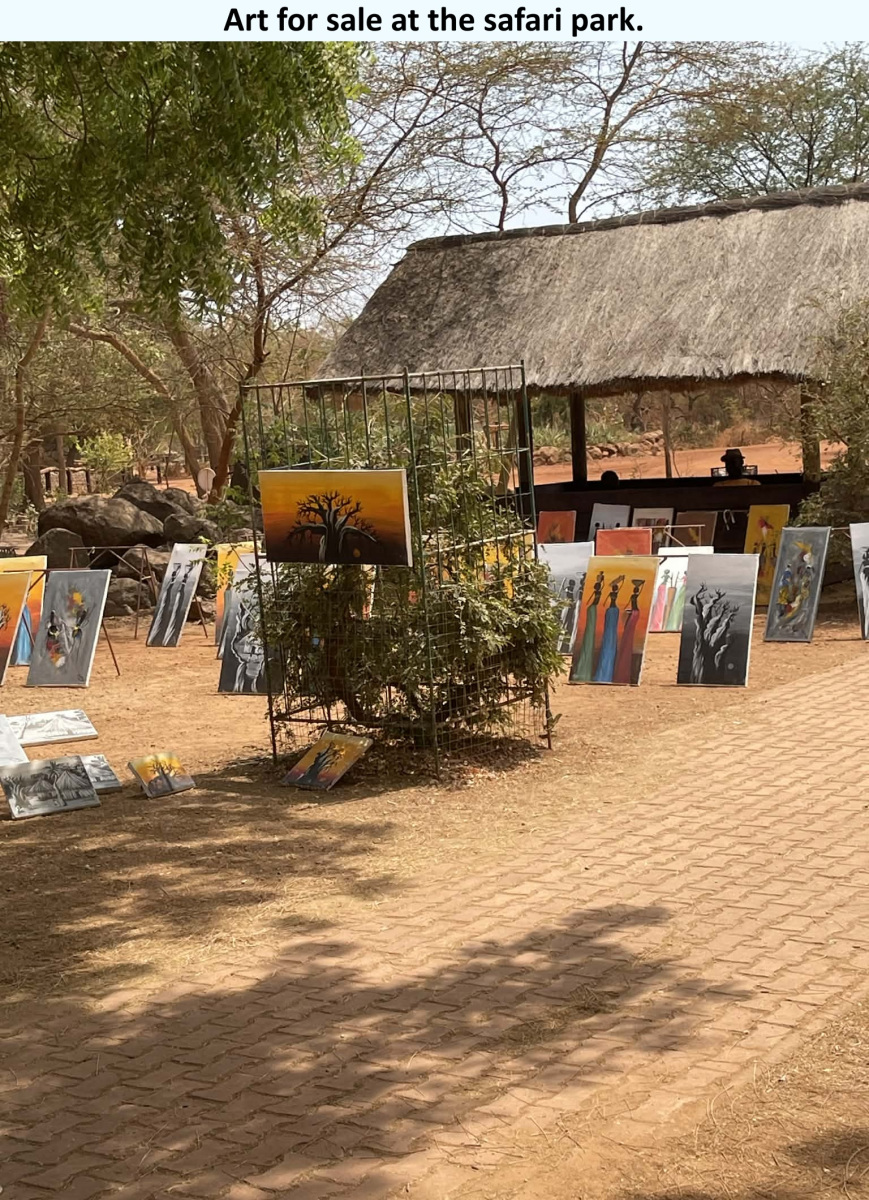
Next stop was the craft market, which was a waste of time since none of us have Senegal money, and places like that don’t take credit cards, so we couldn’t buy anything. It was the kind of carnival-like market I hate. You can’t stop to look at anything without the booth owner coming up trying to sell you things. I took a quick look and headed back to the bus.
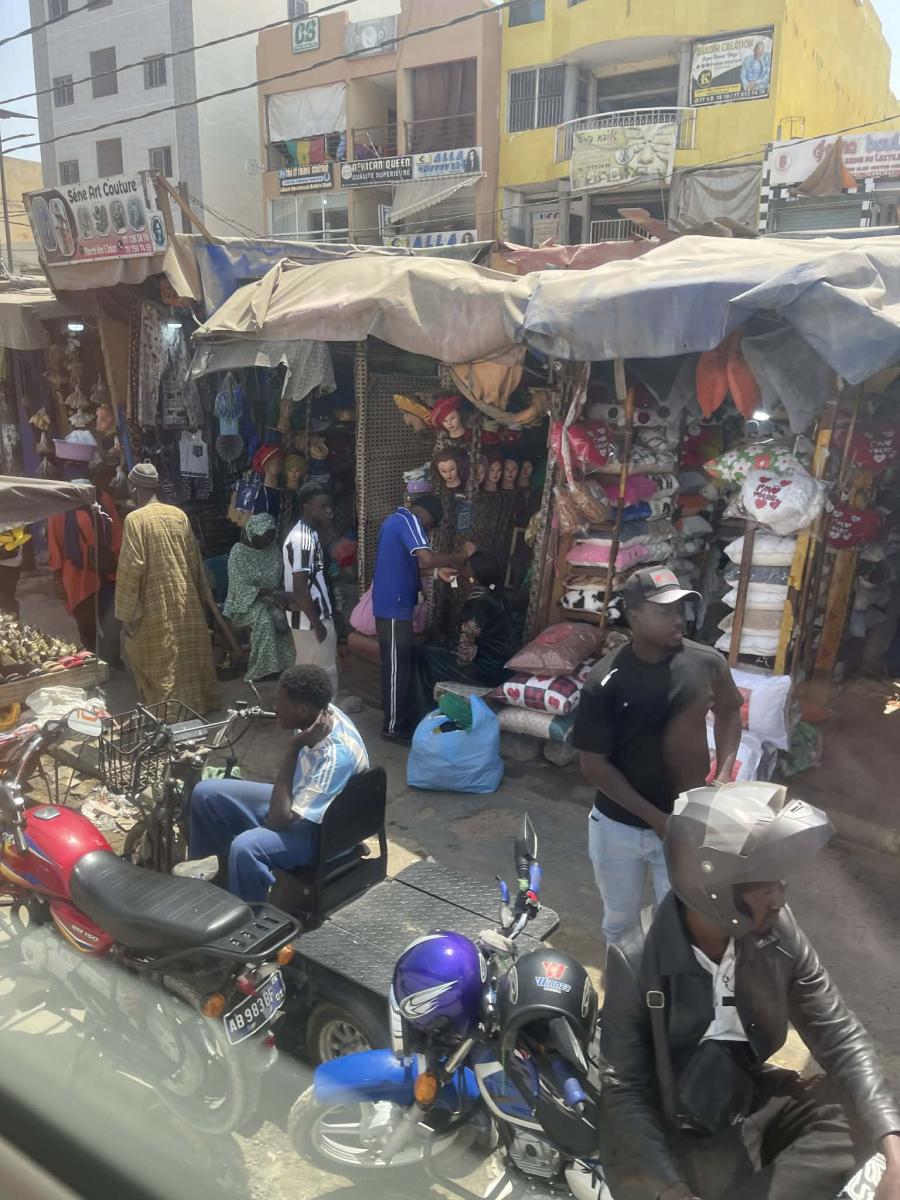
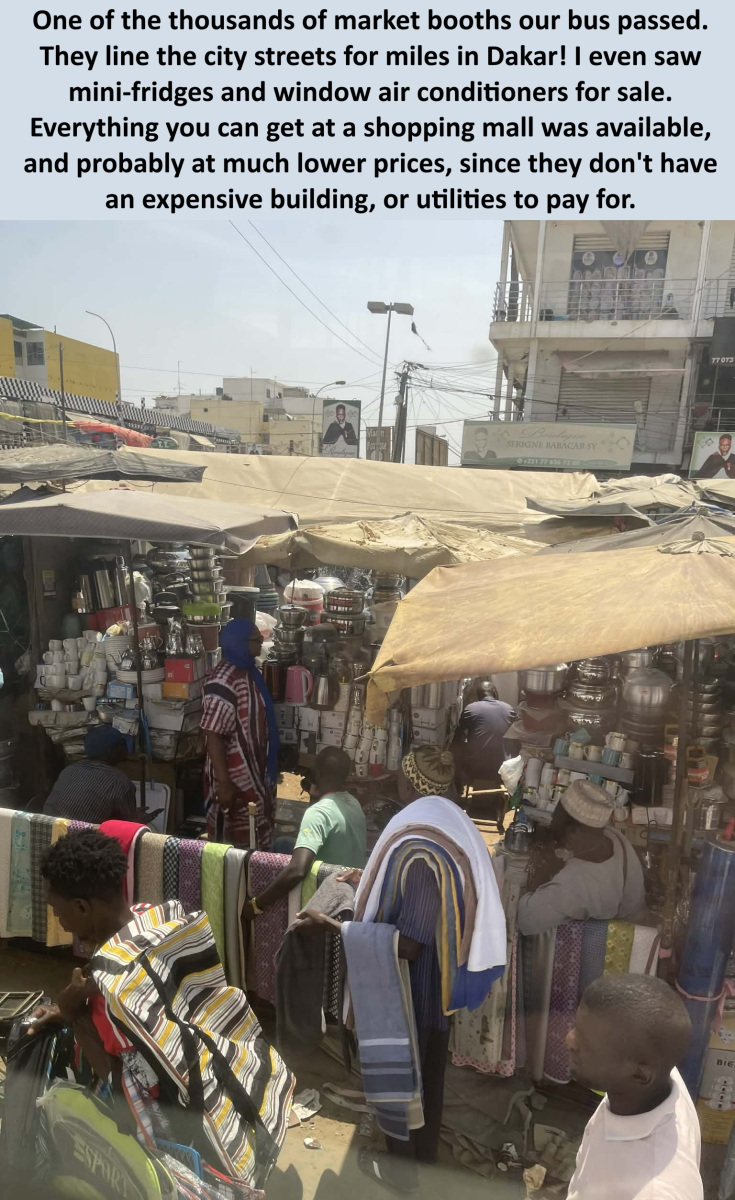
 Then we drove 1 hour through heavy, heavy stop-and-go traffic to get out of town. The markets lined the streets for miles! That’s when I realized that these little markets, sets of individual booths about the size of a county fair booth, are not for the tourists. There are no tourists. These markets are where the locals buy things, in a place with no big box stores or Amazon deliveries. The stalls specialize. One booth will just sell pots and pans. The one beside it will sell table cloths and the next one children’s toys. They’re all covered with tarps or pieces of tin. Each one has a person sitting there all day, hoping to make a sale.
During the day, I heard complaints from three people: though we’d been forewarned by Cunard that the local guides have heavy accents and are hard to understand, one British woman on the bus kept shouting for the guide to speak louder and more slowly. He would comply about two sentences, then lapse back into his fast, very hard to understand English. I caught about 1 word in 10, but it was enough to get the gist of what he was trying to tell us. It didn’t matter, my eyes took in enough to keep me occupied. The British woman finally gave up and shut up.
Later, a different British woman complained that the air conditioning was insufficient. Finally, a third British woman complained about the bus route going through so much traffic. The guide apologized, but said he has no control over traffic, and other routes would be even worse. Considering the loud, profane British woman in the ship buffet, whom I mentioned earlier, my conclusion: the Canadians get their reputation for being nice and polite due to British men, not British women. I was reminded, again, of Hyacinth on the British comedy “Keeping Up Appearances,” and her quiet, long-suffering and embarrassed husband Richard.
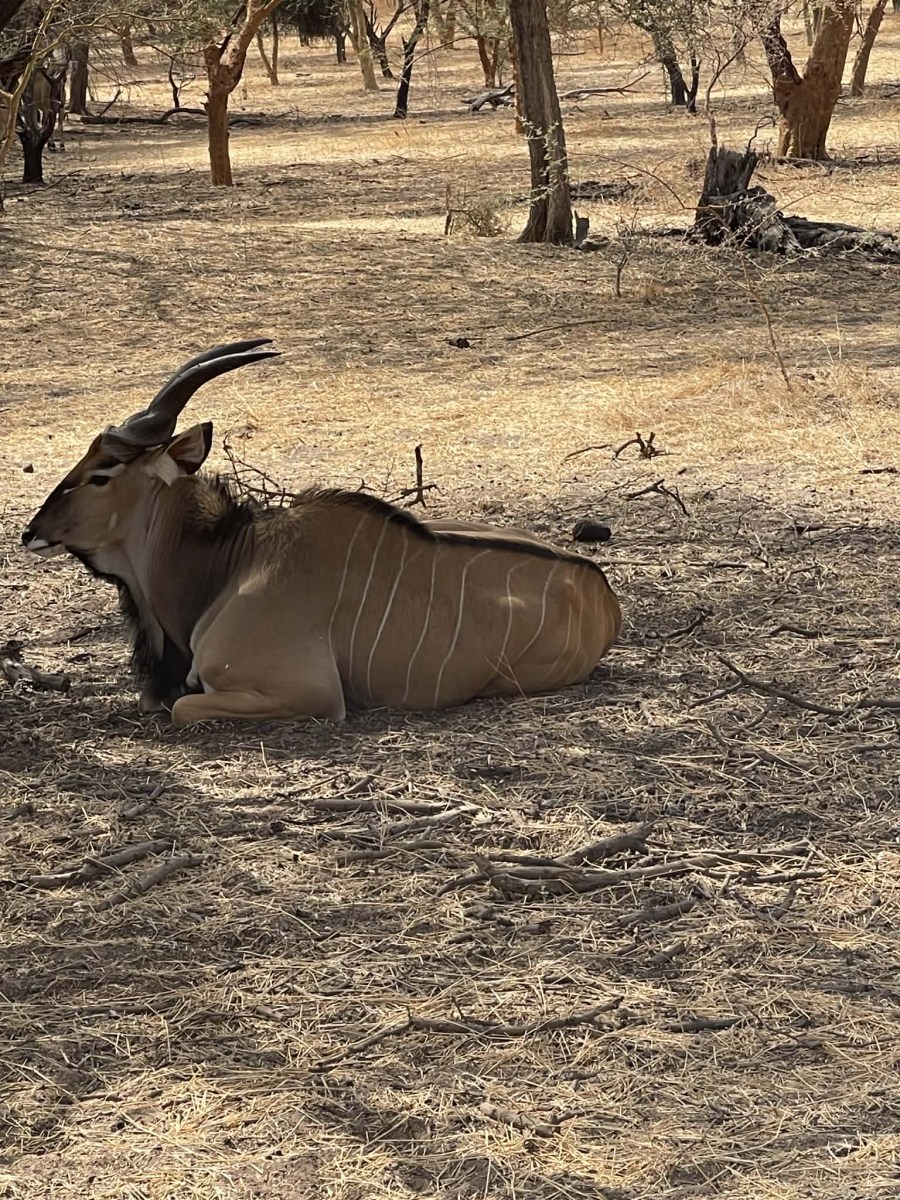
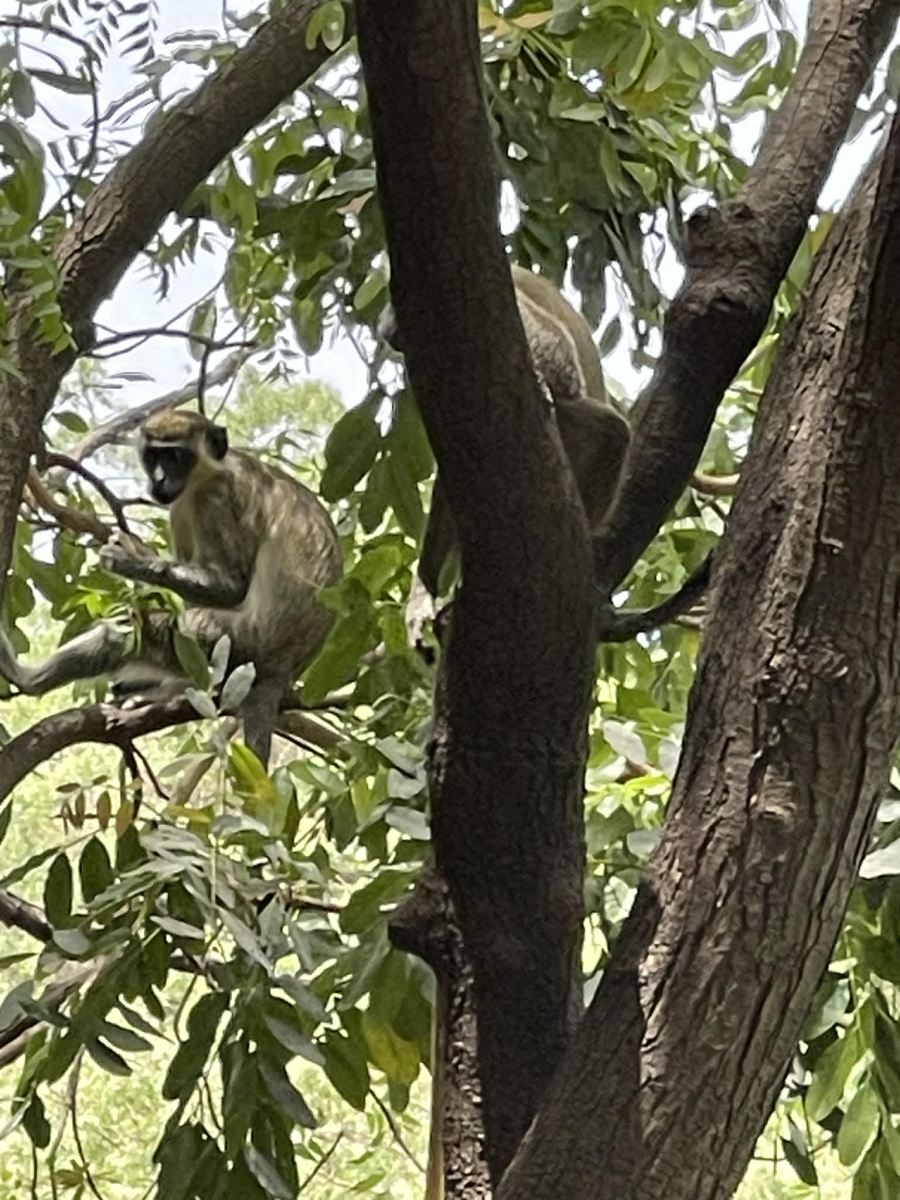
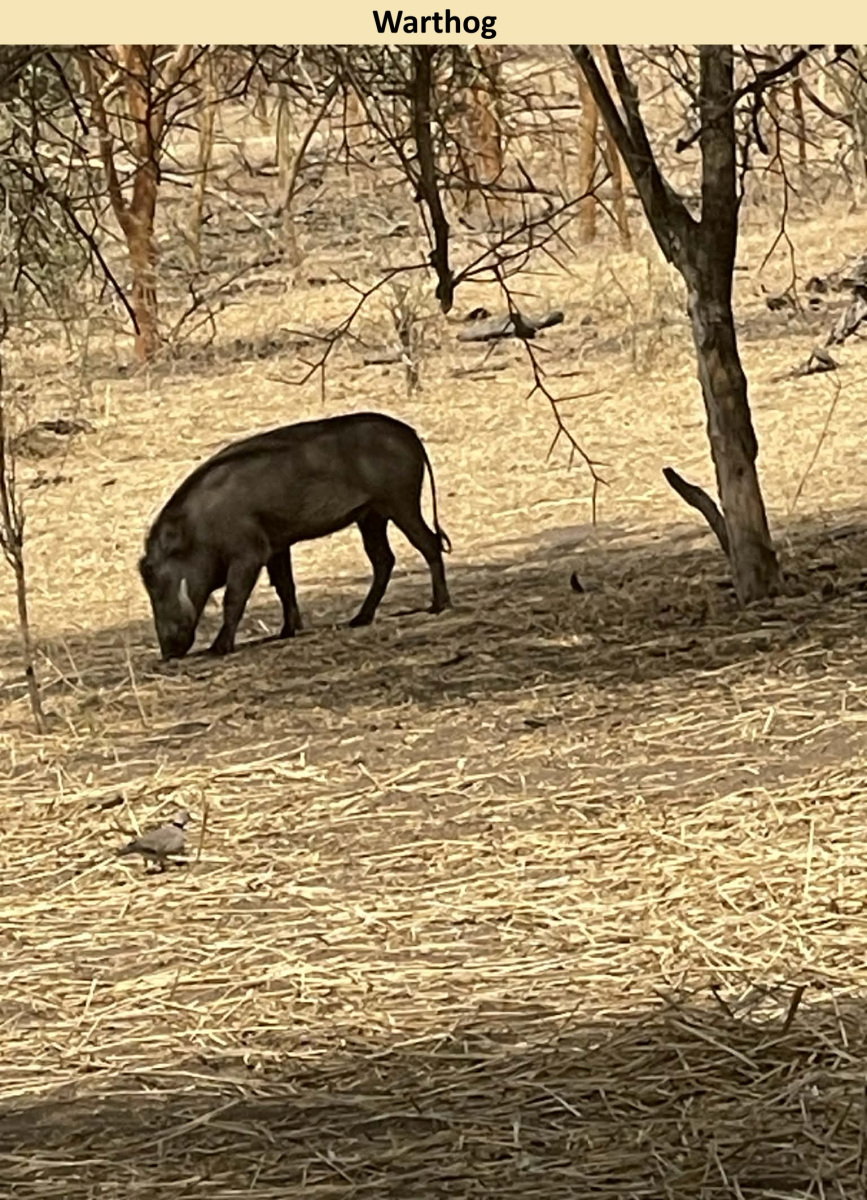
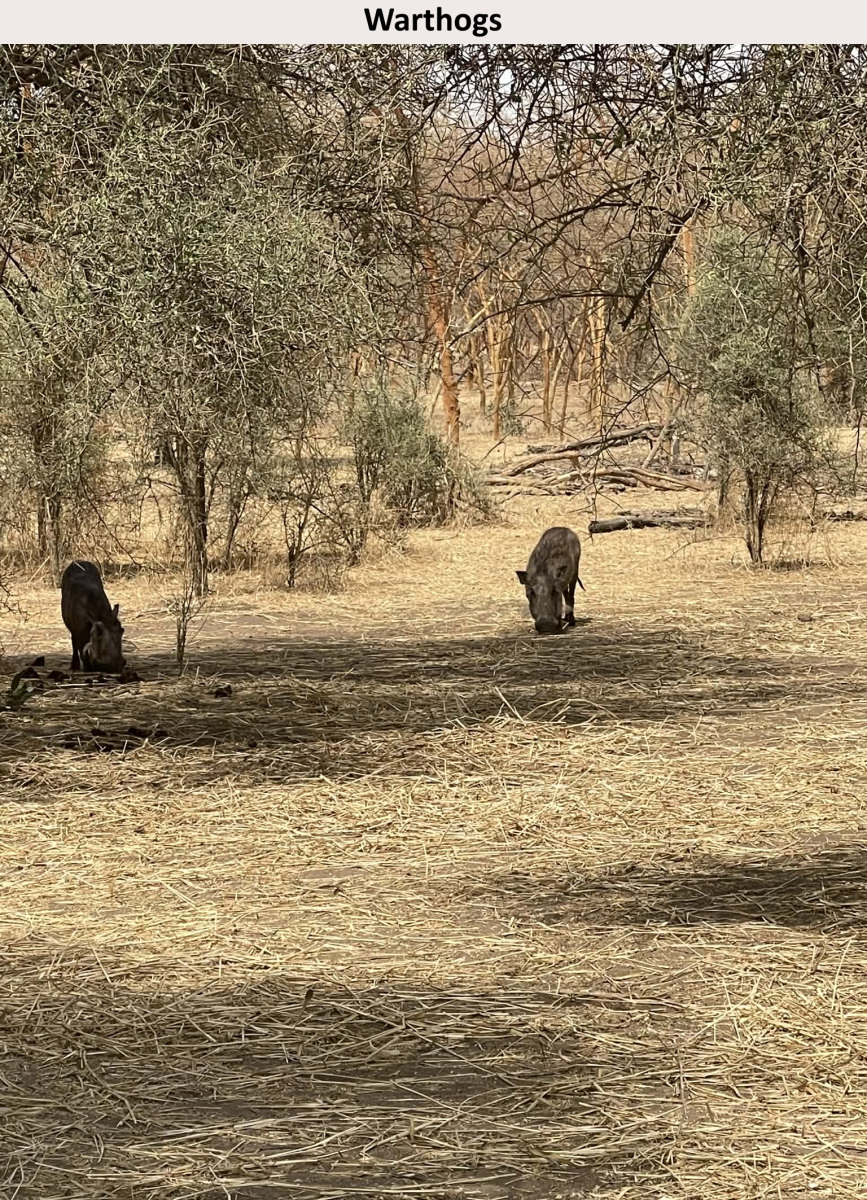
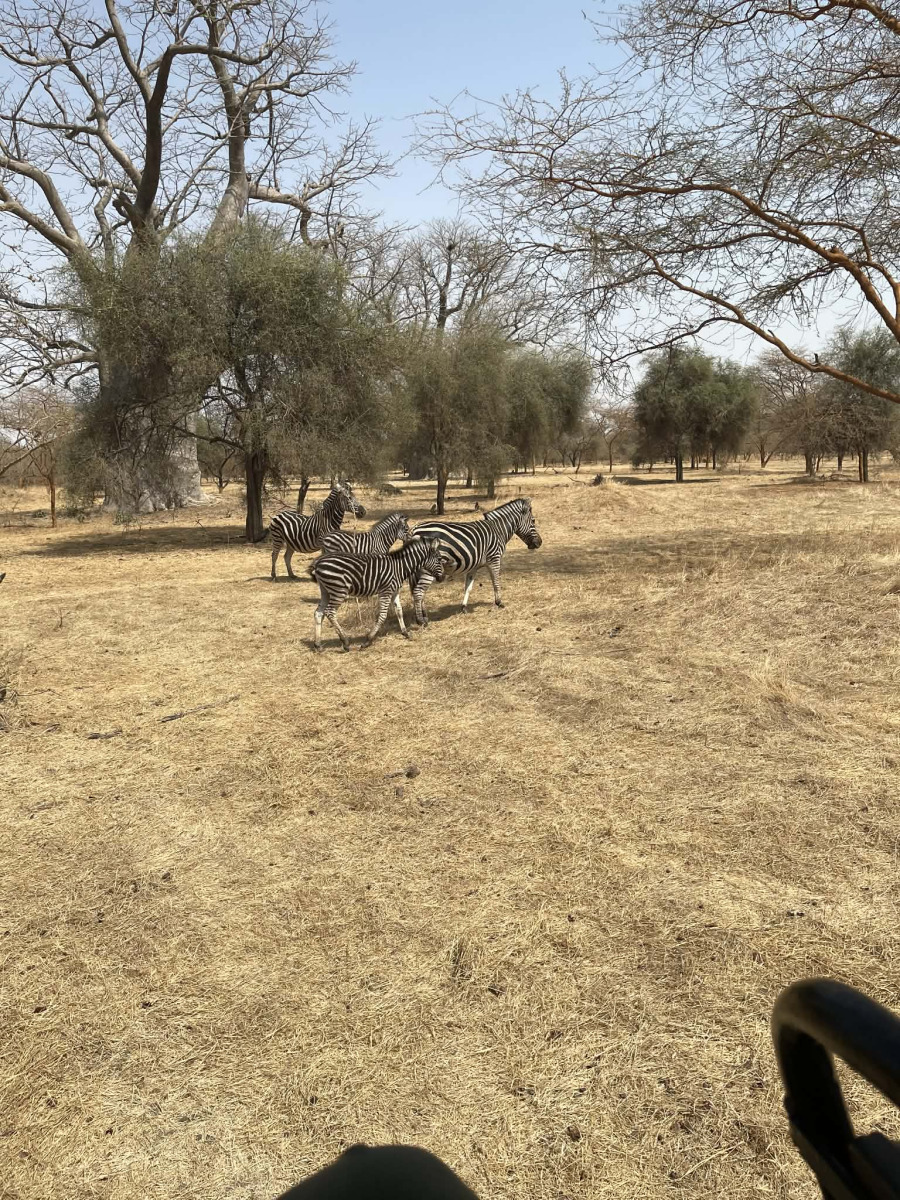
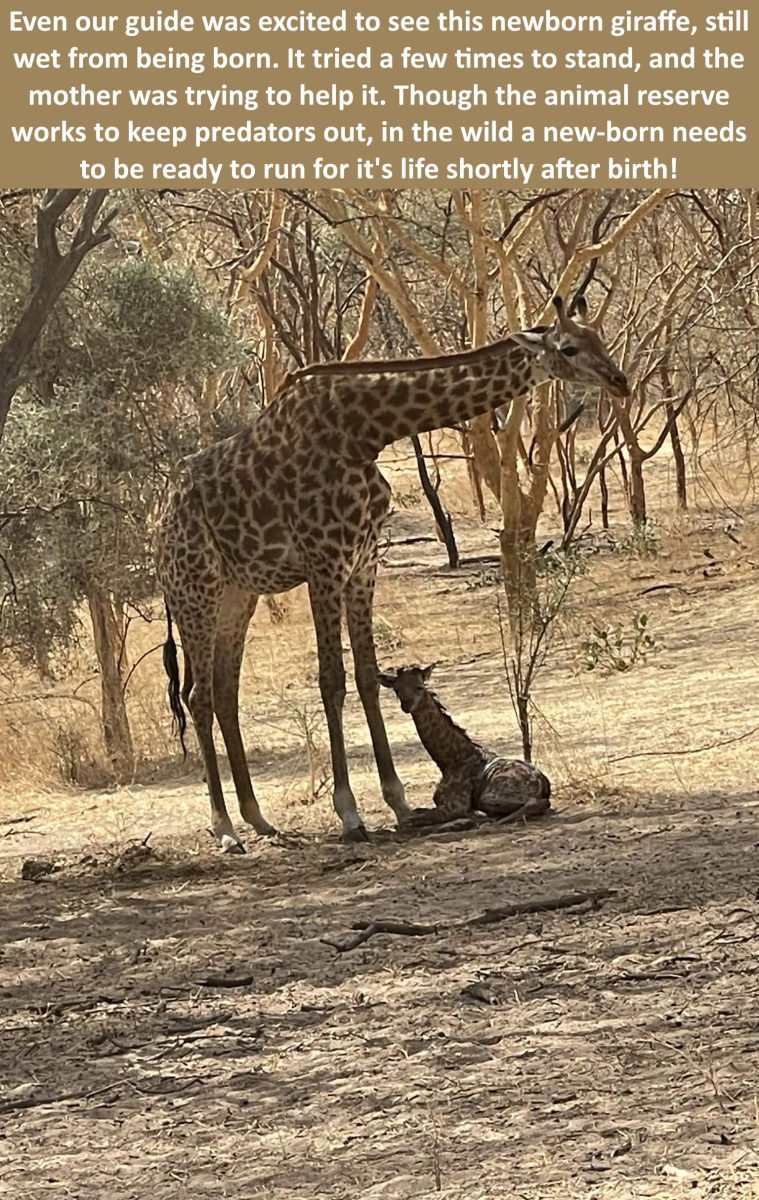
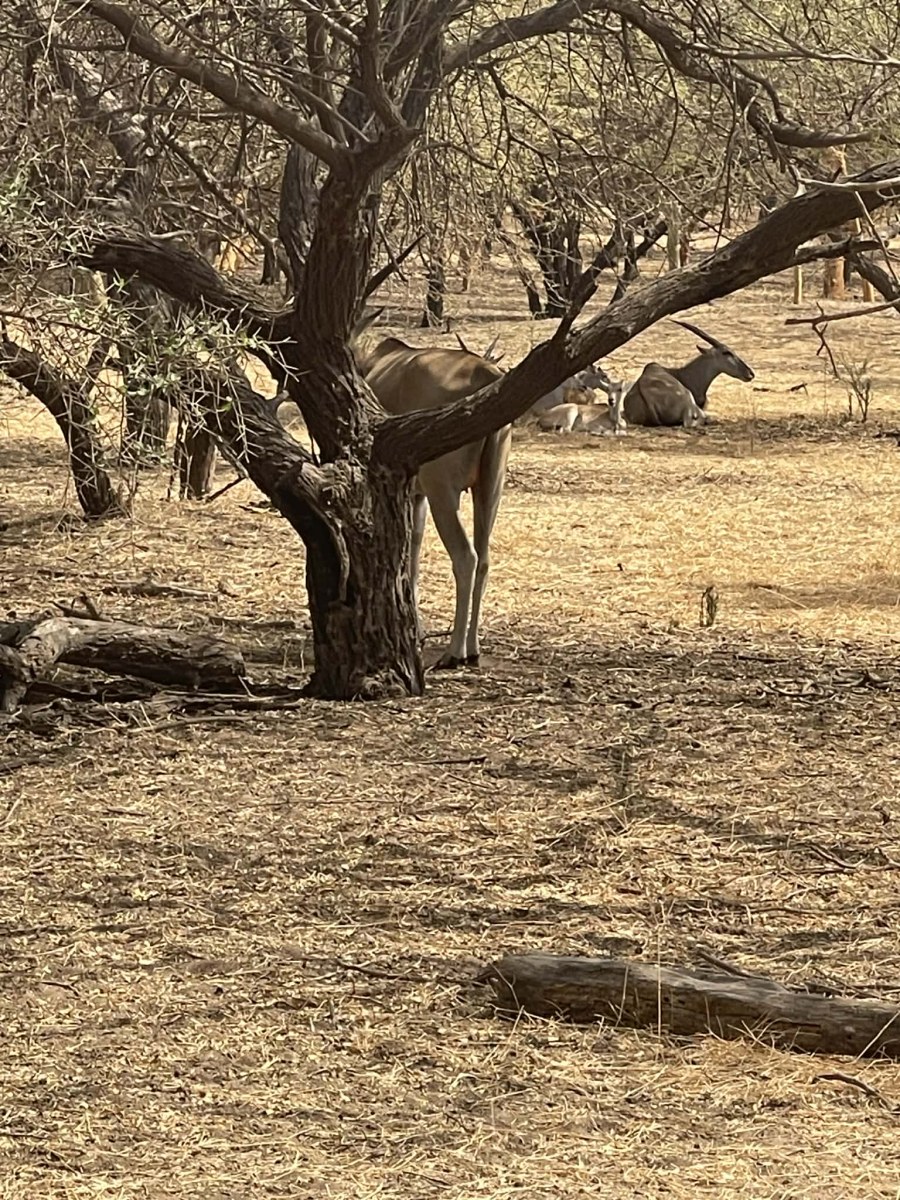
The first time we spotted a monkey, everyone got out their cameras. By the end of the day, we’d seen so many monkeys we didn’t even take notice of them. They were everywhere, going around the larger animals looking for something interesting to examine, or swinging tree-to-tree.
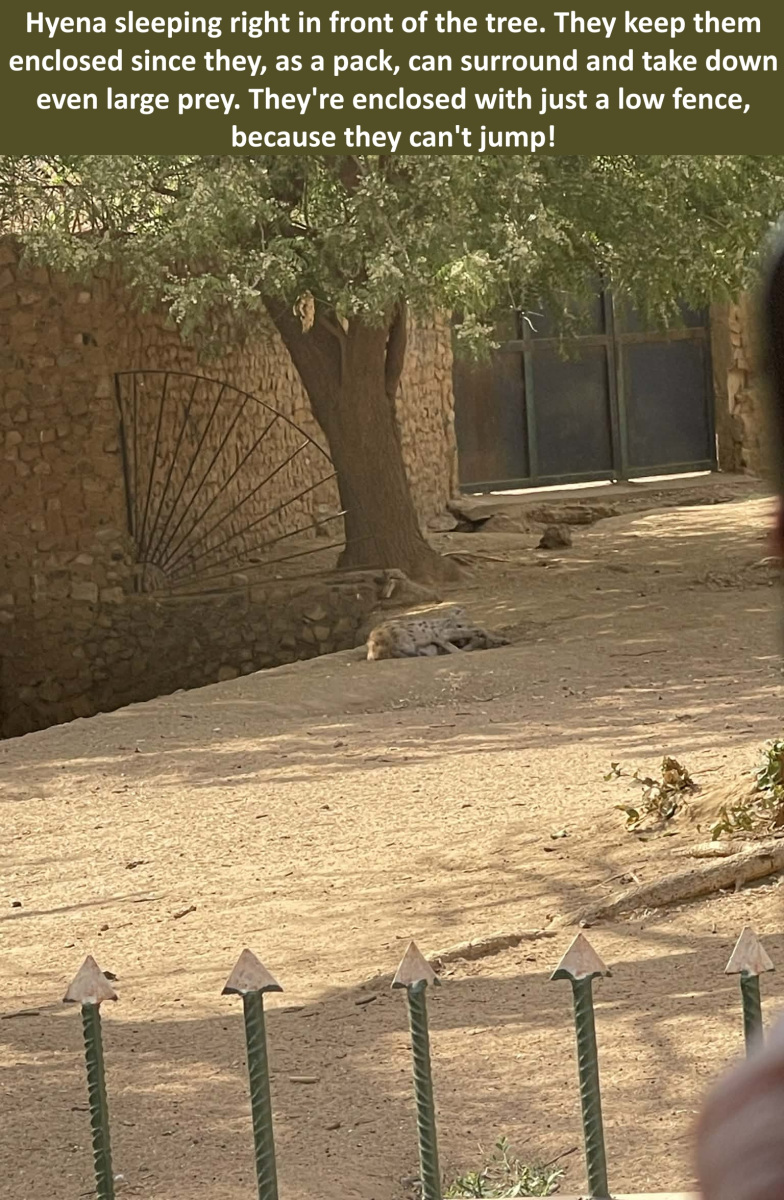
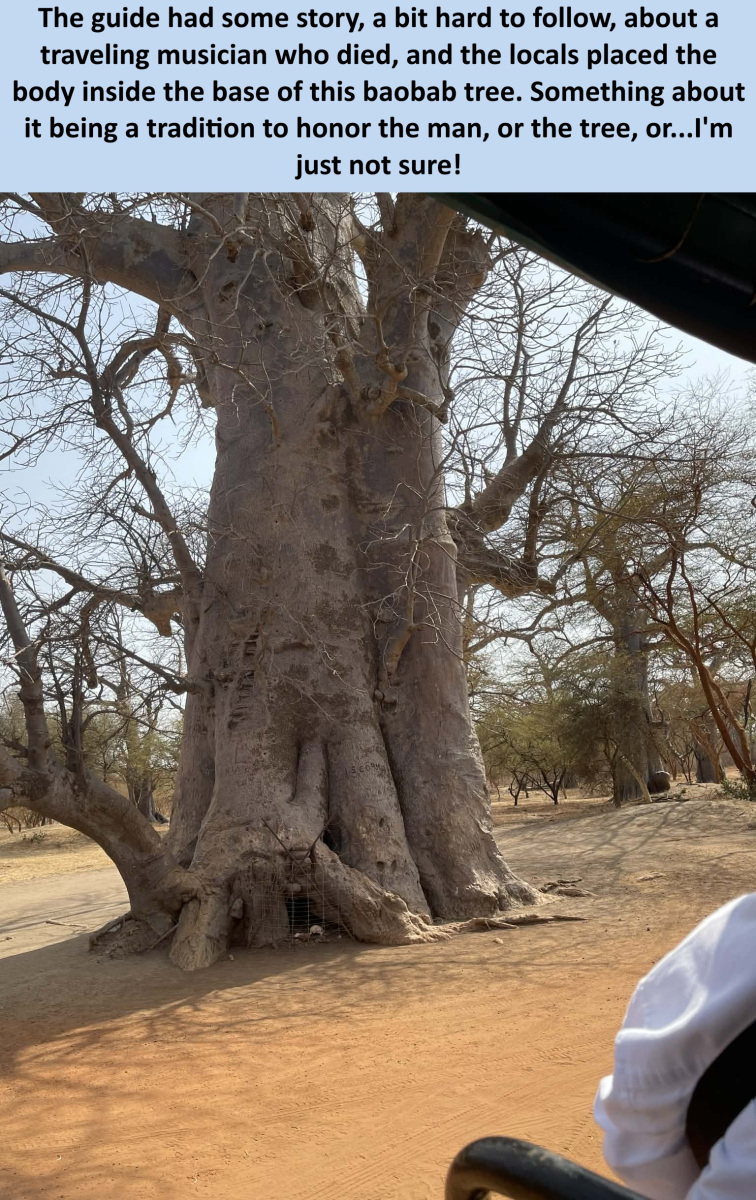
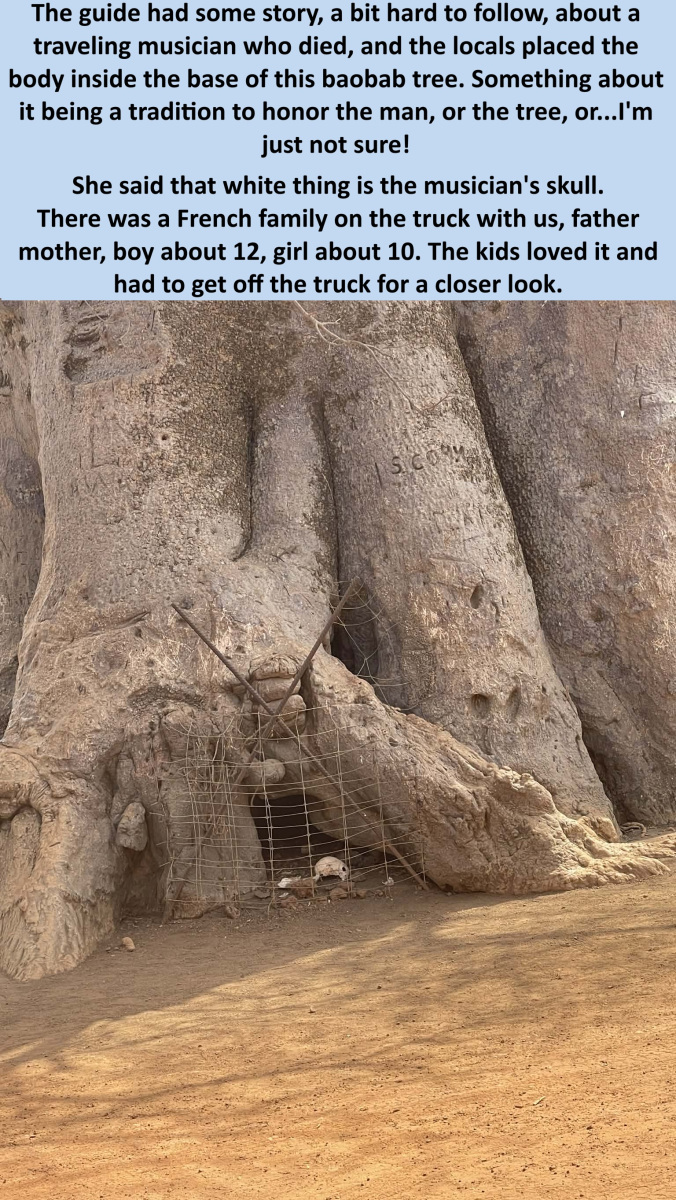
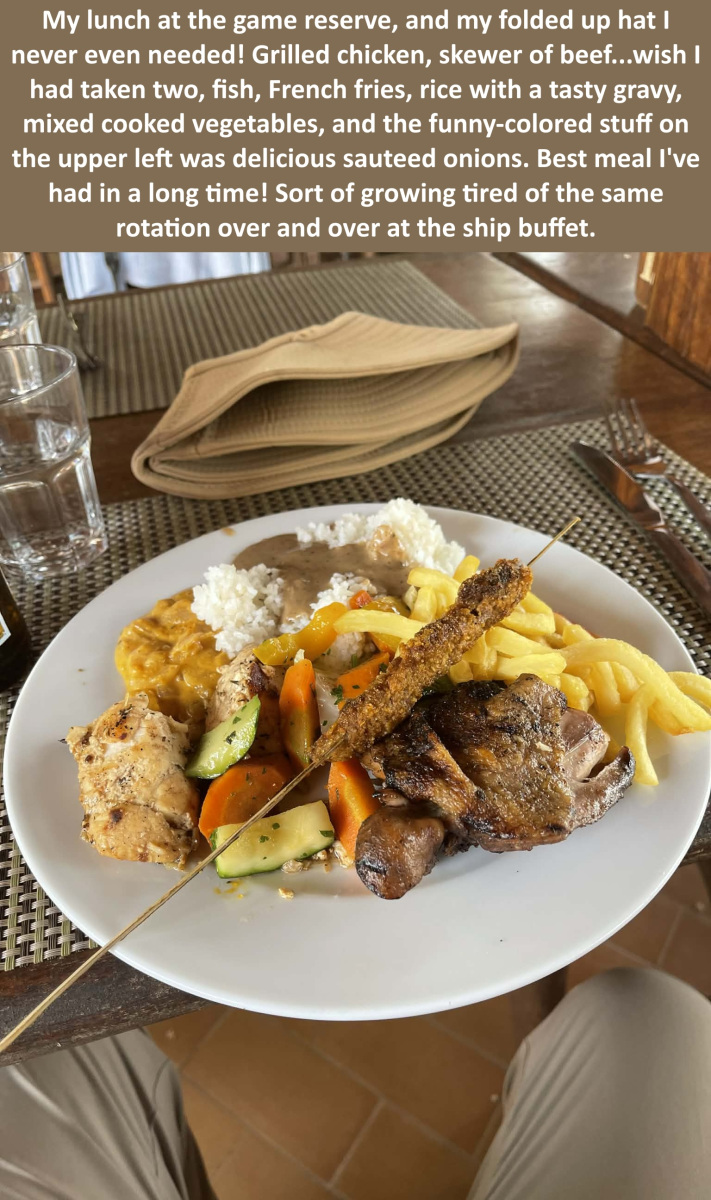
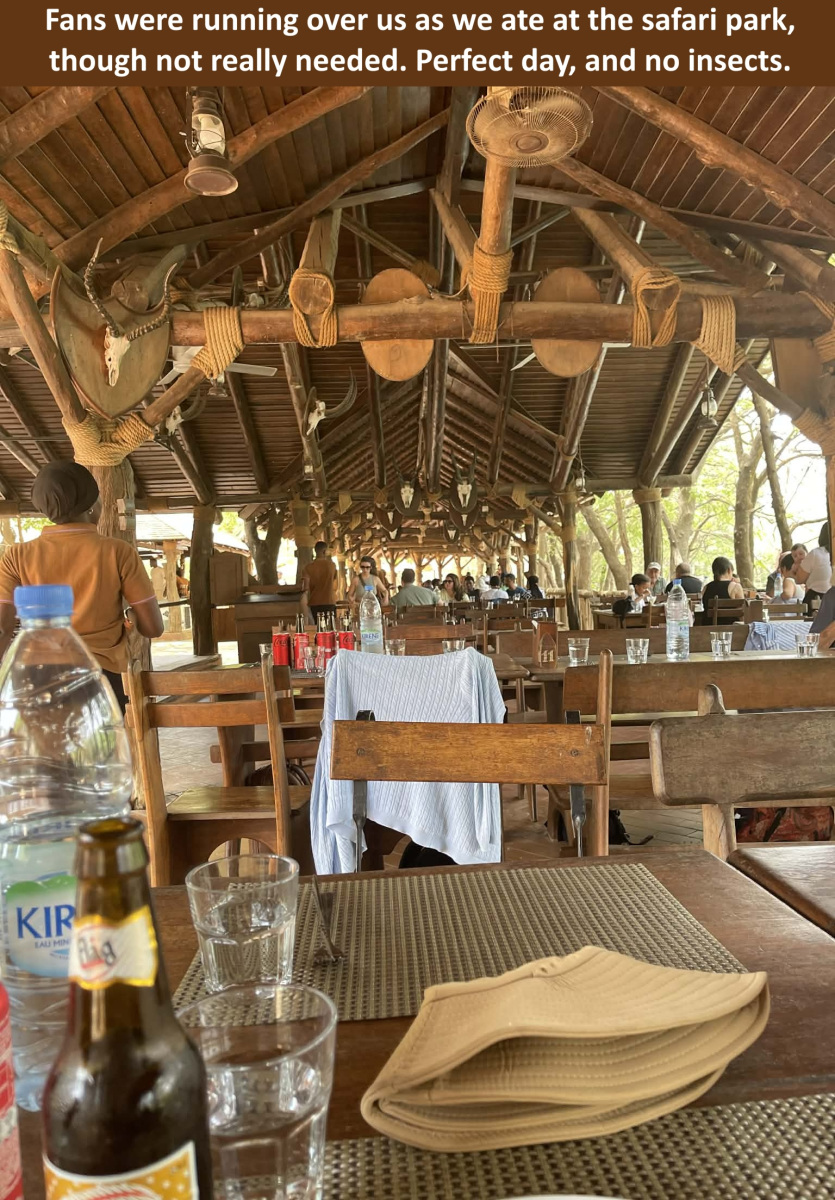
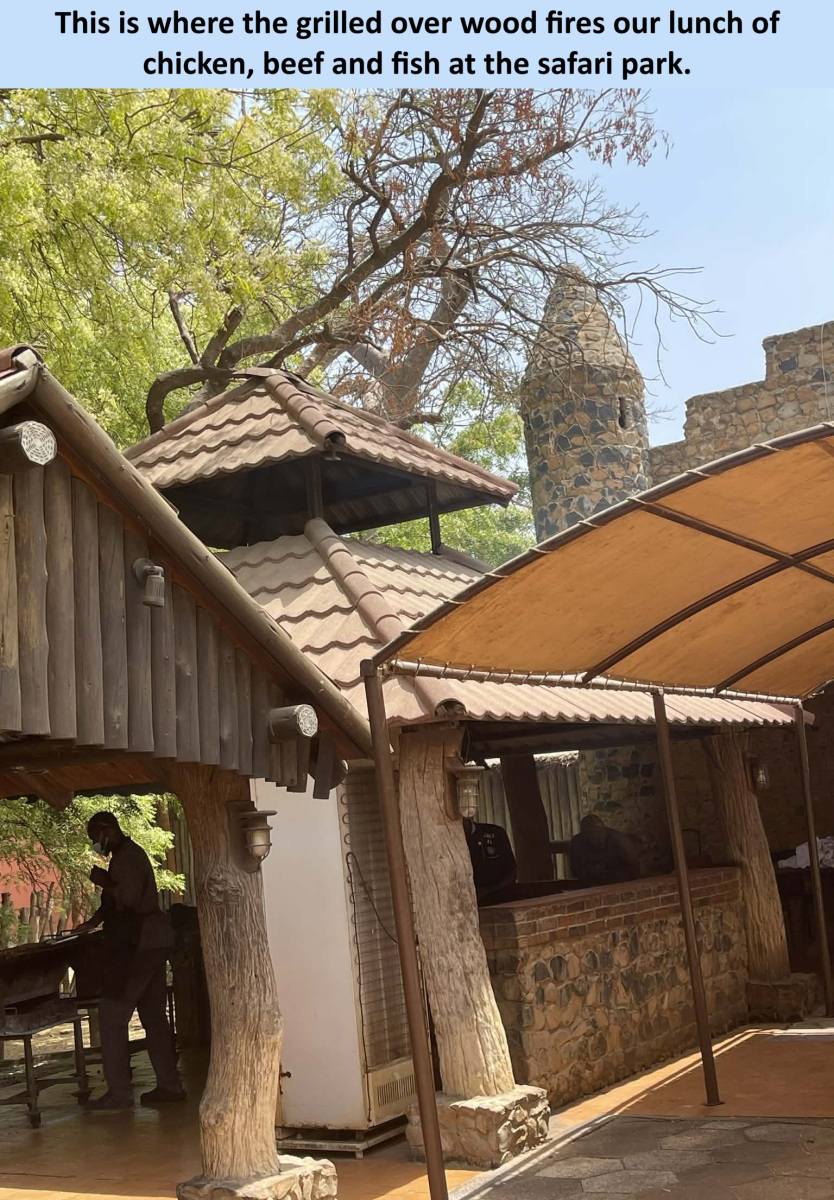
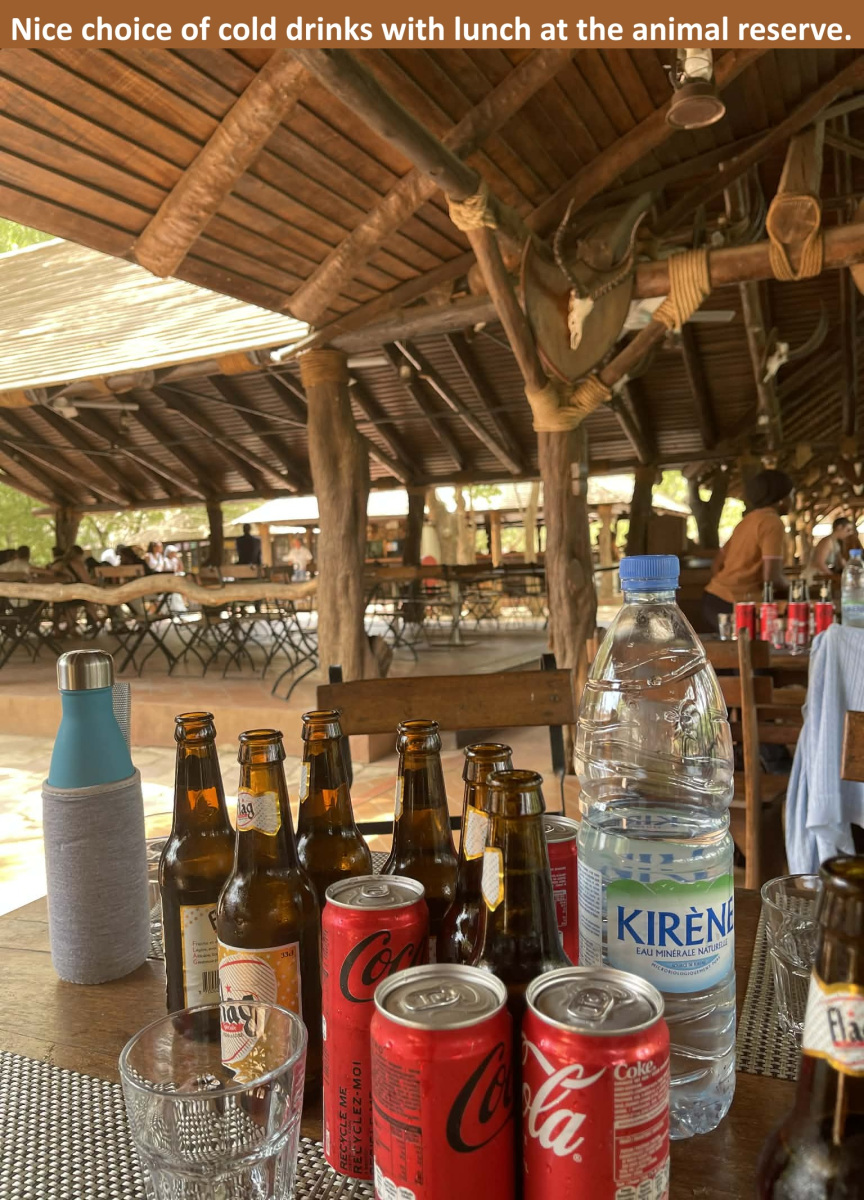
At the reserve, we were first served a great meal. It was 68F/20C, clear skies, nice cool breeze, perfect weather. Linda shared her insect repellant with me, but it really wasn’t needed. Too breezy for mosquitoes, but I’m glad we weren’t there after dark! We ate outside, under a big log-frame pavilion that reminded me of something you’d see at Yellowstone National Park. The chicken was grilled outside over a wood fire, and no sauces applied. Just good grilled, smoke-flavored chicken. They also had strips of beef on skewers that were equally tasty, as well as a mild grilled fish, plus sauteed onions, great french fries, some mixed cooked fresh vegetables, and rice with a tasty gravy. Choice of bottled water, sodas or local beer. The beer was cold and great!
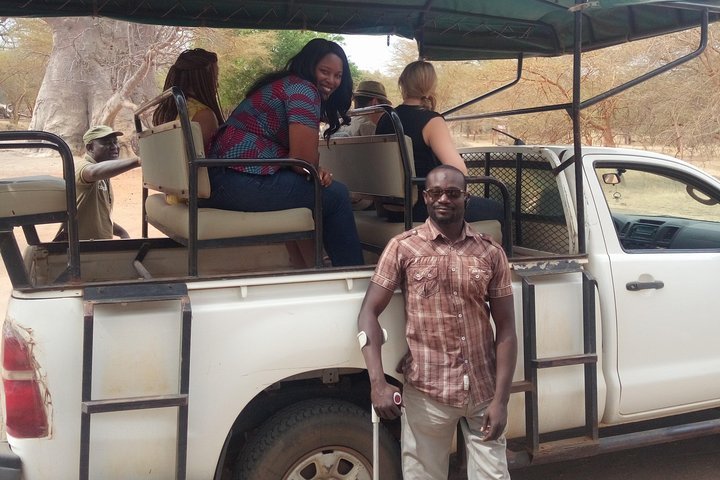
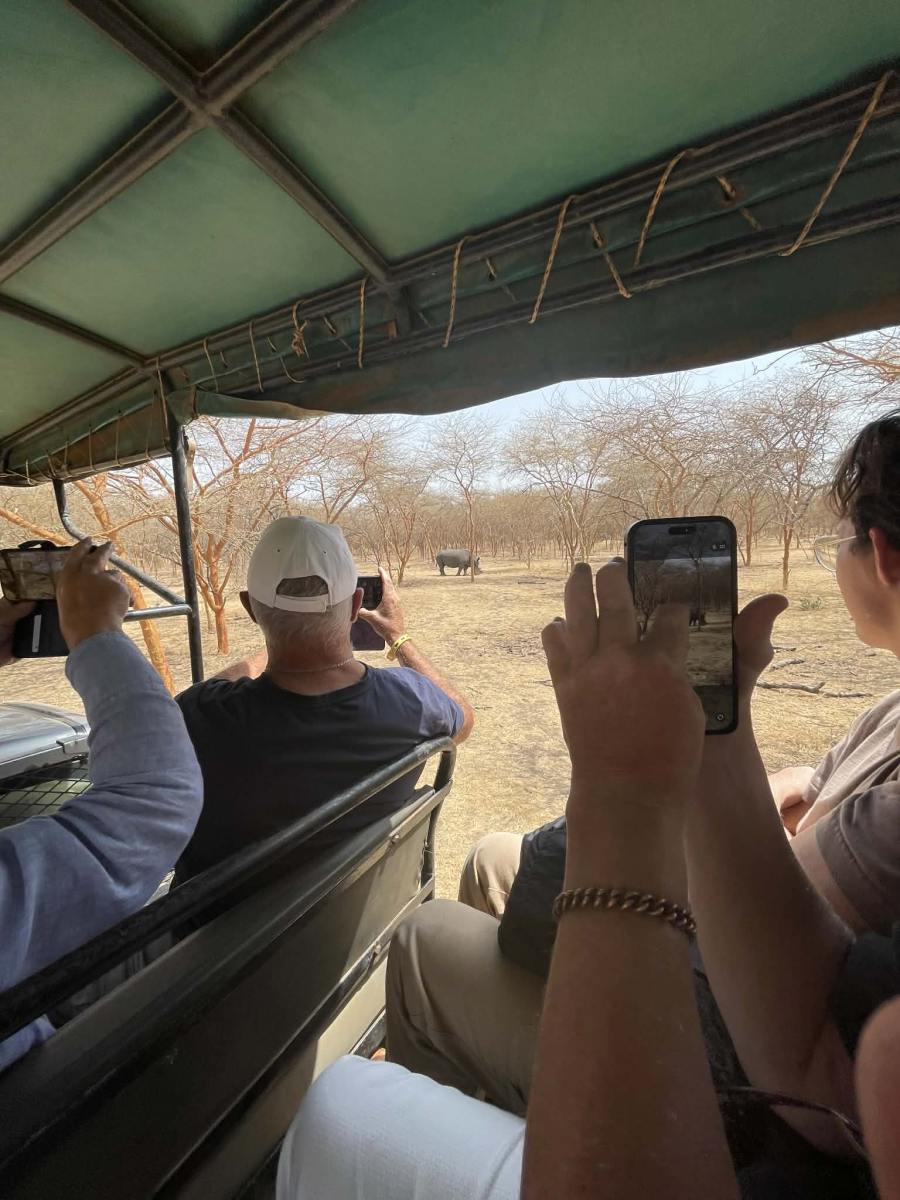
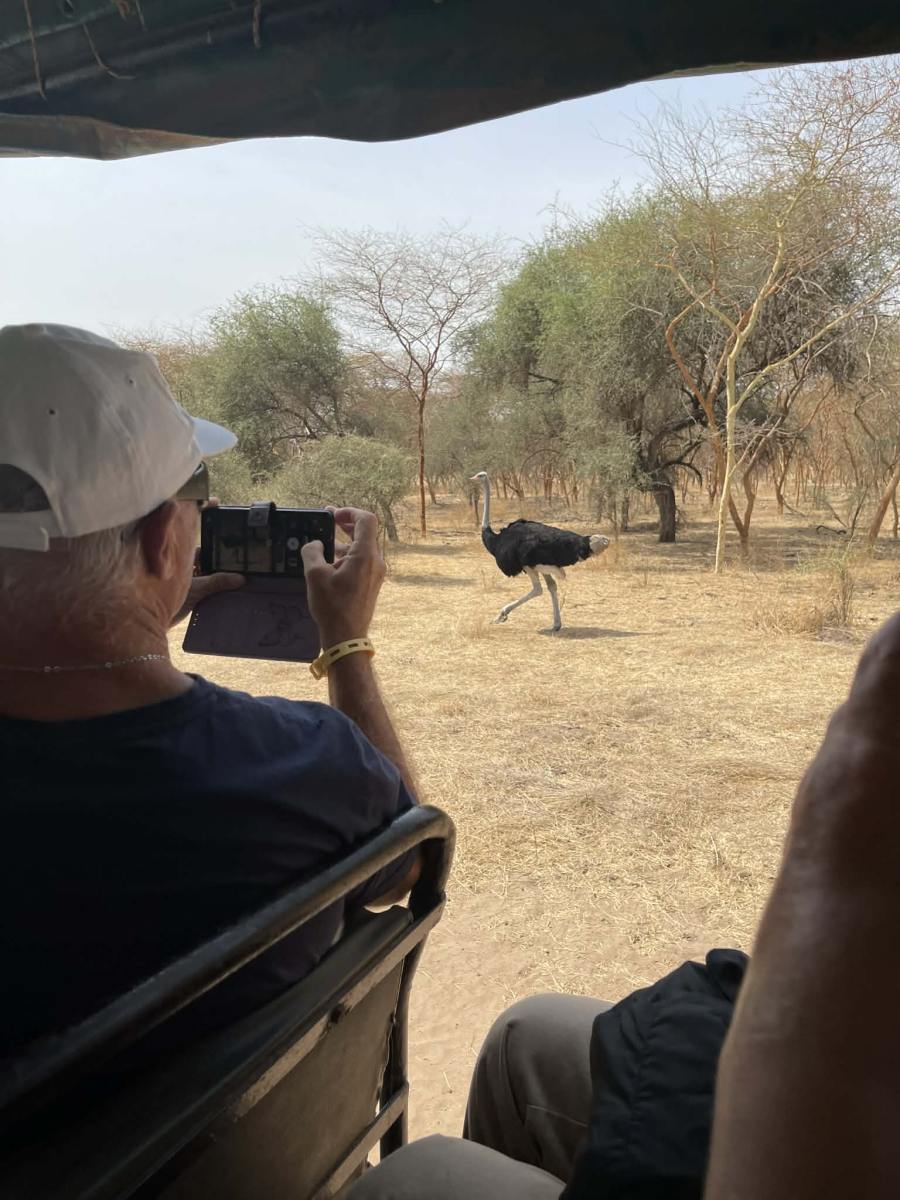
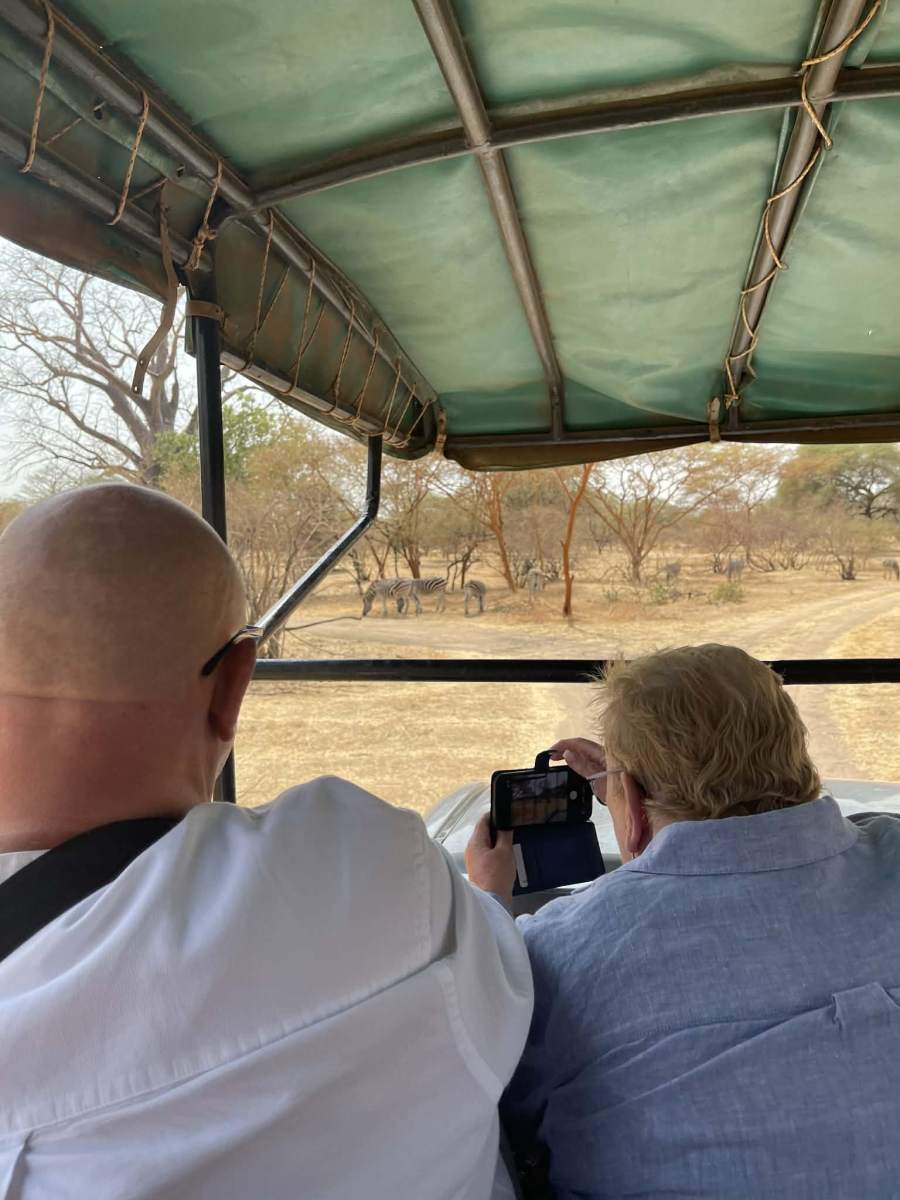
Finally, we walked up a set of steps and boarded the safari vehicles, which are 4 wheel drive pickups with three sets of seats welded in the back, holding a total of 9 people. People who couldn’t climb aboard from the steps were carried in the cab of the truck, so even the oldest, least fit got to go. I carried by wide-brimmed hat all day, but never even put it on. The safari truck had a good tarp overhead, so no sun to worry about. No sun screen needed.
It was a 90 minute drive back to the ship, and we got there 15 minutes after the ship was due to sail, but they waited for us. Luckily, if you’re on a Cunard-sponsored excursion, the ship will wait for you. If you take a privately booked excursion and you’re late getting back, might as well plan on catching an airplane to the next stop on the voyage, because the ship may not wait for you!
Here’s a link to the game reserve website: http://www.reservedebandia.com/home.html
Game Reserve Video Game Reserve Video 2